
PJ Dick Innovation Fund Project Grant: Unmapping State Monocultures
Unmapping State Monocultures
Theodossis (Theo) Issaias, Special Faculty, Carnegie Mellon Architecture
Collaborators:
-FATURA Collaborative, research and design collective (Myrto Vravosinou, Christos Smyrniotis)
-Eray Çayli, PhD, Professor, Institute of Geography, University of Hamburg
-Alexandra Vougia, PhD, Assistant Professor, School of Architecture, Aristotle University of Thessaloniki
-Stamatis Pasopoulos, PhD, Professor of Ethnomusicology, Department of Music Science & Art, University of Macedonia
-Aristotelis Maragkos, Filmmaker
-Veroniki Krikoni, Balkans Beyond Borders
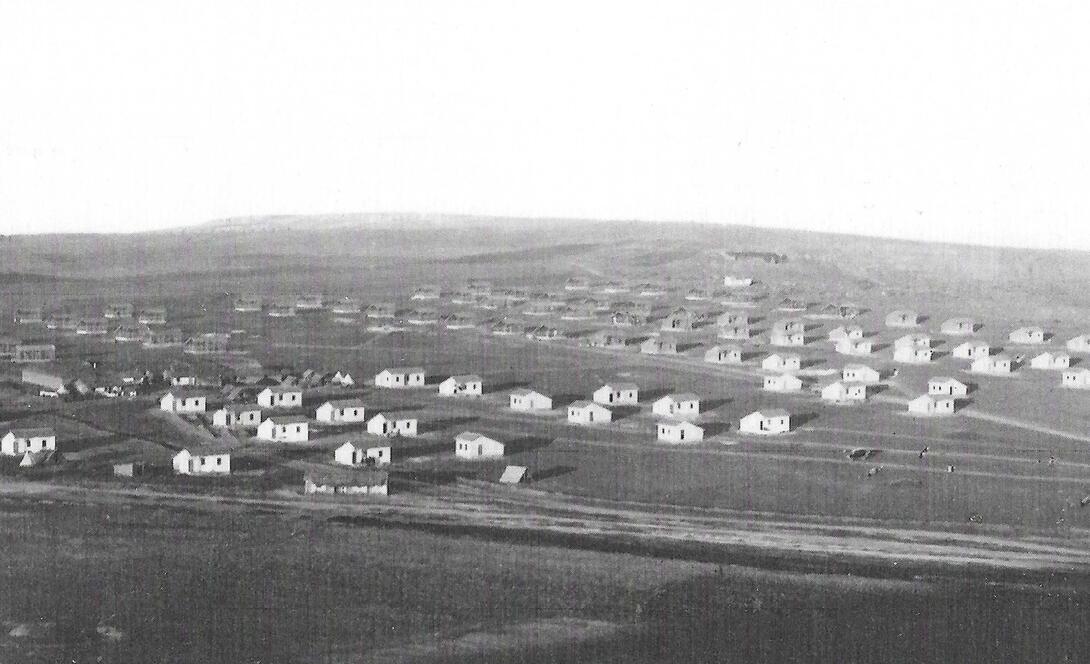
Unmapping State Monocultures begins at the edge of a shrinking hypersaline lake in southern Macedonia, in a border valley shaped by salt, migratory birds, exhausted soils, and the long afterlife of forced displacement. At its centre stands a timber-frame shelter built in the 1920s as part of the League of Nations’ refugee resettlement programme following the 1923 population exchange between Greece and Türkiye. Designed by Bauhaus architect Fred Forbát and erected by German contractors, the structure survives today in the village of Mikrokampos—one of hundreds of settlements imposed onto drained wetlands and former swamps through a programme of agrarian colonisation and monoculture farming.
The shelter is among the few remaining examples of this humanitarian architecture. Reactivated through the project, it becomes a public platform: a site for workshops, conversations, field walks, and ecological interventions that bring together residents, farmers, students, researchers, and cultural practitioners to address the intertwined legacies of displacement, depopulation, and drought in the southeastern Balkans.
Working across architectural history, spatial practice, ecology, and community-based research, the project traces how refugee settlement, land redistribution, and wheat monocultures were used as instruments of nation-building and territorial control. These processes unfolded within agrarian and administrative regimes that normalised uneven exposure to drought and ecological risk, whose effects continue to shape the present.
Central to the initiative is a pilot phase of environmental monitoring and collective observation of Lake Pikrolimni and its adjacent former wheat smallholdings—a fragile saline ecosystem and critical stopover along migratory routes. This work unfolds through field recording, mapping, and forms of citizen-led ecological documentation, laying the groundwork for future ecological repair.
Through archival research, mapping, film, and on-site collective work, Unmapping State Monocultures asks how architectural heritage can be re-read not as a static object, but as an active site for reckoning with histories of humanitarian governance, agrarian control, and environmental exhaustion. Rather than treating the Bauhaus shelter as a monument, the project treats it as a working structure—one that hosts shared inquiry and opens space for imagining other relationships between land, memory, and collective futures across borders.
Image: A village of shelters designed by Fred Forbát for Danziger Hoch- und Tiefbaugesellschaft mbH, Central Macedonia, circa 1925. Dokumente aus dem Bauhaus-Archiv Berlin, Band 5 hg. Bauhaus-Archiv Berlin.
About the Project Lead
Professor of Practice
-
Established in 2023 by PJ Dick Trumbull Lindy Group, the Faculty Grants Program will award a total of $400,000 over four years beginning in 2024. The program supports faculty research and teaching innovations that address the School’s three pedagogical challenges of climate change, social justice and artificial intelligence. The proposals were assessed on their impact in furthering a faculty member’s research and teaching, their contribution to interrogating the School’s challenges, and their viability to garner further research support, make an impact on the discipline and expand the pedagogy of the School.