
Introduction to Ecological Design Thinking
This seminar explores architecture’s capacity to operate as an extension of natural ecosystems and to actively contribute to the ecological regeneration of the built environment across scales.
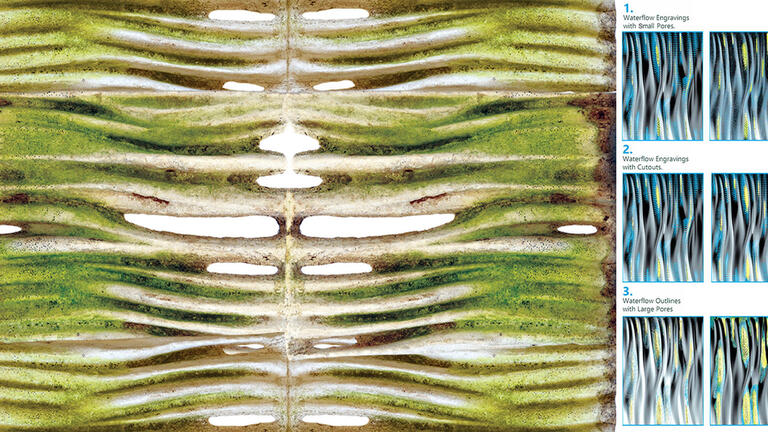
Moss Regimes © Epiphyte Lab, 2016-2018
This seminar explores architecture’s capacity to operate as an extension of natural ecosystems and to actively contribute to the ecological regeneration of the built environment across scales. Grounded in design-centric ecological thinking and bioclimatic principles, the course examines the design and analysis of the built environment, advancing the premise that buildings, infrastructure, and urban systems can function as ecological systems rather than isolated artifacts.
Through case-study research, students engage contemporary regenerative strategies alongside situated technological workflows that respond to evolving environmental conditions while foregrounding environmental and social resilience. The curriculum draws on multicultural and hyperlocal ecological knowledge and connects it to computational design, environmental science, material research, and advanced manufacturing, with particular emphasis on translating large-scale ecological processes into constructed environments. By applying ecological thinking across materials, architecture, cities, and landscapes within broader ecological territories, students learn to align human and non-human systems with natural cycles and energy feedbacks, thereby supporting resilient, sustainable, and regenerative design and research frameworks.