
This studio builds upon the spatial literacy of Core 1 to introduce an intentional, stance-driven design methodology, guiding students from conceptual positioning through rigorous design development to final project narration and visual communication.

Spring 2027
"OMNIconomy" by Shreeja Harisrikanth, Henry Youngren, Tristan Hineman, Sarah Meronek, and Allen Chen, from "Monopolis for the Masses," fall 2025.

The city of Pittsburgh is our (permanent or temporary) home and the site of many of our studio projects. In this course, students start exploring Pittsburgh as built environment in which their work might be situated, as cultural context they need to interpret, and as creative material for their own work.

This course serves as an introduction to the type of equipment and methodologies utilized in architectural fabrication. Students develop a basic understanding of the field to leverage these processes to explore and represent the complex nature of their designs.

This is the second course in a two-course sequence that introduces students to a broad range of architectural drawing techniques and practices that document, communicate, and generate design possibilities.
Fulfills minor requirements for: Architectural Representation and Visualization, Computational Design, Architecture (non-majors)
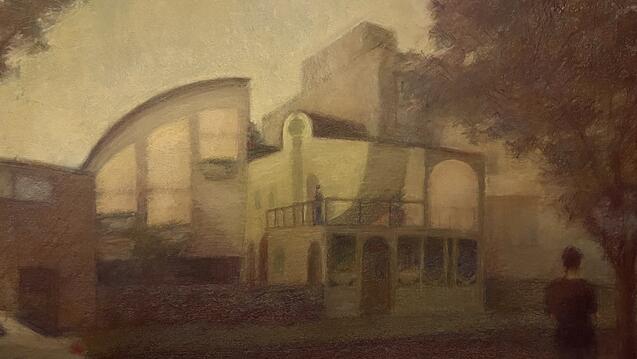
This course builds a capacity for visualizing three-dimensional space through freehand drawing, along with the use of line, tone, and color.
Fulfills minor requirements for: Architectural Representation and Visualization, Architecture (non-majors)

This course cuts a broad swath through time, geography and cultures, surveying critical episodes in the built environment of Europe, the Middle East, Asia, Africa, and the Americas from ancient times through the 19th century.
Fulfills minor requirements for: Architectural History, Architecture (non-majors)

This course focuses on how students learn, develop, and make decisions as they transition into architecture education.
This studio is the fourth in the B.A. / B.Arch core studio sequence.

This course investigates the history of a wide range of buildings, architecture, cities, landscapes, and theory across the 20th century around the world.
Fulfills minor requirements for: Architectural History, Architecture (non-majors)

This course takes computers outside the box and outlines a journey of discovery revealing computation as connective tissue encompassing multiple facets of contemporary architectural practice and experience.
Fulfills minor requirements for: Computational Design
This studio focuses on urban housing and medium-density development, investigating the mid-rise building as an instrument of urban life.

This course introduces the fundamental principles of structural engineering and their application to building design and construction.