Poiesis II experiments by Allen Chen, Alobi Huang, Will Ivansco, Jioh Kim, Adeline Kwan, Estee Teo, Max Whalley and Lukas Yao.

Poiesis II experiments by Allen Chen, Alobi Huang, Will Ivansco, Jioh Kim, Adeline Kwan, Estee Teo, Max Whalley and Lukas Yao.

This seminar investigates the future of cities by focusing on three existential challenges: the escalating environmental crisis, growing social inequity, and technological dislocation, addressing the role and agency of designers and planners in tackling the Third Industrial Revolution.

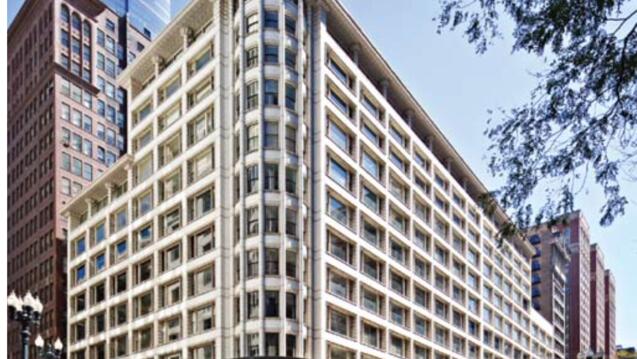
This course examines urban ecology as the evolving relationship between people and the environments they create, informed by systems thinking, ecological flows, and cultural values. Rejecting a binary distinction between built and natural worlds, the course frames the city as a dynamic, living system shaped by feedback loops and adaptation.

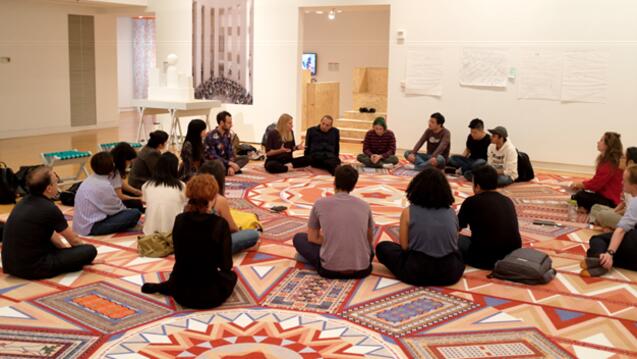
This seminar introduces MSCD students to the rudiments of graduate level academic research, and offers a space to discuss inchoate research methods, questions and projects in the field. 

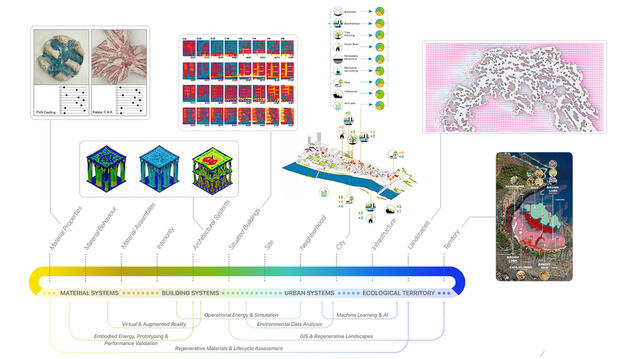
This is the culminating course for the Master of Science in Sustainable Design (MSSD) program. The course focuses on delivering a design research project that integrates ecological principles into the built environment across multiple scales.

This course exposes students to advanced project scheduling methods and familiarizes them with the primary reporting practices performed in the construction industry, including change management, resource charts, and project status reports.

In this course, second year students in the Master of Science in Computational Design (MSCD) program work towards the completion of their thesis. 

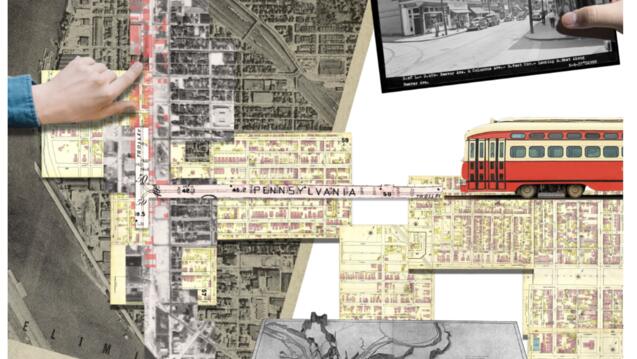
In this course, students collect local or global data and apply mapping skills, including using ArcGIS and Illustrator, to map local experience and large-scale urban systems and use spatial data science to make inferences.