
PJ Dick Innovation Fund Teaching Grant: Owning Affinity: Spatial Models for Collective Housing
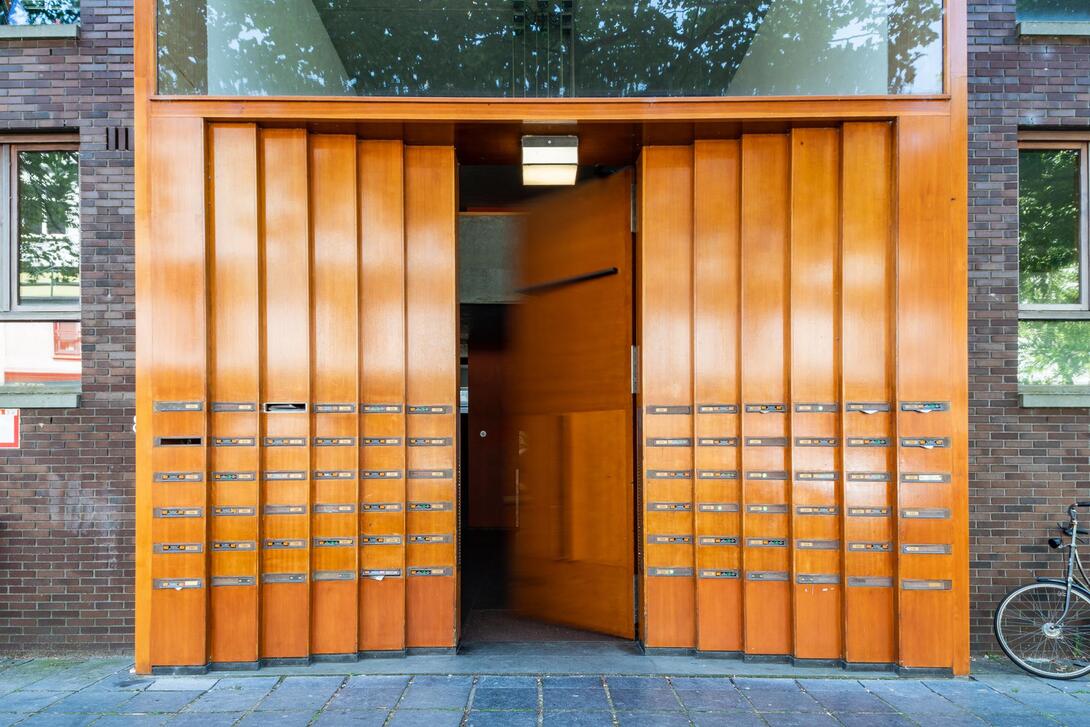
Piraeus Housing Block Entry with Mailboxes. Image credit: Mario Ferrara.
Owning Affinity: Spatial Models for Collective Housing
Instructor: Jongwan Kwon, Assistant Teaching Professor, Carnegie Mellon Architecture
This new Core 5 Studio (formerly Praxis II Studio) will reinforce the existing B.Arch studio sequence by integrating collective housing as the design project. This new curricular development strategically focuses on utilizing housing not merely as a program, but as a vehicle to productively and organically engage with the existing required course curriculum, thereby reinforcing overlapping learning objectives while introducing new critical knowledge elements and competencies.
The studio will contribute to CM–A’s pedagogical mission, particularly in addressing the challenges of social justice. Beyond understanding the multitude of actors and constituents in housing development, students will undertake deep analysis on architectural typology and urban morphology that cultivates collective identity and affinity, supporting cultural and social diversity. This approach enables students to develop a critical position on imminent housing crises, fostering ownership in speculating future housing practices towards building equitable and resilient communities.
Through the support of this grant, the curricular invention and development in 2026 aims to lay a foundation for three consecutive terms (Spring 2027–29) by establishing a robust framework of learning objectives, assignments, readings, workshop activities, and assessment methodologies.
Image: Piraeus Housing Block Entry with Mailboxes. Image credit: Mario Ferrara.
About the Project Lead
Assistant Teaching Professor
-
Established in 2023 by PJ Dick Trumbull Lindy Group, the Faculty Grants Program will award a total of $400,000 over four years beginning in 2024. The program supports faculty research and teaching innovations that address the School’s three pedagogical challenges of climate change, social justice and artificial intelligence. The proposals were assessed on their impact in furthering a faculty member’s research and teaching, their contribution to interrogating the School’s challenges, and their viability to garner further research support, make an impact on the discipline and expand the pedagogy of the School.