Entangled: Remaking Nature from the Picturesque to the Hypernatural
This seminar examines the entwined relationship between nature and culture, challenging the false dichotomy that separates them. By tracing how concepts of nature, landscape, and ecology are culturally constructed and aesthetically represented, the course reveals how human imagination has shaped — and been shaped by — the natural world.
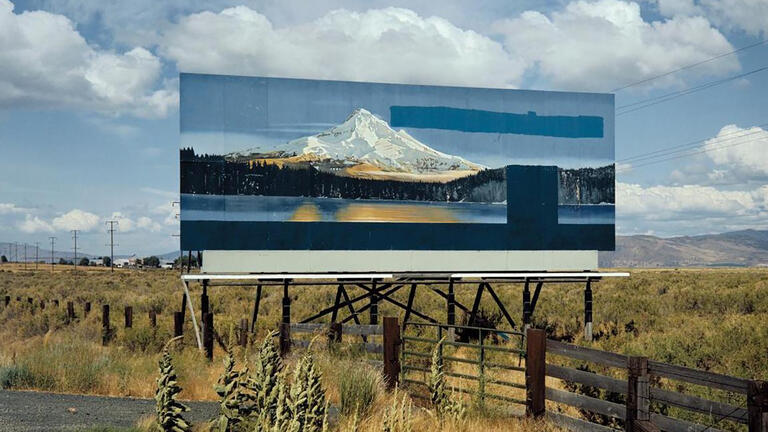
Stephen Shore, U.S. 97, South of Klamath Falls, Oregon, July 21, 1973.
This seminar examines the entwined relationship between nature and culture, challenging the false dichotomy that separates them. By tracing how concepts of nature, landscape, and ecology are culturally constructed and aesthetically represented, the course reveals how human imagination has shaped — and been shaped by — the natural world. Drawing from architecture, art, philosophy, and environmental theory, students critically engage with how cultural narratives inform our understanding of the environment and how design practices reflect, reinforce, or resist those views. Emphasizing the role of creative expression in the age of the Anthropocene, the course explores how both wild and artificial systems are represented in art and architecture, and how the images we create influence how we see the world. Theories such as deep ecology, natureculture, biopolitics, and ecofeminism frame discussions on the ecological responsibilities of designers. Ultimately, students investigate how aesthetics not only reflect but actively construct our environmental realities, opening space for more ethical, responsive, and imaginative ecological futures.