Newsletter v040: The Legacy of Academic Research

Dear School of Architecture Community,
It feels particularly rewarding to start a new academic year after a tumultuous summer. Pittsburgh's picturesque fall weather seems the perfect welcome for all of our students and an opportunity to remember our shared mission.
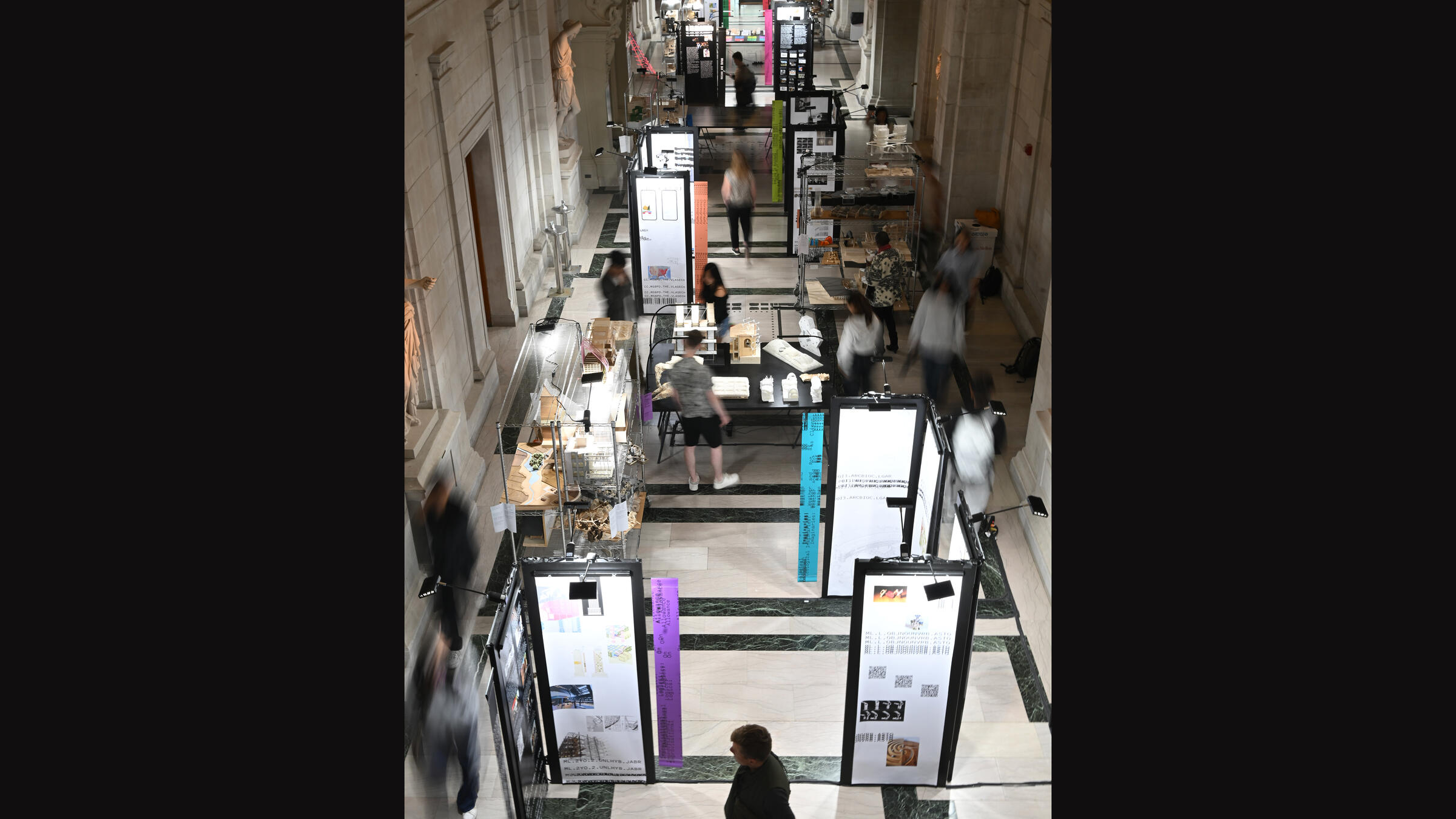
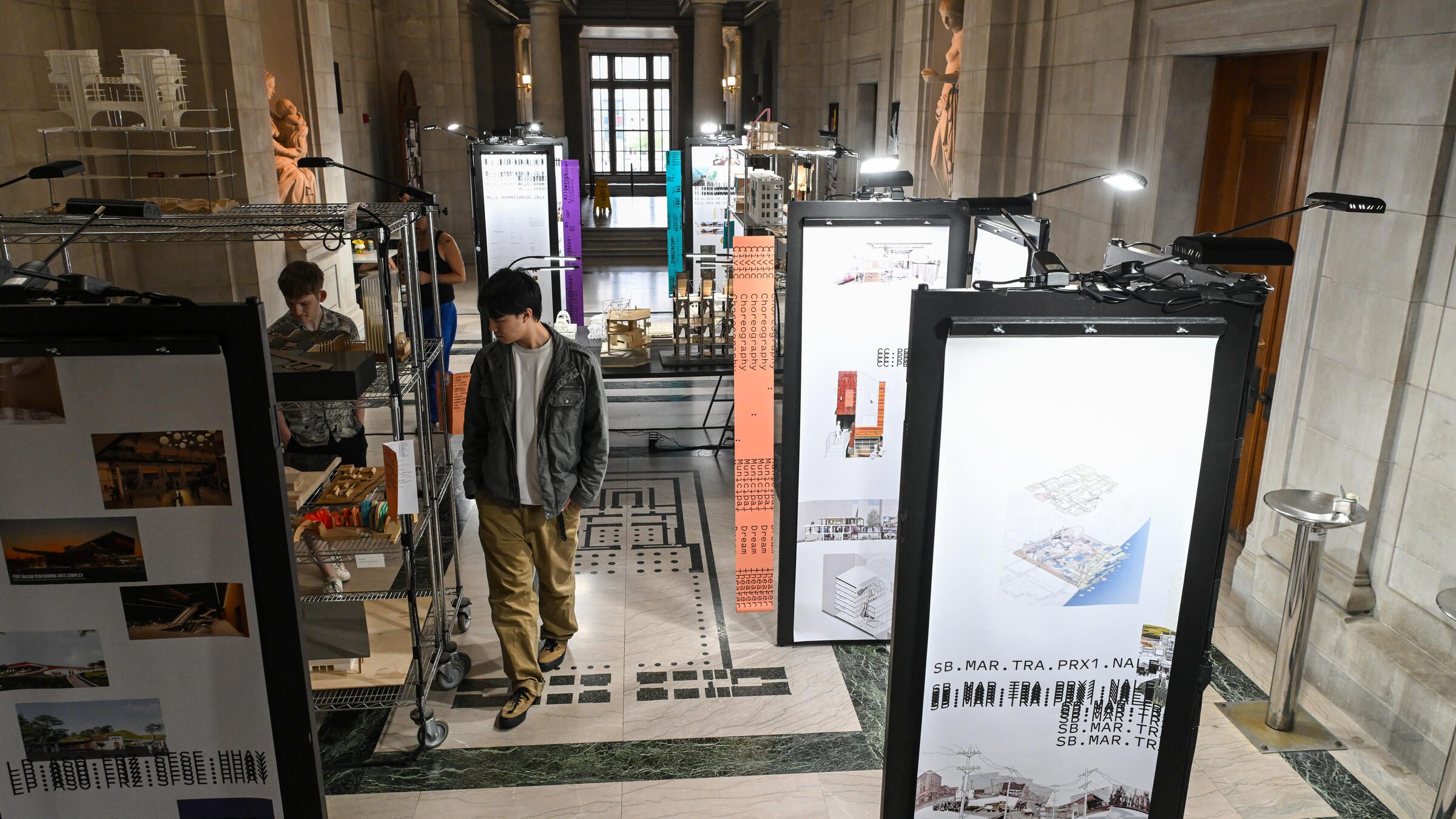
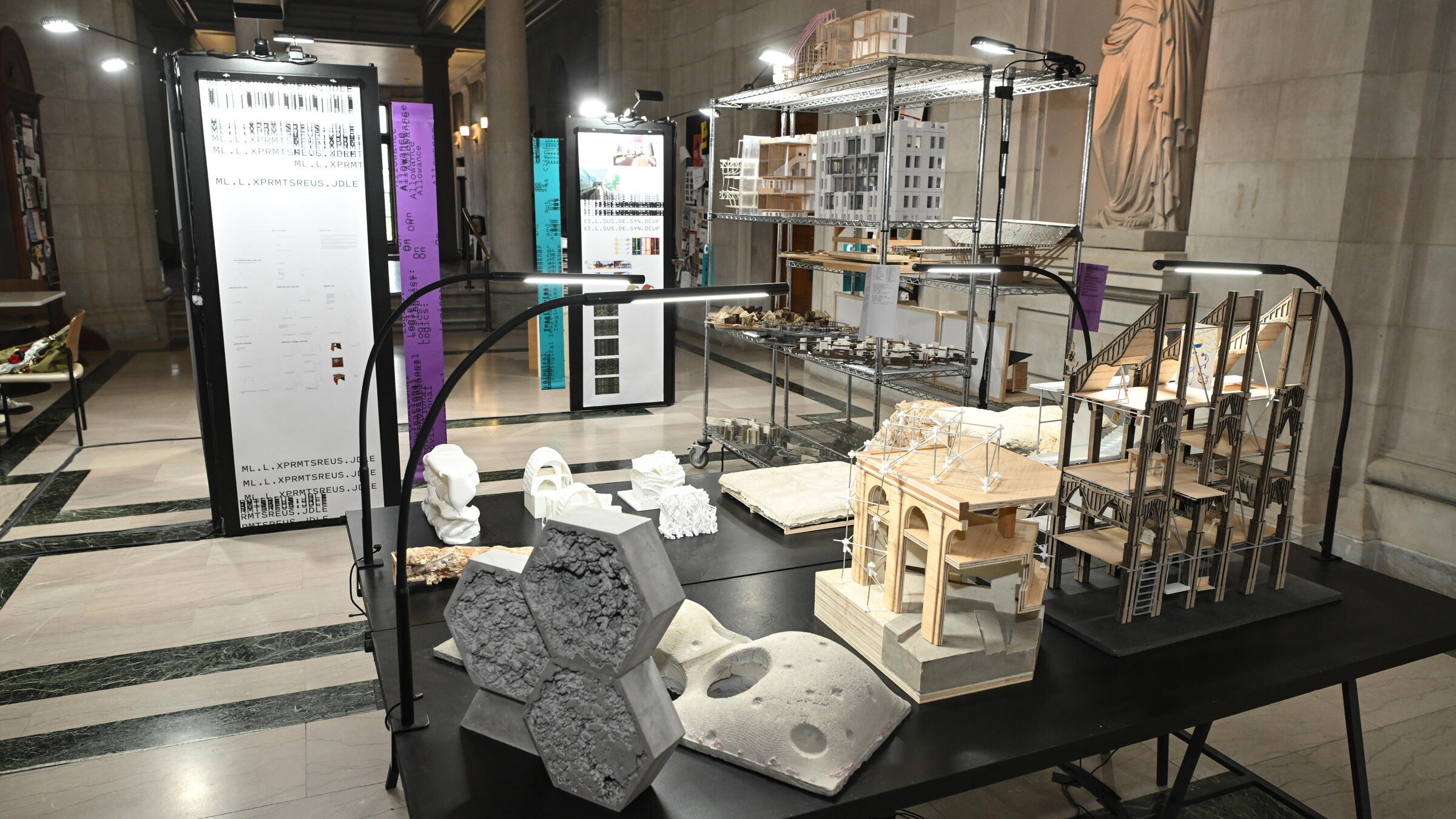
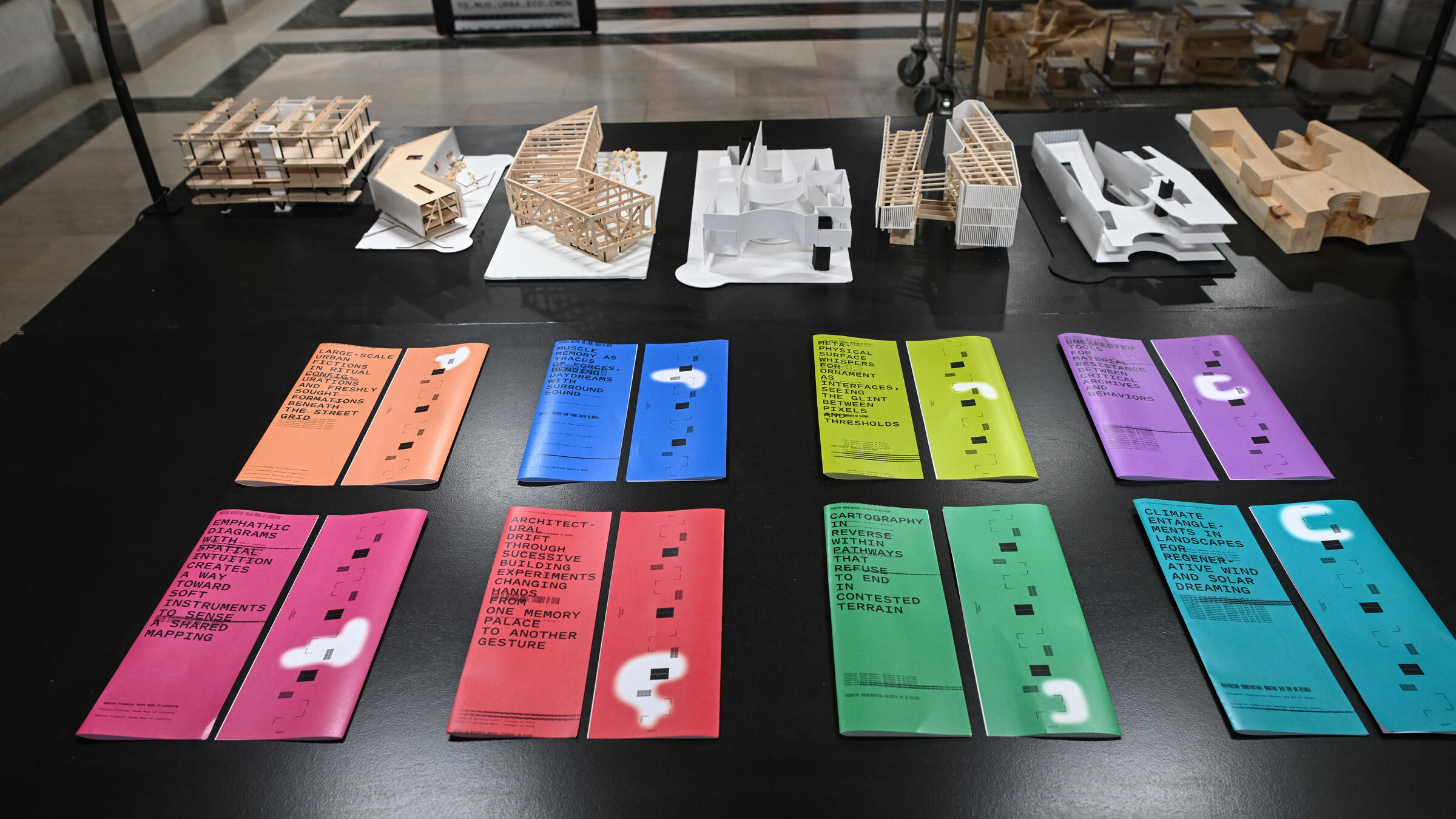
In May, we concluded the academic year by celebrating our undergraduate and graduate students' thesis and capstone work during two full days of reviews at Rockwell Park. And we began this new year celebrating the school's collective efforts: on the first day of classes, August 25, the End-of-Year Exhibition, titled "Cabinets of Curiosities," opened in the College of Fine Arts Great Hall. Be on the lookout for the forthcoming launch of the 2025 "x-change" publication cataloging our student work from the past year!
Sadly, this summer marked the passing of a seminal member of the Carnegie Mellon Architecture (CM–A) community, Art Lubetz. Art's passionate and provocative teaching impacted the lives of decades of architecture students. I had the pleasure of teaching alongside Art during my first year at Carnegie Mellon, and his example still shapes my outlook on teaching. Art's work as a practicing architect has also shaped Pittsburgh's many neighborhoods, leaving a lasting testament to the impact of thoughtful and courageous design. As part of Pittsburgh Architecture Week, CM–A will host Architecture Night @CMU. In addition to showcasing student work, CMU Libraries' Architecture Archives will highlight Art Lubetz’s oeuvre — a tangible opportunity to remember Art's legacy. The event takes place on Tuesday, October 7 from 5:30 to 7:30pm in the College of Fine Arts Great Hall. Please join us.
Art's legacy reminds us of the impact of design research. Research is a hallmark of CM–A, where faculty, students and staff join forces around important work that matters to people, often in active collaboration with industry, government, and regional partners. And we seek to share the results of this work — either built or published — so that our colleagues across the nation and the globe can discuss, critique, refine and apply it.
This year's issues of our newsletter will celebrate and explore CM–A’s many forms of design research and the ways it’s changing the world. We hope you'll stay tuned.
Joshua D. Bard
Associate Professor & Associate Head for Design Research
Associate Professor & Associate Head for Design Research

Over the last decade — and certainly in the last several months — American scholarly research has become a cultural lightning rod.
Colleges and universities have responded with a host of evidence of the social value of scholarly research: many R1 universities’ homepages feature bold assertions that "research matters" or "research saves lives." Carnegie Mellon’s website, for example, promises "Work That Matters," noting that, at CMU, "researchers, scholars and artists come together to ask bold questions, solve complex problems and make real change, build[ing] new tools and work[ing] across disciplines to make sure technology serves society and fuels economic opportunity."
Among those "researchers, scholars and artists" are the students, faculty and staff of Carnegie Mellon Architecture (CM–A), who daily seek to push the limits of human knowledge about the built environment. This academic year, through profiles of scholars, research centers, and alumni, e-SPAN will explore CM–A's vital, expansive research and how it shows up in the world.
At its base, according to Joshua Bard, Associate Professor and Associate Head for Design Research, research is "the incremental development of new insight, knowledge, and capacity in response to targeted questions aimed at subjects where there are holes in our current understanding."
While its questions may be precisely targeted, university research as a whole is far-ranging, multifaceted, and rooted in social contexts. In fact, university research in the United States has been a profoundly interdisciplinary, inter-institutional and public project.
Associate Professor and CodeLab Director Daniel Cardoso Llach's work on the cultural and intellectual history of computational design has given him a bird's-eye view of the evolution of university research and funding over time, especially in the U.S.

According to Cardoso, U.S. universities' global research leadership emerged in the second half of the 20th century, when U.S. government officials understood that solving difficult problems required three key elements: interdisciplinary talent, industry involvement, and robust public investment.
To win the economic race — and secure the country’s military dominance — the U.S. federal government began directing massive funding toward university research across disciplines. As a result, says Cardoso, the breadth and depth of public support for American university research has, for decades, been an order of magnitude higher than that of any other industrialized economy, reflecting a globally unique alignment among the federal government, higher education, and industry that has made U.S. universities "the envy of the world."
Of course, knowledge and creativity aren't limited by discipline, so research findings originally emerging from radar defense, ballistics or wartime manufacturing spurred innovation in many other, often seemingly unrelated, fields — including architecture.
Cardoso notes, for example, that many of the technologies now considered basic in architecture and design have strong roots in publicly funded university research. "If you look at the history of the technologies that shape our personal and professional lives," he says, "from the digital computer to computer graphics, CAD, and the internet, they all have strong roots in the interdisciplinary, critical soup of the U.S. university system. It is very disconcerting to see this powerful ecosystem of knowledge now under threat."
The word "ecosystem" is key here. New technologies tend to arise from collaborative, interdisciplinary work — often catalyzed by publicly supported university research.
"The myth of the individual genius-inventor is pernicious, because it undermines the very system that created those possibilities," he says. "Individual talent is of course real and essential, but there is simply no digital computer without massive U.S. government funding into ballistics. There is no interactive computing, computer graphics, or the internet without huge public investments in radar and defense systems — however one may feel about these investments."
For Cardoso, research and criticality go hand in hand. As he defines it, "criticality" is questioning the status quo from enough distance to see its cracks and develop opportunities for new understandings. Critical research and scholarship often happen best in collaboration, with scholars pushing one another to ask more precise questions, apply all extant knowledge, and test their findings thoroughly.
And one way scholars organize themselves, both at CMU and elsewhere, is in research centers and labs, which Cardoso describes as "communities of critical making and thinking, where we imagine and test new ways of practicing and designing, and explore new ways that technologies might facilitate interactions among the stakeholders in a design and construction process."

CM–A's research centers include the Remaking Cities Institute and CodeLab, which have both undergone major evolution over their long histories, as well as newer labs — all supported through some combination of federal funding, regional partnerships, and philanthropic grants. Here faculty, students and staff work, in Bard’s words, to "shape the future built environment while also understanding how the built environment shapes us in return" via a range of design research activities: "laboratory experiments, full-scale prototyping, gallery exhibitions, archival and ethnographic studies, and community-situated design-build." At CM–A, these research efforts enrich the curriculum with new courses that expose students to the most current design and architectural research.
Alongside the formalized research groups, individual CM–A faculty are also conducting research that steadily pushes the boundaries of what architecture and design can do. Associate Professor and Center for Building Performance & Diagnostics Co-Director Erica Cochran Hameen is studying how to improve indoor air quality in K-12 school buildings. Special Faculty Vicky Achnani works on innovative applications for the material properties of bamboo, one of Earth’s most renewable natural resources. Assistant Professor Juney Lee is developing new computational methods to radically design structures according to ecological principles. And Assistant Professor Vernelle A. A. Noel is bringing together ethnography and experimental technology design to study craft traditions, centering notions of care and repair.
While these projects all carry major economic import, Cardoso cautions against making the potential for profit the only barometer of research success and insists instead on leaving space for exploration, imagination, and fundamental questions. Publicly funded scholarly research, he says, underlays public flourishing, which can't be monetized. Ultimately, the job of researchers is to "pursue knowledge and the advancement of humankind through knowledge and science."
It's a tall order, but CM–A researchers, from undergrads and grad students to faculty and staff, are up to the challenge.
Stay tuned to e-SPAN this year for profiles of CM–A researchers, research centers, and alumni deploying CMU-style "critical imagination" in policy and practice.
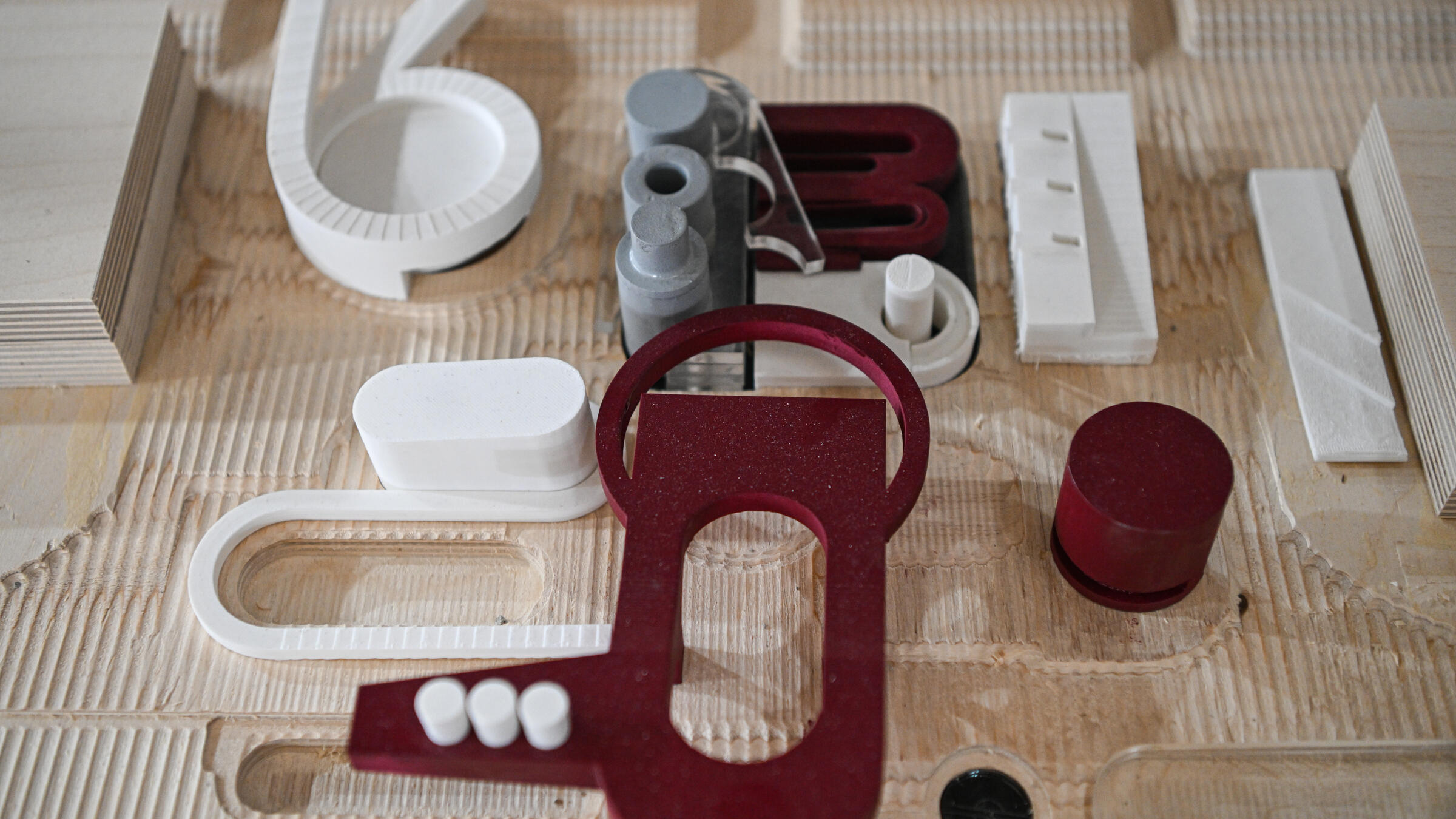
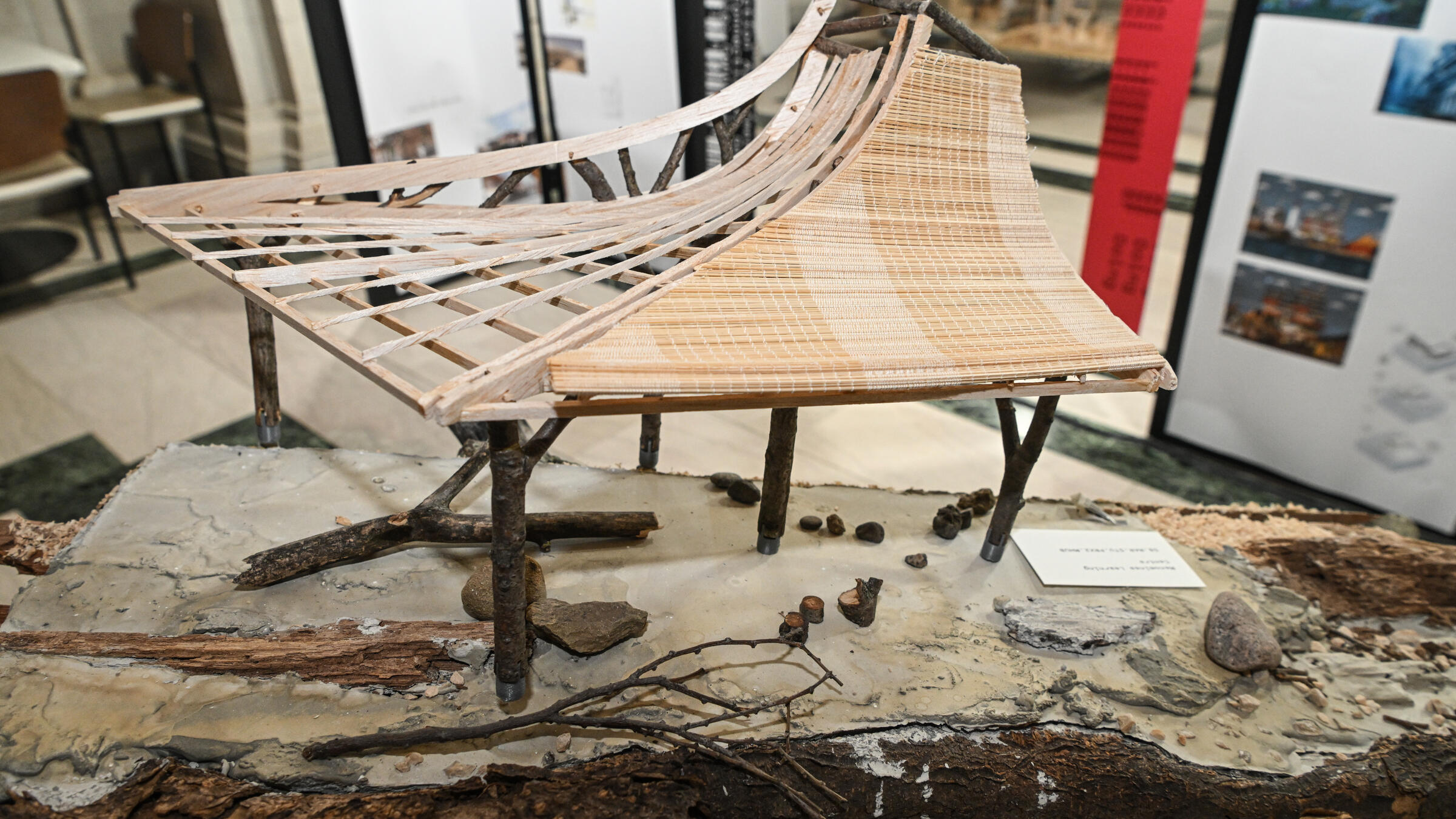
End-of-Year Exhibition: "Cabinets of Curiosities"

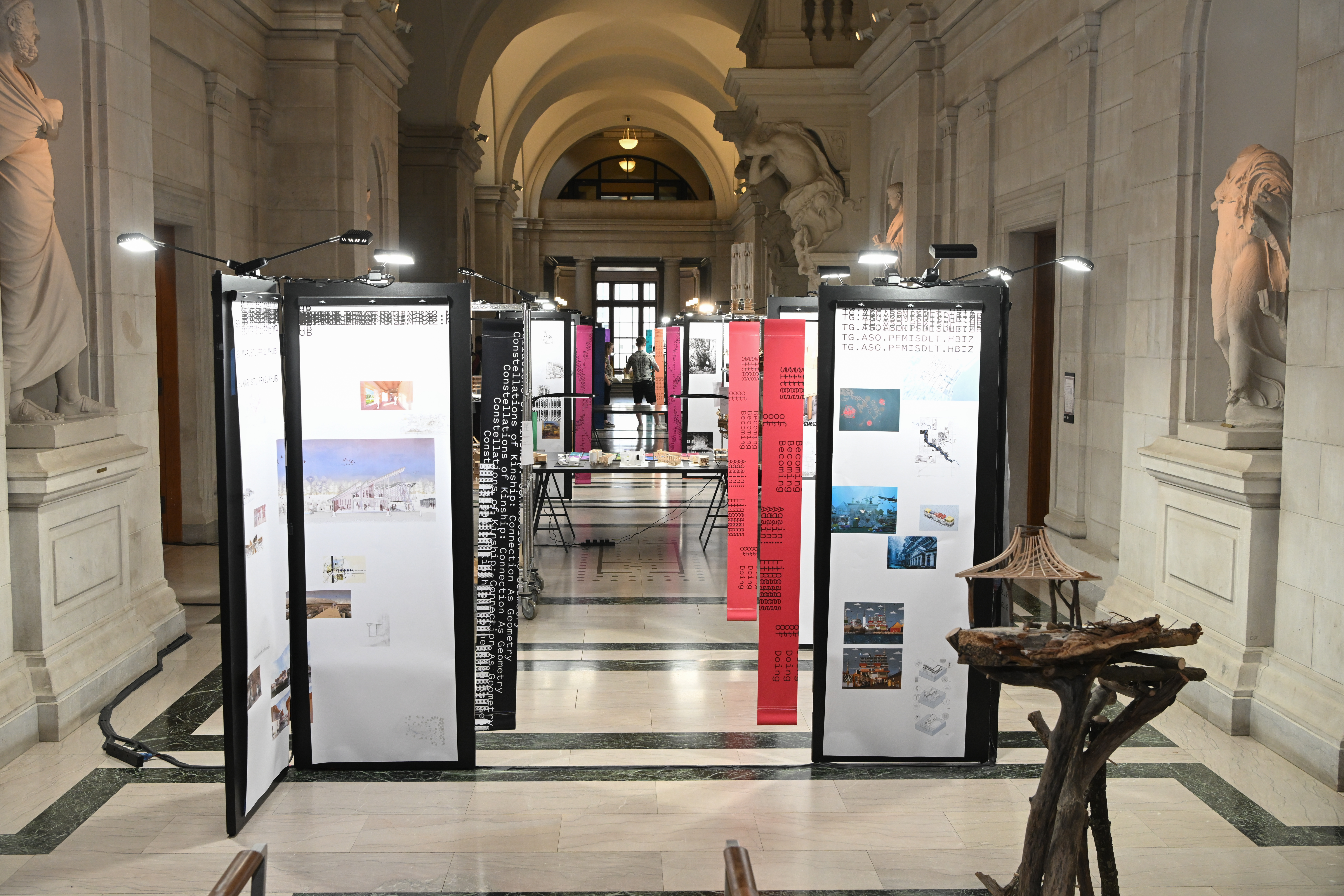
The End-of-Year Exhibition, titled "Cabinets of Curiosities," was on view in the Great Hall beginning on the first day of classes, Monday, August 25, 2025 through Friday, September 5.

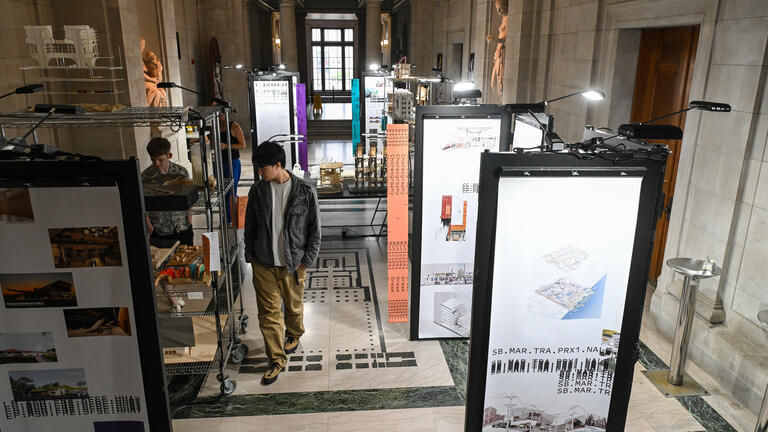
The exhibition builds on the Fall 2025 and Spring 2025 Public Programs Series on "Artificial (and Othered) Intelligences."
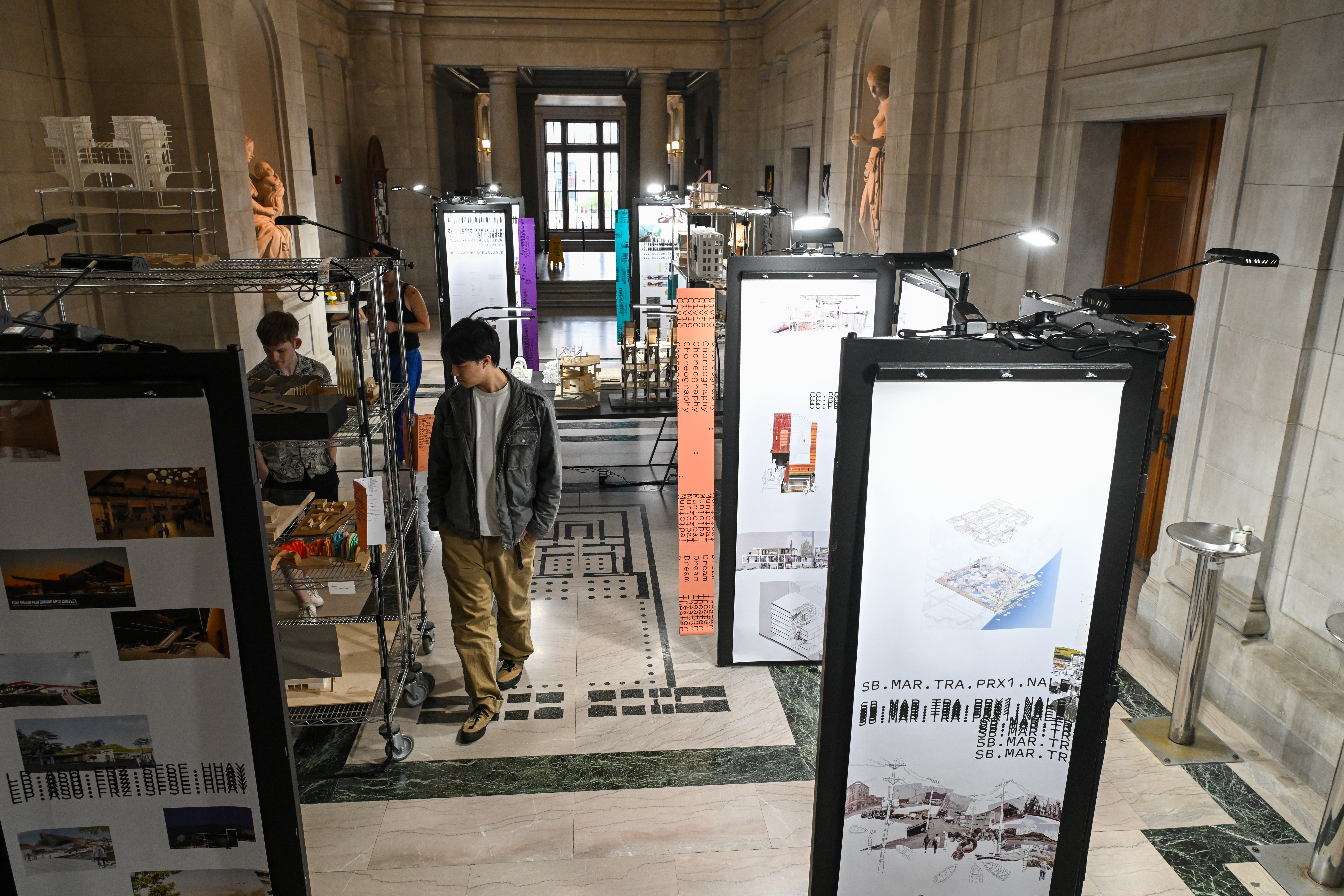
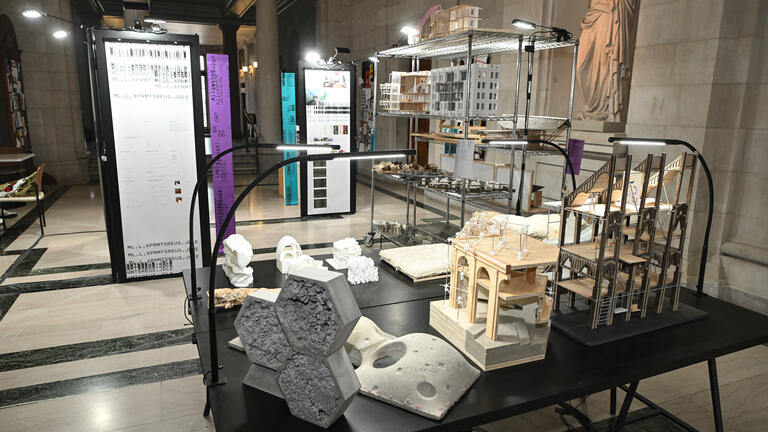
Exhibition designers Jared Abraham and Heather Bizon approach Carnegie Mellon Architecture’s End-of-Year Exhibition as an active archive, one that reflects the school’s multi-world, plural intelligences.

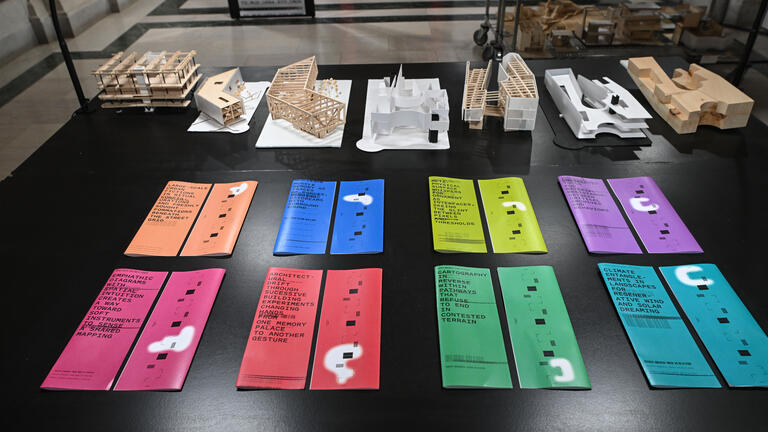
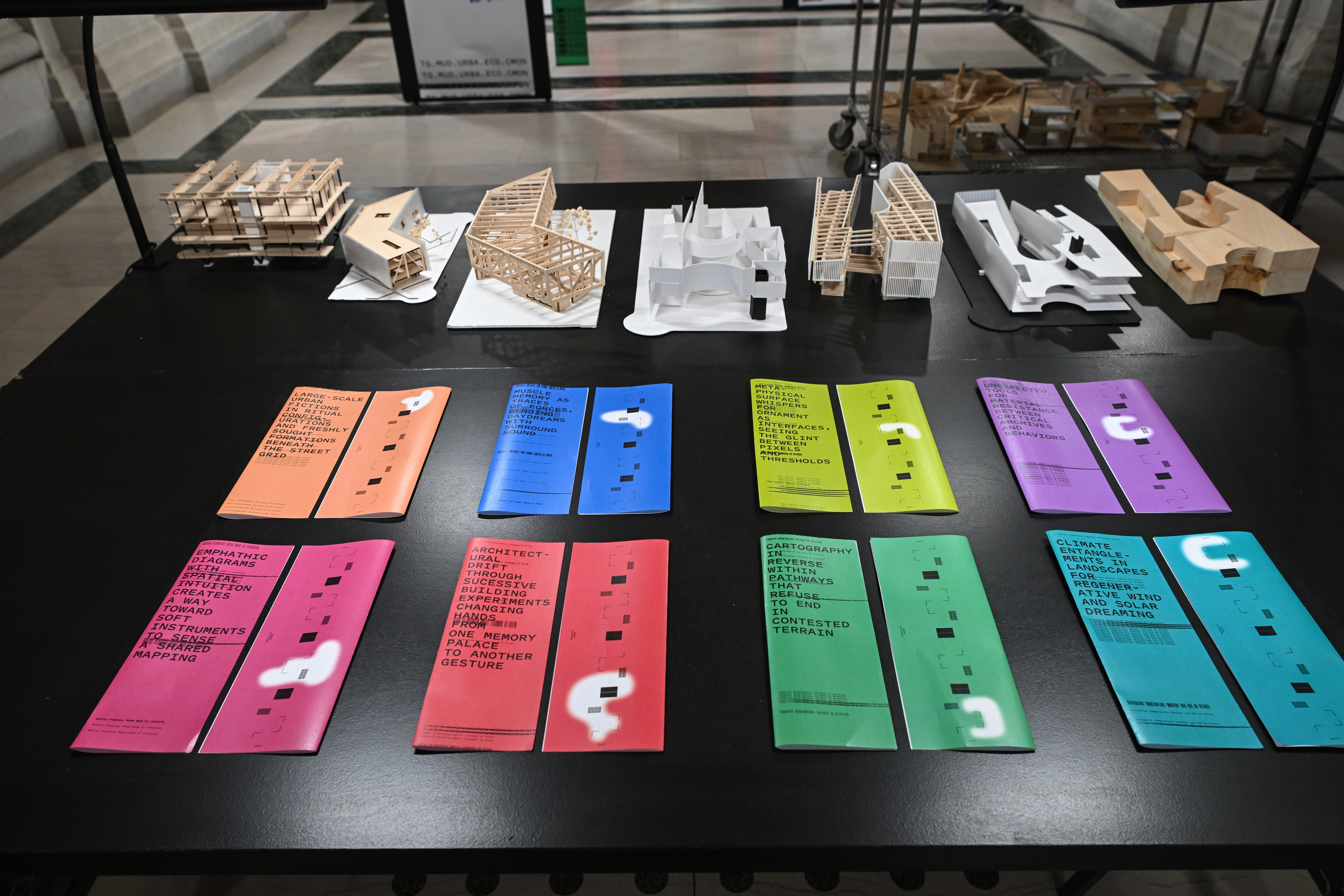
"Cabinets of Curiosities" presents the work of the school as collections of artifacts organized into "species of classes" to surface the distinct logics, methods, beliefs, and tools that shape each body of work.
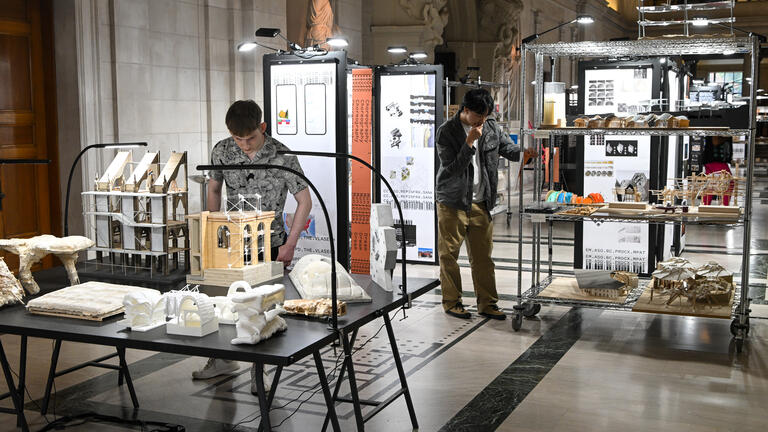
Historically, cabinets of curiosities was a colonial practice of meaning-making. Through it, aristocratic collectors codified geography, architecture, and people into systems that reinforced hierarchies of ownership, objectification and exoticism.
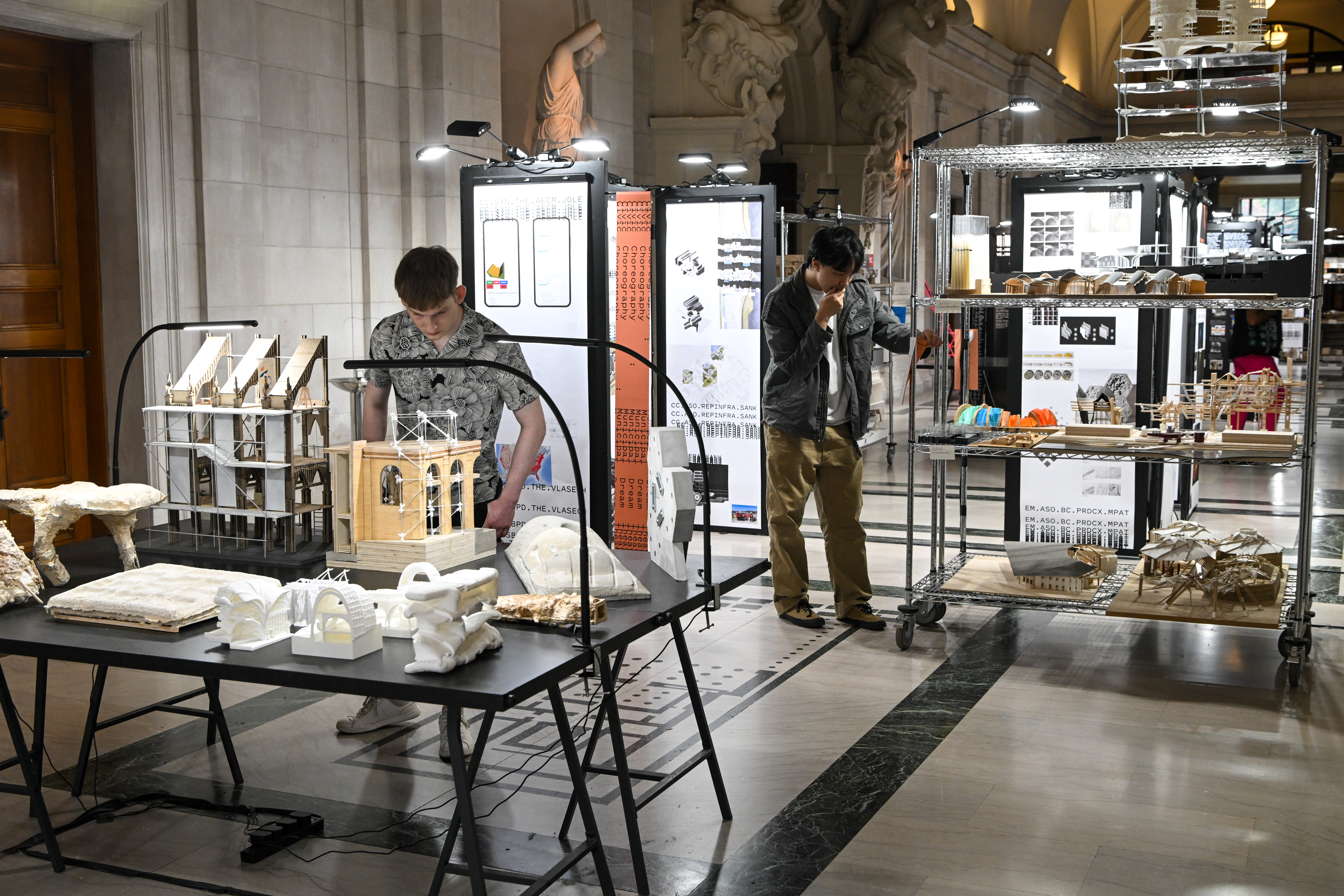
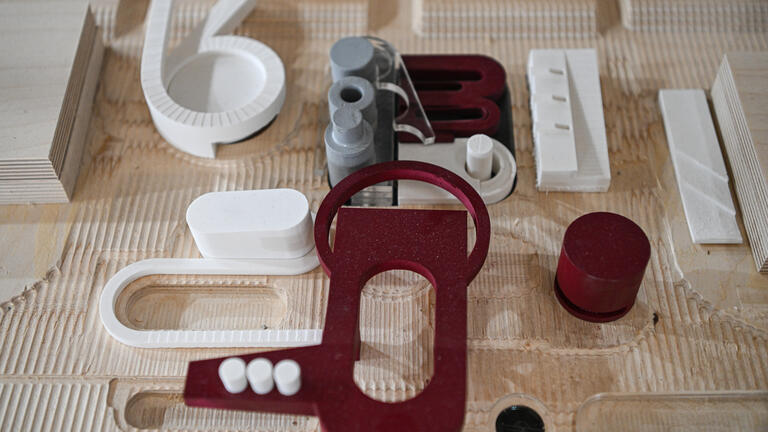
Today, technologies like artificial intelligence continue this legacy, acting as new agents of classification that shape how space, place and subjectivity are constructed.
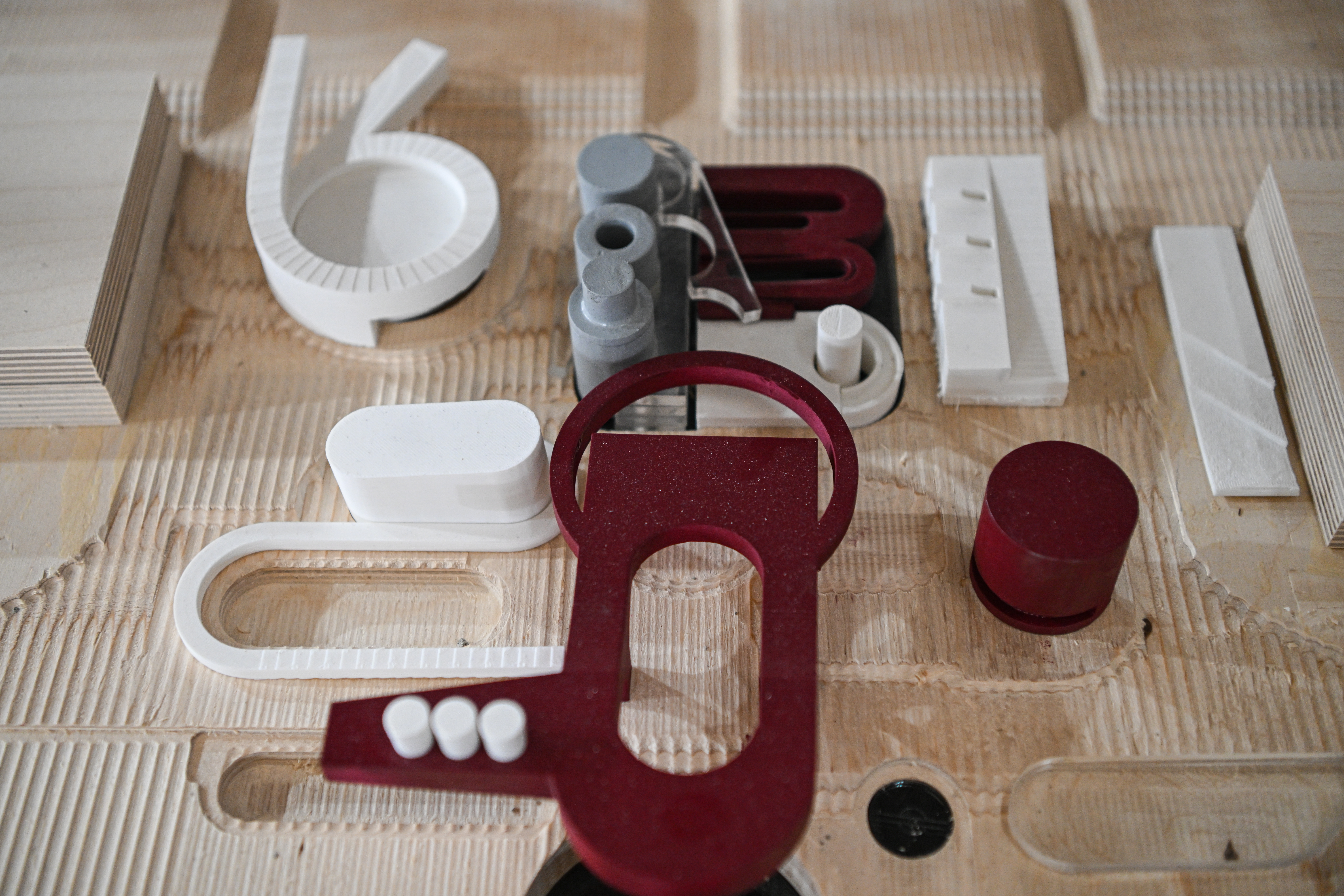
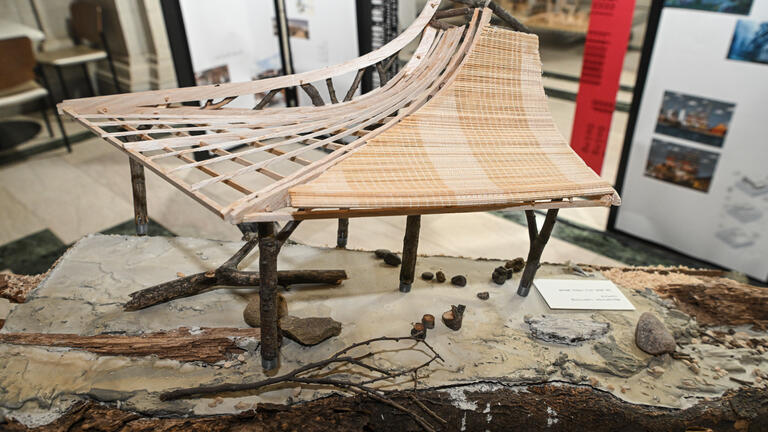
The exhibition reimagines the cabinet not as a site of extraction, but as a site of inquiry, foregrounding the school’s layered and co-existing frameworks of thought.


In doing so, it reflects the various ways that intelligence gets defined in the school, and how acts of classification shape the way such varying knowledge, and hence worlds, are made legible.


Exhibition Team
Director & Project Manager: Tuliza Sindi; Exhibition Design: Jared Abraham, Heather Bizon; Graphic Design & Visual Identity: Lisa Maione, Asad Pervaiz; Installation: Josh Ice, Kate Prilla; SHOP Fabrication Support: Jon Holmes, Steven Sontag; Lighting Consultation: Cornelius Henke II; Production & Student Support: Pariya Ayati, Melika Davarkhah, Lilianne Kouyaté, Keng Pu (Paul) Li, Ananya Shrimali, Aakash Vipparla; Photogrammetry Model: Vernelle A. A. Noel.
We are grateful for all consultants, service providers, and faculty, staff, and students whose insights and labor made this exhibition possible.
Remembering Art Lubetz
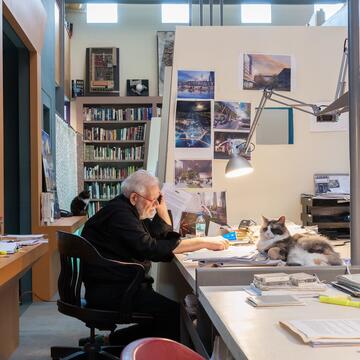
Alumnus Arthur Lubetz, a visionary architect whose bold and colorful designs transformed Pittsburgh's architectural landscape, passed away on July 4, 2025. Art served as an Adjunct Professor at Carnegie Mellon Architecture for over 30 years and was known for many notable projects, including Carnegie Library of Pittsburgh's Squirrel Hill branch (2005) and Glass Lofts (2007).
Art had a profound impact on so many. In the weeks following his passing, we collected memories of him from his former students, fellow faculty, mentees, colleagues and those whose lives he touched. We invite you to reflect and remember Art through these stories, as told in the words of our community.
We invite you to join us during Pittsburgh Architecture Week for CMU Libraries' Architecture Archives highlight of Art Lubetz's oeuvre — a tangible opportunity to remember Art’s legacy. The event takes place on Tuesday, October 7 from 5:30 to 7:30pm in the College of Fine Arts Great Hall.
Faculty & Staff News
- Daniel Cardoso Llach has been appointed the Associate Dean for Faculty and Graduate Affairs in the College of Fine Arts.
- Daragh Byrne was selected to the Aspen Policy Academy’s Summer 2025 Class of Science & Technology Policy Fellows.
- Sarosh Anklesaria presented his paper, "Architectures of Dissent," at the "Memory, Memorials and Resilience" panel of the 2025 ACSA Summer Conference held Aug. 7-8 in Charlotte, N.C.
- Sarosh’s paper "Architectures of Dissent: Building Memorials to Gandhi through Everyday Praxis" was shortlisted for the "The Plan Journal's” Best Paper Award.
- Sarosh contributed an essay, "Education as a Practice of Social Infrastructure," for the forthcoming book publication related to the after school exhibition at the CMoA.
- The AIA hosted a webinar on Sept. 10 featuring Vivian Loftness and Prof. Ying Hua (PhD-BPD alumna) as panelists: "POE + M Research Insights: Towards High-Performance Commercial Buildings and the End of Least Cost Decision-Making."
- Tommy CheeMou Yang presented the paper "Worlds Multiple in the Hands of Grandmothers at the Scale of a Mango Seed" at the Society for Social Study of Science on Sept. 4.
- On Sept. 11, the HMoob Stories Project, co-founded by Tommy, opened the exhibition "A Field of Secrets: HMoob in Wisconsin" at The Allen Priebe & Annex Galleries.
Alumni News & Updates
We invite all Carnegie Mellon Architecture alumni to keep us up to date on their awards, professional milestones and more. Send us your updates with a brief description and link to more information.
- Bergmeyer, headed by President and CEO Rachel Zsembery, AIA, LEED AP (B.Arch '00), has been named the Boston Real Estate Times' 2025 Architecture Firm of The Year. Read more here.