Newsletter v042: CodeLab

Dear School of Architecture Community,
It is hard to believe that we are at the end of the semester with final reviews beginning today. The school is abuzz with activity as students prepare their final presentations and guest critics arrive to share their insights on the work. We have also had our first snow of the season, which has brought with it a holiday mood.
I extend thanks to all of the alumni, parents, faculty, staff, students and friends that gave this past week for Giving CMU Day. Your contributions help support our students' learning experiences, including the student organizations' activities, studio teaching and faculty research. For those who still wish to give to the Head's Innovation Fund you can donate here.
In this CM—A Newsletter, we highlight another one of our research centers, the CodeLab. Professor Daniel Cardoso Llach, who directs the lab, discusses what makes it one of the most vibrant centers for computational design on campus and among schools of architecture. Its interdisciplinary approach welcomes students from different backgrounds while providing a common language for them to develop their unique work. An interview with alum Lydia Schweitzer (MSCD '21), currently a research scientist at NASA, describes her experience coming from an arts/math bachelor’s degree and finding ways to connect "creativity with technology" through the program at the lab.
The school is proud to launch our new publishing imprint, in otherwards, that will allow us to develop books and folios related to the research and teaching happening at the school. Our first publication "after school" is the accompanying book of the exhibition of the same name curated by faculty member Theodossis Issaias, curator of the Heinz Architectural Center at the Carnegie Museum of Art, and Alyssa Velazquez, assistant curator. The book includes articles and work by faculty members Stefan Gruber, Sarosh Anklesaria, Vicky Achnani, architecture librarian Lynn Kawaratani, alum Leah Wulfman, and Master of Architecture students Sharvi Shah and Nicholas Thies. The book was produced by our director of publications Tuliza Sindi. in otherwards is made possible by the Jill Watson Endowment for Innovation at the Intersection of the Arts.
Looking ahead to the spring, we’ll begin next semester celebrating the publication of the 2025 edition of "x-change," our annual yearbook of student work from our undergraduate and graduate programs. We will also showcase research work from the 2025 faculty recipients of the PJ Dick Innovation Fund Faculty Grants Program. It is so fulfilling to see the incredible work of our faculty and students. In spite of the difficulties that higher education has been facing this year, I am proud of the resilience that our students, faculty and staff demonstrate on a regular basis. Clearly our heart is in the work.
I wish you all a wonderful holiday season!
Omar Khan
Head of School
Professor & Head

A Conversation About the Computational Design Laboratory (CodeLab) with Director Daniel Cardoso Llach
This interview has been lightly condensed and edited.

Give us the quick version: What is CodeLab?
The Computational Design Laboratory (CodeLab) is a research and learning laboratory at Carnegie Mellon University School of Architecture. Fundamentally interdisciplinary and experimental, it draws together methods and sensibilities from architecture, engineering, art, and the humanities to rethink the role of computing in architecture and the built environment. Faculty and students work together around subjects including construction robotics, artificial intelligence, digital heritage, computational structural design, media archaeology, and tangible interaction. CodeLab faculty and students are actively redefining those fields. It is really thrilling and an honor to work with such an impressive group of students and colleagues.
How does CodeLab's research "get made"?
Both CodeLab students and faculty come from a variety of backgrounds. Many come from architecture and other design fields; however, computer scientists, mathematicians, humanists and artists are usually also part of the mix. This creates a really nice dynamic where learning happens as much horizontally, across disciplines, as it does vertically — allowing us to use different lenses to think about a problem. Another important element of how research at CodeLab "gets made" is our structure. CodeLab actually works as a "lab of labs" where each faculty member leads projects and research groups with autonomy. Three things bring us together: First, a focus on computing as a material to reimagine design in response to social, environmental, and technological questions; Second, the curricular scaffolding of CM—A's graduate program in Computational Design, which is uniquely adaptive to allow for exploratory research; Lastly, a wonderfully creative community of students, visiting scholars, and affiliate faculty that has coalesced around the lab. This community comprises about 35 graduate students in the Master of Science and Ph.D. programs in Computational Design, six full time faculty, and a varying number of visiting scholars and external affiliates. Sometimes a faculty member has a grant to support a specific idea or project and forms a team around it, which in turn becomes a generator of new ideas and courses. Sometimes a student's research project kindles a more complex idea around which a broader team forms, resulting in theses, publications, and sometimes in new funding and courses. In any of these paths, we are always learning.
How does CodeLab's research function outside of CM—A's Computational Design program — within and beyond CMU?
Within the school, CodeLab plays an important role shaping CM—A's unique approach to computing. CodeLab faculty deliver a sequence of fundamental courses that introduce not just software tools, but also concepts — from procedural methods and digital fabrication to data literacy — that help students cultivate technical skills as well as critical perspectives on architecture and computing. In addition, CodeLab faculty and doctoral candidates contribute several elective courses to the architectural curriculum each year, which delve deeper into topics including generative design, architectural robotics, digital heritage, computational fabrication, and more. These constantly change to reflect the evolving state of the art of the field and are available to the entire school. These contribute to CM—A's broader rethinking of architectural pedagogy. In addition, B.Arch and M.Arch students often participate in the lab's projects as research assistants working alongside graduate students, which creates opportunities for mutual learning.
New Courses in CodeLab
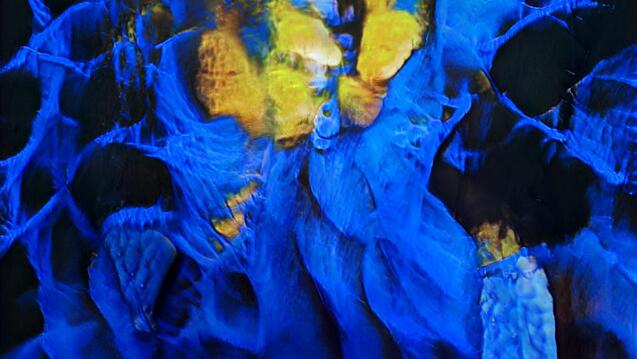
This course explores conceptual, technical, and practical questions of heritage and technology through theory, concepts, and critical making.
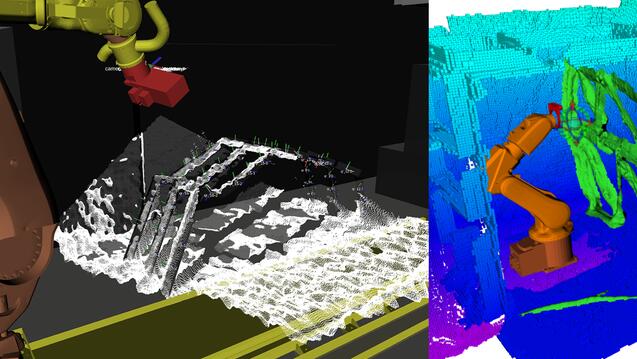
This course follows "48-555/48-755: Introduction to Architectural Robotics," teaching students how robots sense, interpret, and act in the built environment to connect design intent to fabrication.

This course offers a practical introduction to computational fabrication methods supporting exploratory and creative design research.
Beyond the school, at the university level the laboratory has cultivated an "extended family" of collaborators in departments such as human-computer interaction (HCI), robotics, computer science, art and design. They work closely with CodeLab students and faculty, and frequently participate as advisors and collaborators in thesis, dissertations and research projects.
Finally, beyond CMU the lab's research and creative works are routinely discussed, published, and exhibited in leading national and international venues. Our students go on to serve in leading positions in industry — not just in architecture but also in technology design — and in academia as faculty or doctoral researchers in leading programs.
How do people "use" CodeLab's research — in practice, policymaking and beyond?
A university lab is a space of learning and research that generates new knowledge that advances a field. A good university lab also cultivates people with the technical and conceptual skills to play positive roles in society. The CodeLab community accomplishes the former by being remarkably active in research and scholarly conversations across architecture, HCI, robotics, and science and technology studies (STS). The lab's numerous research outputs include publications, exhibitions, and funded projects that redefine the role of computing in architecture and other creative domains. And it accomplishes the latter by cultivating innovative researchers who are both fluent design technologists and aware of technologies' social dimension. We adapt Phil Agre's phrase "critical technical practitioners" to describe this approach. It shows up in the way our students go on to build careers as research leaders in industry or in academia, not only in architecture but in other fields, as well. They also work to transform practices and pedagogies outside of CMU. Our students really are at the center of what we do.
Lydia Schweitzer (MSCD '21) declines to choose a lane.
As an undergraduate math and fine arts major, she was introduced to space science through art — first completing a brief internship with two data-visualization artists from NASA's Jet Propulsion Laboratory and then working with an astronomy professor who was keen to collaborate with a member of the art department.
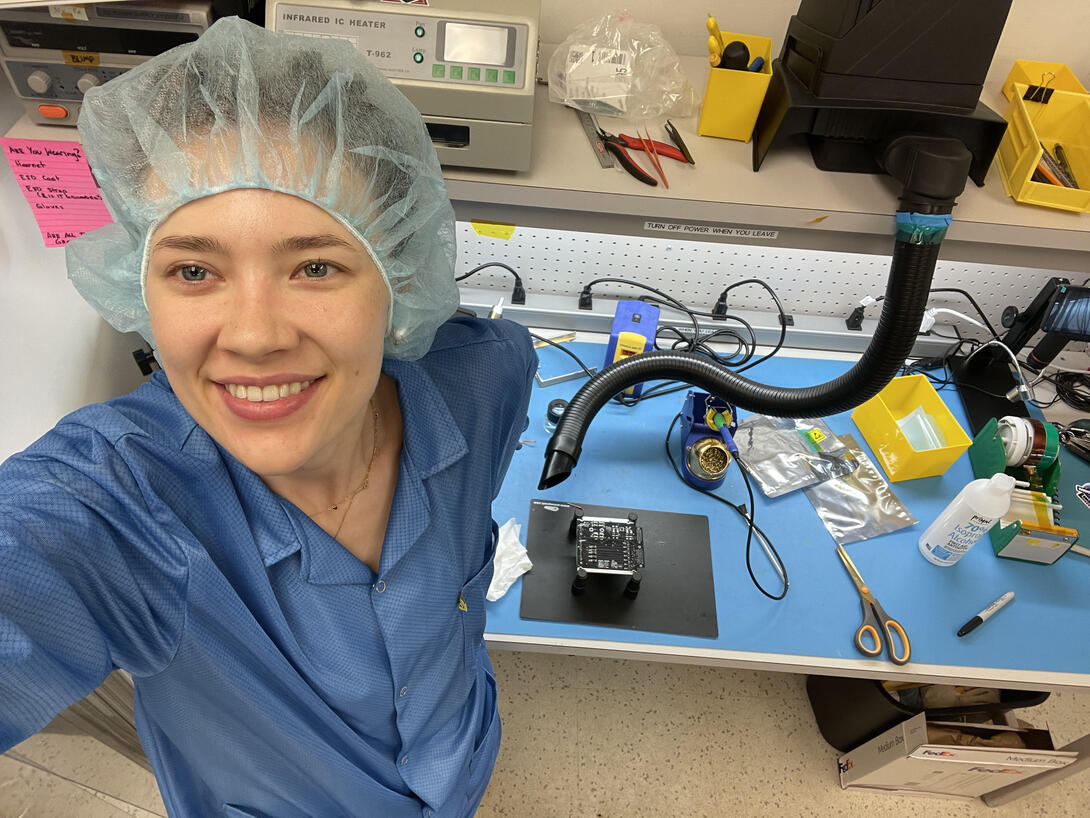
Fast forward to today: Schweitzer is a NASA research scientist through the Planetary Systems Branch of the Bay Area Environmental Research Institute (BAERI), where she is a member of a small Neutron Spectrometer System (NSS) team, whose work helps identify potential water on the moon. Her team operates an instrument on the Volatiles Investigating Polar Exploration Rover (VIPER), and she's worked for several years on the MoonRanger mission, featuring a lunar rover built at CMU. Schweitzer also currently leads a collaborative design-build project creating a communications interface between NASA's NSS instrument and the Japanese Space Agency's Lunar Polar eXploration (LUPEX) rover.
So, what — other than a deep well of curiosity and enthusiasm — took Schweitzer from a math/fine arts bachelor degree to a career as an interdisciplinary NASA scientist?
CM—A's CodeLab: a unique academic environment where research bridges and melds the artistic and the scientific.
"CodeLab's approach is very different from that of other master's or Ph.D. programs; it was my top choice because of the way it combines creativity with technology," Schweitzer explains. "It helps students build a foundation in technology, a common language across fields — but it doesn't think about technology in a standard way. CodeLab understands that tech and art are not two mutually exclusive mindsets: they're an integrated skillset that's useful in nearly every discipline."
For Schweitzer, this integration was reinforced in a memorable conversation with Tim Angert, Machine Shop Manager in the Robotics Institute, as she was weighing multiple post-CMU job offers. "He said to me, 'the most successful people in the world are those who see everything as the same.' Work A, work B: you can move between them, and everything equips you to tackle everything else. The same kinds of problems arise everywhere, and being able to see their similarities allows you to problem-solve creatively across disciplines."
Schweitzer's "integrated skillset" found both a challenge and a home at CMU and in the CodeLab, where research incorporates hard science and math as well as vaguer, more conceptual thinking styles.
"My math-brain side really loves puzzles and problem solving and having logical formulas to explain things. And there's another part of me that knows the world can't be solely explained by formulas, that we can't possibly account for every variable, that the world is fuzzier than we might like it to be, and art is a way to understand it.
"For example," she continues, "exoplanets."
(This is the kind of conversational turn that Schweitzer — a rock climber and classically trained violinist in addition to an artist, a mathematician, and a NASA research scientist — handles with grace and ease.)
"There's no way of seeing what exoplanets look like in the same way we see planets in our own solar system," she explains. "We don't currently have the necessary technology. So, visualizing and understanding a planet outside of our solar system is always a give-and-take between the scientists receiving data from instruments and people who are creative — artists, visualizers." Scientists collect data about an exoplanet, compare it to what they know about our solar system, and share all of their information and hypotheses with artists, who create possible renderings of the planet — which then, in turn, the scientists may use as inspiration for subsequent data collection.
She cites the movie "Interstellar," whose scientist-informed renderings of black holes sparked new questions and research in visualization, 3D modeling, and space science. "Art and science both grew because of that collaboration; we need to accept that they're related and dependent on each other in such a beautiful way."
It's difficult to imagine an endeavor more contingent on perfect mathematical precision than space travel, but Schweitzer's experience tells a different story.
"Human spaceflight is absolutely a combination of hard numbers and fuzzy flexibility. Supporting astronauts in space requires accounting for their humanity: their emotions, biological responses, physical abilities.
"And even when we do account for it, I don't think I've met anyone for whom every mission has gone to plan. You plan and prepare, but space operations are extremely fluid; if you go into a spaceflight mission with your brain entirely hard-coded and inflexible, you're setting yourself up for failure. In this work, you have to be adaptable, creative, flexible, open-minded."
Schweitzer's time at CMU and in CodeLab — collaborating on research with cross-disciplinary colleagues in the Robotics Institute — was a crucial step in building the kind of adaptability that allows her and her colleagues to prepare, execute, troubleshoot, and optimize a NASA mission.
Research, she says, is simply a matter of "observing the world, noticing where it can grow, and then trying to grow it." And that growth is always a matter of both science and art: "The world is fuzzy; that's just how it is. We have to — no, actually, we get to — understand it as such."
CM—A Publishing News: in otherwards, "after school" and "x-change" 2025
This past month, CM—A launched its publishing imprint, in otherwards, and first title, "after school," co-produced with the Carnegie Museum of Art. The imprint and publication officially launched on Thursday, November 13, 2025 at a panel hosted at the Carnegie Museum of Art. CM—A is also proud to announce the launch of the 2025 edition of "x-change."

in otherwards
in otherwards is the publishing imprint of Carnegie Mellon University School of Architecture, directed by Tuliza Sindi. The imprint aims toward epistemic plurality, both foregrounding prominent thought and practice, as well as negated ones such as Indigenous, diasporic, and Global South perspectives. Through books, folios, and broadsheet formats, the imprint takes interest in critical explorations on how spatial vocabularies, technologies, materialities, and cosmologies shape the built environment, and how space, culture, technology, and power co-construct each other.
In this effort, publishing at in otherwards is treated as a form of worldmaking and unmaking, and a site for relationing expansive futures.

after school
"after school" attends to the material, political, and social conditions that shape public education today. Bringing together architects, artists, educators, students and activists, the publication studies the states and stakes of schooling across classrooms, corridors, itinerant sites, and cooperative experiments. Developed alongside the exhibition of the same name at the Carnegie Museum of Art and co-produced with in otherwards, "after school" examines how public education has been built, organized, contested, and reworked across its buildings as social infrastructures.
"after school" was co-edited by Theodossis Issaias and Alyssa Velazquez. It was published by in otherwards, the imprint of Carnegie Mellon University School of Architecture and co-produced with the Carnegie Museum of Art.

"x-change" 2025 (upcoming release)
Carnegie Mellon Architecture is proud to announce the launch of "x-change," our annual publication showcasing work from first-year students to Ph.D. candidates. Inaugurated in 2017 as "EX-CHANGE," the publication has since evolved into "x-change" to more pointedly reflect its role as a platform for critical discourse and reflection. This year’s theme, "market x-change," invites us to reflect on what we, as a school, offer as contributions to the intellectual and speculative economies that shape the discipline. The 2024-25 course offerings, and the work generated, stake their place in this exchange, offering up their claims with clarity, care, and a call for slow and deep engagement.
The book was designed by Studio Elana Schlenker and Jordi Ng, and edited by Tuliza Sindi, with co-editing support by Meredith Marsh. The exhibition of work from the publication, "Cabinets of Curiosities," was on view in the College of Fine Arts Great Hall from August 25 to September 5, 2025, and was designed by Jared Abraham and Heather Bizon.
The 2025 "x-change" book will be available in both print and digital editions. To request a printed copy by mail, please complete this form. The book is available free of charge, while copies last.
About "2024-25: market x-change"
Save the Date: "x-change" Book Launch Jan. 16
Save the Date: PJ Dick Innovation Fund Round 2 Awardees Celebration
On January 23, CM—A will celebrate work from the second round of PJ Dick Innovation Fund Faculty Grants Program recipients. Throughout 2025, the second round of grant recipients have been hard at work on eight research projects and four experimental courses.
The PJ Dick Innovation Fund Faculty Grants Program supports projects that address the school’s three pedagogical challenges: climate change, social justice and artificial intelligence. It supports the diverse work of Carnegie Mellon Architecture’s faculty in creative practice, professional practice, artistic practice, funded research, participatory design, design build, curation, scholarship, critical and digital humanities, and more.
Faculty & Staff News
- November 3, 2025: PhD-AECM candidate Joseph Murray and Associate Teaching Professor Joshua D. Lee present their new book "Sustainable Design for Uncertain Futures: Dialogues on Time-Based Architecture," during a Zoom webinar to CR0WD (Circularity, Reuse, Zero Waste Development), based at the Susan Christopherson Center for Community Planning in Ithaca, N. Y. The event also featured CR0WD founders Jennifer Minner and Felix Heisel, professors at Cornell University, who are included in the book. The book, co-edited by Murray and Lee, includes 14 time-based sustainable design strategies, such as adaptive reuse, preservation, mass customization, disassembly and reuse, and open building. By presenting these strategies through dialogue, the editors demonstrate the collaborative thinking needed to address growing uncertainty in the built environment and provide a framework to consider the technical and management approaches that emerged.
- November 9, 2025: Special Faculty Tommy CheeMou Yang delivers a public Zoom workshop and lecture "Situated Entanglements: Ethnography as Architectural and Urban Model" at National Cheng Kung University in Taiwan, invited by Department Chair & Program Chair of Techno Art, Cheng Luen Hsueh. His lecture explores ethnography as a design and urban method, tracing how oral histories, material practices, and digital worlds shape architectural imagination. Drawing from projects including "Compoundologies" and "Game Worlds, Real Worlds," Yang examines architecture as a relational practice of care, craft and co-making across communities, technologies and landscapes.
- November 24, 2025: Pidgin Press accepts a paper co-authored by Special Faculty Niloufar Alenjery and Special Faculty Tommy CheeMou Yang to be published in Pidgin Issue 34 in early spring 2026. The essay examines how architectural knowledge emerges not from abstraction but from intimate, embodied encounters with land and material. Drawing from practices of walking, gathering and making, the paper argues for a mode of architectural experimentation grounded in reciprocity, tactility, and ecological attunement.
Alumni News & Updates
We invite all Carnegie Mellon Architecture alumni to keep us up to date on their awards, professional milestones and more. Send us your updates with a brief description and link to more information.
- Carolyn Caranante, AIA (B.Arch '09, MSAECM '10), Senior Project Manager at Shawmut Design and Construction, has been named to Professional Women in Construction, New York’s 20 Under 40: Women in Construction. This recognition reflects Carolyn's contributions to the built world, local communities, and the next generation of builders. Carolyn's project portfolio includes work on some of New York’s most iconic, skyline-shaping buildings, including One World Trade Center, One Manhattan West, One Vanderbilt, 270 Park Avenue, and the Barclays Center.
- Longney Luk, Assoc. AIA, NOMA (B.Arch '21 , MSSD '22), Project Associate Architect at DesignGroup, has been awarded a 2025 Paula Maynes ARE Grant. The grant recognizes five emerging architects for their exceptional commitment to the profession and their meaningful contributions to their communities.
- Autumn Dsouza (M.Arch '24) published a paper to the peer-reviewed journal "Interstices: Journal of Architecture and Related Arts" (Issue 24, "On Water: The Aqueous in Architecture"). The paper, "Sympoietic shores — An interscalar architecture for Sri Lanka’s coastal futures," expands on her M.Arch thesis, examining coastal Sri Lanka as a site of colonial, ecological, and architectural entanglement.
- Raymund Ryan profiled the residential project Frame 122 by Brent Buck Architects, headed by Principal Brent Buck (B.Arch '03).