
Newsletter v046: The CM—A Student Experience
Dear School of Architecture Community,
As we begin the 2026-27 academic year, we are confronted with many challenges. Foremost among those is our recruitment of exceptional international students who have always enriched the educational experience at the school. For many admitted international students, this summer proved to be a difficult time as they sought student visas that unfortunately were not given. As the federal government takes a hardline position on immigration, international students coming for higher education are facing growing roadblocks that include visa acquisitions, travel freedoms, and most consequentially, employment. While much of this is outside of our control, we are truly privileged to have these students as part of our school and recognize the difficulties they overcame to get here.
Carnegie Mellon University's reputation globally, and especially in South and East Asia, exceeds its national reputation. As the university's rankings go up, we are similarly seeing the rankings of our Bachelor of Architecture (B.Arch) program improve (Niche and Black Spectacles). Our ability to attract exceptional students is possible because we continue to evolve our curriculum to better reflect the knowledge and skills that architects will need for their future practice. This began with the Pedagogies 2020 framework, where we defined three grand challenges — climate change, artificial intelligence, and social justice — for the school to collectively work on through its programs and research. The B.Arch program went through considerable revisions; just last year, with professor Jeremy Ficca taking on the role of Associate Head for Design Fundamentals, it has gone through further refinements. In this newsletter, Jeremy shares his thoughts and reflects on the process for the changes that he has brought to the curriculum.
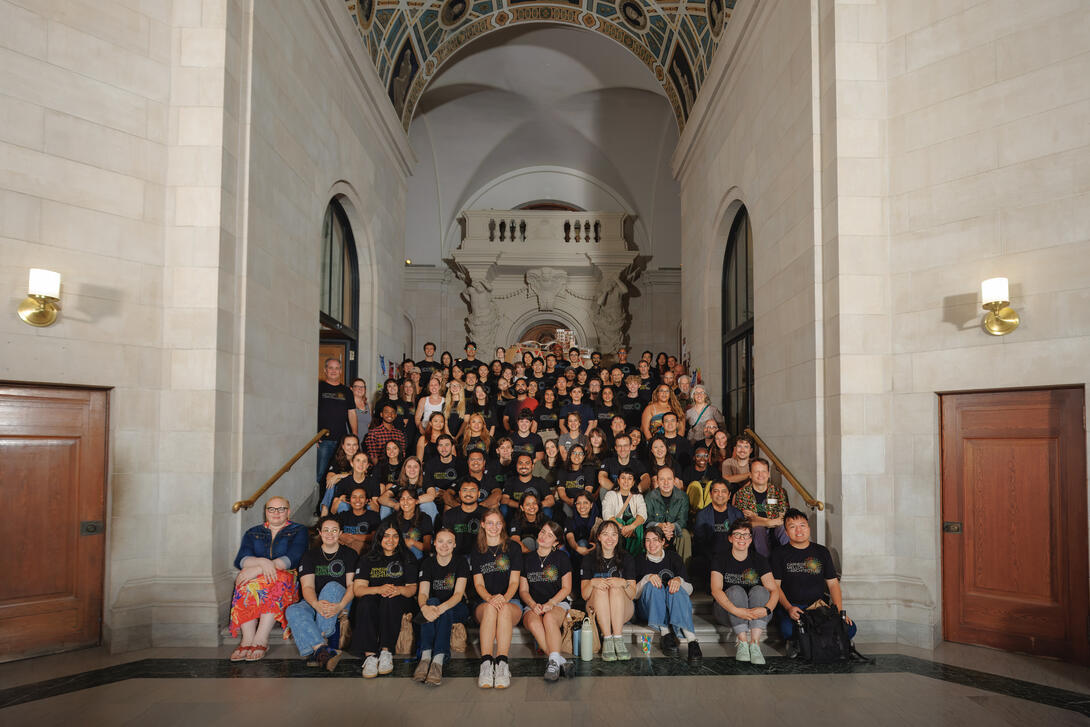
For this year's newsletter, we have decided to make it the year of the CM—A student experience. The best way to reflect on an education is to understand it from the perspective of the student. There are many opportunities in addition to the courses we teach that enrich our students' educational experience. These include travel, study abroad, student organizations, competitions and research. Our hope this year is to provide a window into this busy but enriching life of the Carnegie Mellon Architecture student.
I wish you all a wonderful academic year!
Omar Khan
Professor & Head of School
Professor & Head

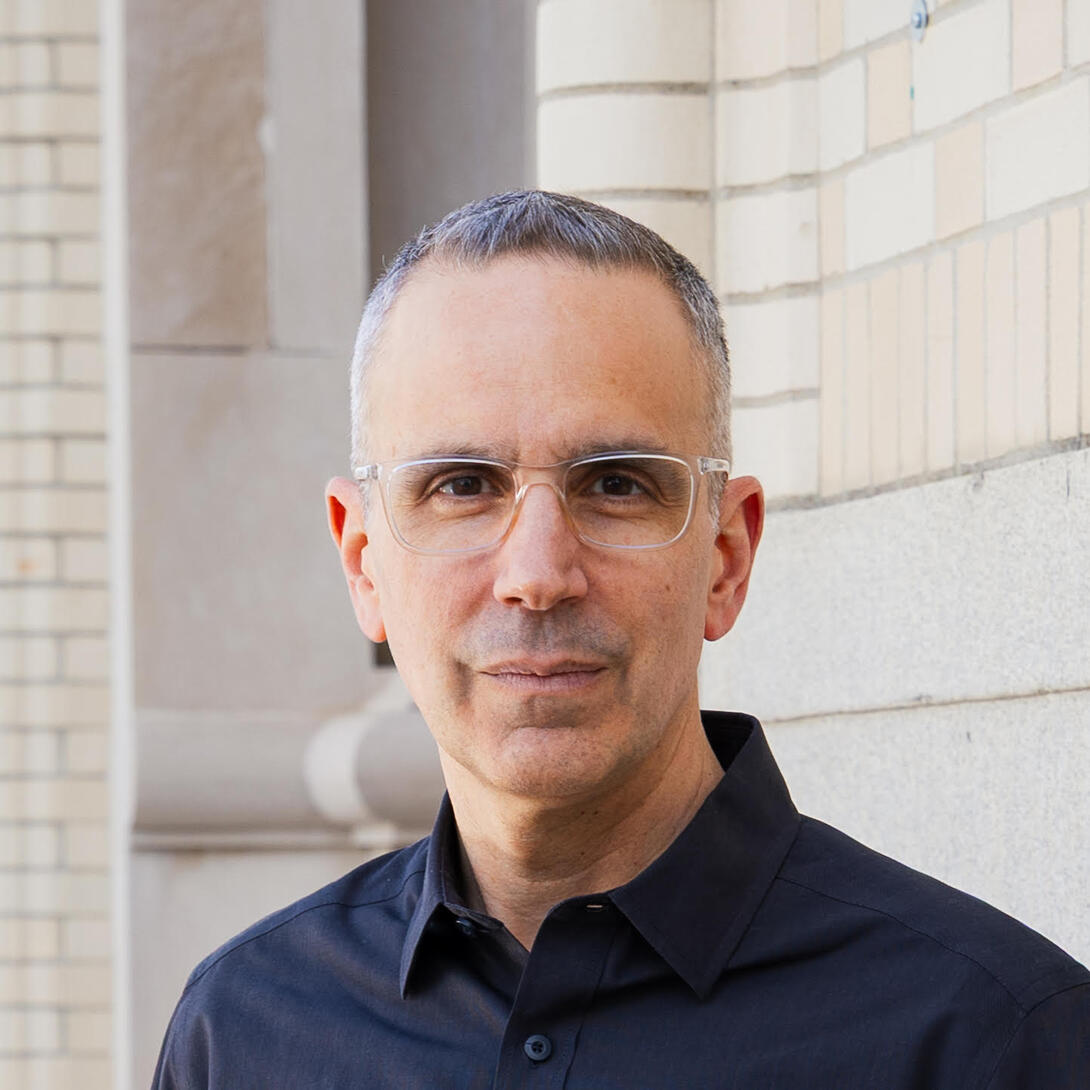
This academic year, the CM—A alumni newsletter will highlight some elements of the student experience in the School of Architecture. First up: a conversation with Associate Professor and Associate Head for Design Fundamentals Jeremy Ficca about a new framework shaping the undergraduate studio sequence.
Can you describe the origins of this effort to retool the studio curriculum?
Last year, when I took the position of Associate Head for Design Fundamentals, I convened a series of meetings with the studio coordinators to review the core studio sequence and articulate the priorities and responsibilities of the studio core to the curriculum and, ultimately, to the students. I've taught here for some time, across several studio levels. Structuring these faculty conversations was not due to lack of familiarity, but rather a desire to foster discourse, develop shared understanding, and hopefully contribute to the "esprit de corps." This collective effort laid the groundwork for the core studio framework, which outlines the focus of the core studios and their integration within the undergraduate curriculum.
This process was also motivated by conversations I had with students during the pandemic. When Omar joined as Head of School in 2020, he convened a series of virtual "pedagogies" meetings with faculty, staff and students in order to fully understand the school and as a way for all of us to think critically about the school's strengths and blind spots. One recurring theme that stood out in those conversations was students' desire for greater coordination across the full arc of the core studio sequence.
What are the major differences between the updated core curriculum and its previous iteration?
Perhaps the biggest difference is a clarified "scaffold" that establishes clear connections among core studios — a framework that sets out the conceptual streams and priorities for a given sequence of studio courses, while allowing for degrees of interpretation and agency among coordinators and instructors. This requires careful calibration. Our studios are invariably shaped by the faculty teaching within them, but I believe the core studios are bigger than any one of us as faculty. The scaffold establishes curricular durability.
I also believe it's important for us, as a school, to share this framework with the students, who are at the heart of the school's vitality and culture. They should understand the full arc of the studio core, what its priorities are, and how that integrates the knowledge they are building beyond studio.
Another change is articulating the conceptual strands that underlie the studio core — not just the skills and competencies that students should have gained after completing a particular studio, but also the habits of mind that connect and transcend those competencies.
CM—A Undergraduate Core Studio Framework
How do you build a stronger framework without homogenizing the curriculum, or stripping it of its "Carnegie Mellon-ness"?
The core studio curriculum establishes a shared foundation that affords students degrees of exposure to broader topics, which are often elaborated on in the advanced option studios in students' final three semesters. These option studios are topic driven and offered by faculty as forums to introduce students to disciplinary concerns. Some studios are also a way to introduce forms of design-based research. One element of "Carnegie Mellon-ness" is a culture of entrepreneurialism and bottom-up processes that support a breadth of ideas and approaches. The studio scaffold delineates between a coordinated and cohesive core and the rich diversity of offerings among the upper level option studios. I believe this clarity benefits both.
In restructuring this curriculum, how did you think about what CM—A is preparing students for? Are you preparing students for the profession of architecture as defined by NAAB or the AIA, or are you preparing them for something more general, or more nebulous?
Many of us are familiar with the idea — however romanticized and seemingly foreign it might be — that higher education affords a luxury of time that allows your mind to wander and expand.
Part of me holds steadfast to that notion of the undergraduate experience: this idea of self-actualization, of studying a discipline but also discovering who you are. Curiosity emerges in this space of time. And I believe that this remains an important facet of the undergraduate university experience.
But I also recognize that this is built on significant privileges of time and resources. Higher education is changing rapidly, and this is accelerating through the emergence of AI. Understandably, the "return on investment" of these resources is placed under greater scrutiny. For the students in our Bachelor of Architecture program, five years is a long time, with so much potential for change — within the profession but also society writ large. So, I feel a huge responsibility for our students not only to be employable, but also to experience empowerment and agency in the world and not just exist at the whims of the market. This requires a robust and evolving curriculum.
And not just for now. One of our challenges and responsibilities as educators is to see further horizons, to try to understand (and hopefully help shape) what kinds of futures our students may inherit.
It's important for "futures" to be understood as plural, not singular. And despite the fact that those horizons are blurry, and despite the fact that it's safer for us to adhere to current norms, we owe it to our students to educate them not only for practice today, but for concerns that will likely be critical in 15 and 20 years. This is quite challenging and made all the more opaque through the rapid development of AI, but it is an essential project.
Through these curricular changes, we hope to prepare students to dive now, into practice and work, but also to have the appetite to reinvent themselves, the stamina to perpetually learn, and the curiosity to imagine new possibilities for the world they will shape.
I'm endlessly interested in how to help each student become the kind of person who is set up for that.
In Photos: Student Travel Awards
Each year, Carnegie Mellon Architecture offers awards for undergraduate, master's and Ph.D. students in the fall and spring semesters. The annual awards program provides over $100,000 to support travel, projects, internships and research and recognizes student work in public interest design, design and representation, sustainability and professional promise.
We caught up with several of the winners of the fall 2025 awards; they've shared images and reflections from their travels. The awards highlighted are the Gindroz Prize for Summer Travel and Study in Europe, the Luther S. Lashmit Traveling Scholarship and the Louis F. Valentour Traveling Scholarship. The faculty members who served on the jury for these awards in fall 2025 were Diane Shaw (Chair), Doug Cooper, Neal Lucas Hitch and Nida Rehman.
Check out the article below to peruse their images, which include beautiful drawings and photography from around the world.
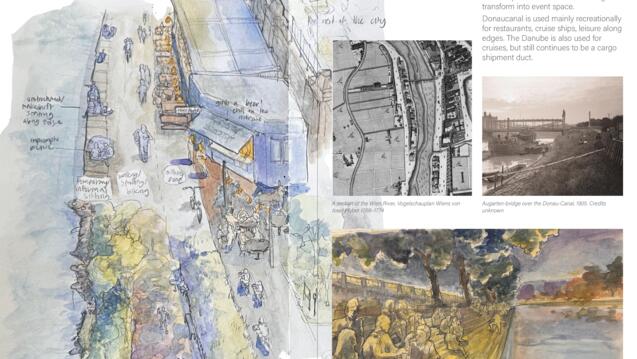
Carnegie Mellon Architecture's annual awards program supports summer travel for our students. Winners of the fall 2025 Gindroz Prize, Luther S. Lashmit Traveling Scholarship and Louis F. Valentour Traveling Scholarship share images and reflections from their travels.
Upcoming Events

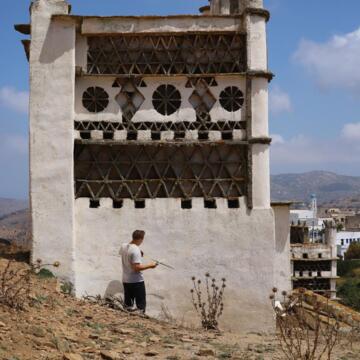
Carter Nelson (B.Arch '17), recipient of the 2022 Delbert Highlands Travel Fellowship, documents a dovecote on the Greek island of Tinos.
Last Chance to Apply for the 2027 Delbert Highlands Travel Fellowship for Alumni: Now Offered Annually
There are only four weeks left to apply for the 2027 Delbert Highlands Travel Fellowship. Formerly offered on a biennial basis, the fellowship is now offered every year. We are excited to bring the fellowship into an annual offering along with our other awards and the opportunity this will offer to support more alumni research in the coming years. Applications are due Friday, October 30, 2026, at 11:59pm ET.
The $12,000 fellowship supports alumni travel to study collections belonging to locales to promote the professional development of awardees and contribute to the richness of our surroundings. Please reach out to Meredith Marsh with any questions.
Faculty & Staff News
- The paper "Knit Joinery: Incorporating Multifunctional Materials with Single-Bed Machine Knitting" won the Best Paper award at the Designing Interactive Systems (DIS) Conference. Authored by Yi-Chin Lee, Associate Professor Vernelle A. A. Noel, Scott E Hudson, James McCann and Lea Albaugh, the multidisciplinary work was developed in collaboration with architects, artists, scholars, designers, and computer scientists at CMU and the University of Michigan.
- Associate Professor Sarosh Anklesaria, Associate Professor Stefan Gruber, and Curator for Public Programs and Director of Publications Tuliza Sindi were awarded a Graham Foundation grant on behalf of the Remaking Cities Institute (RCI) for their forthcoming publication, "Making Alive! Reworlding Cities: Decommodified · Regenerative · Pluriversal."
- On October 7, the Frank-Ratchye Studio for Creative Inquiry will host "The Urban Classroom: Sankofa Bamboo Greenhouse," a public lecture with Special Faculty Vicky Achnani and his collaborators, Vikki Ayanna Jones from Sankofa Urban Farm and Denele Hughson from Grow Pittsburgh.
Alumni News & Updates
We invite all Carnegie Mellon Architecture alumni to keep us up to date on their awards, professional milestones and more. Send us your updates with a brief description and link to more information.
- We are saddened to inform our alumni community of the passing of Stephannie Bartos, who joined CMU as the T. David Fitz-Gibbon Professor of Architecture in 1996 and spent a decade with the university. Stephannie will be deeply missed by her family, friends, colleagues and students.
- KPF announced the promotion of 13 new Directors, 39 new Senior Associate Principals and 59 new Associate Principals across six of the firm’s global offices. Many CMU alumni were among those promoted, including Director Andrew Werner, AIA, NCARB (B.Arch '09); Senior Associate Principals Chandler Archbell (B.Arch '17), Natale Cozzolongo (B.Arch '09), Alex Huseman (B.Arch '16) and Rachel Muse (B.Arch '18); and Associate Principals Christina Brown (B.Arch '20, MSSD '20), Fah Kanjanavanit (B.Arch '17) and Fan Yang (B.Arch '18).
- Amy Maceyko, AIA, LEED AP, NCARB (B.Arch '99), is the new co-managing principal of the Pittsburgh studio of Perkins Eastman.
- Giacomo Tinari, AIA, LEED GA (B.Arch '11), is this year's honoree for AIA Illinois' Early Career Achievement Award - Young Architect.
- Rachel Zsembery, AIA, LEED AP (B.Arch '00), is featured in the latest issue of the College of Fine Arts Magazine. As our graduation ceremonies speaker this past May, Rachel provided an inspirational roadmap to people-centered design, through a skill set she calls "architecture AND."
- Dr. Jihyun Park, CPHC, LEED AP, WELL AP (PhD-BPD '15), was a panelist speaker at the International Well Buildings Institute conference on September 10. She contributed expertise on Korea's leadership in IAQ to the international survey on advances in indoor air policies by 17 nations.
- Nominations are now being accepted for the 2027 Alumni Awards, due December 13. These annual awards honor members of the CMU alumni community who have made an impact on their industries, their communities, their alma mater and others' lives around the world.
- Architecture Classes of 1974 and 1975 Endowed Merit Scholarship
The CMU School of Architecture Classes of 1974 and 1975 are creating an enduring legacy: an endowed merit scholarship for present and future architecture students. Please join them in supporting this and the next generations of CMU architects.
Inspired by reconnecting at their 50th reunion during Spring Carnival 2025, 23 alumni have already pledged $44,250 toward the new Architecture Classes of 1974 and 1975 Endowed Merit Scholarship. The goal is within reach: at least $50,000 in pledges by next year is needed to keep the endowment account open, followed by full payment of the funds within four years.
Once funded, this endowment will provide scholarship assistance, in perpetuity, to present and future CMU Architecture students. It will be the first scholarship established by a graduating class in the School of Architecture — an example of what alumni can accomplish together.
We invite fellow alumni, friends, and supporters of CMU Architecture to help close the gap and fully fund the account now held by the university. Your cash gift can help move this scholarship forward to its first student award sooner. You can contribute online to help reach the goal.
To learn more, please contact Rebecca Abrams, Senior Director of Development, at rebeccaabrams@cmu.edu or 412-268-4849.
Carnegie Mellon Architecture Newsletter
The Carnegie Mellon Architecture Newsletter comes out three times per semester. It includes interviews with CM—A alumni and faculty and deep dives into research, events, projects and work happening at the school. Started in 2010 as a print publication known as "Span," it moved online under the name "e-SPAN" before coming to be known as the CM—A Newsletter. Have an update you'd like to share? Contact us.