Newsletter v044: The Remaking Cities Institute
Dear School of Architecture Community,
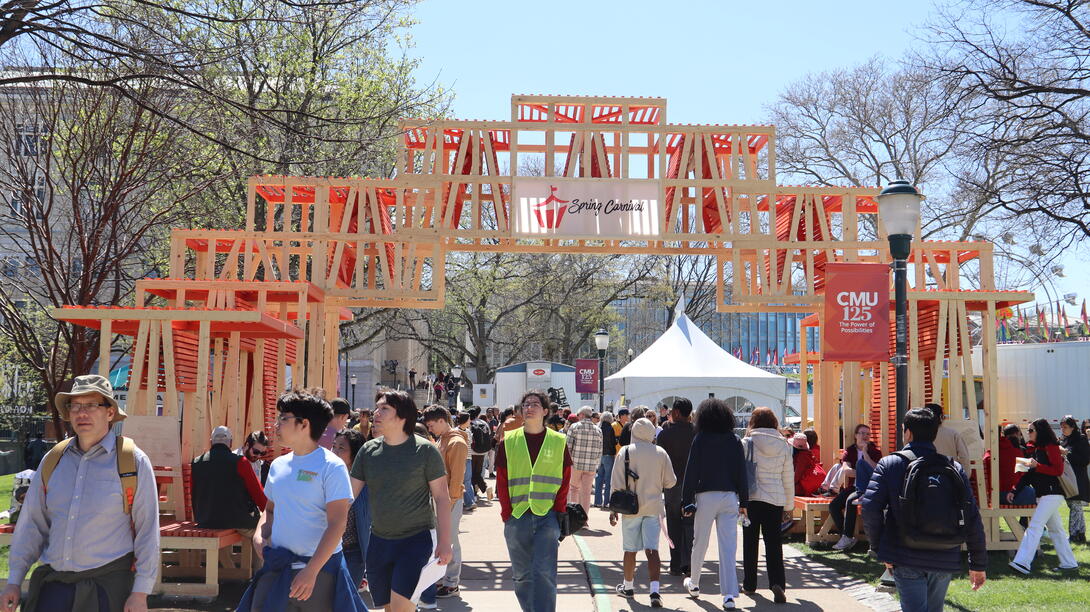
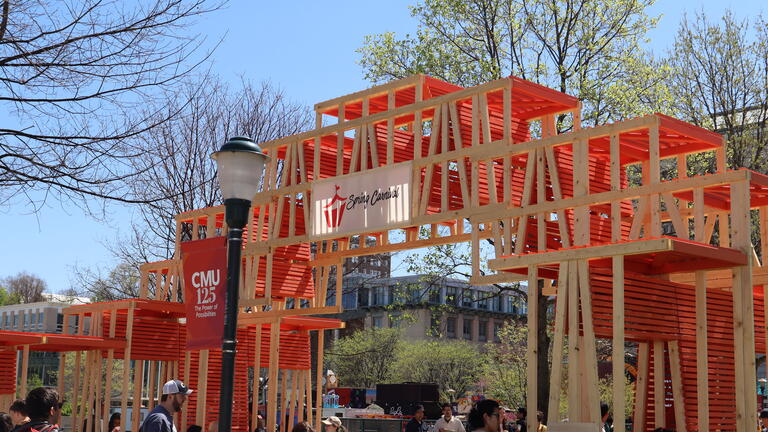
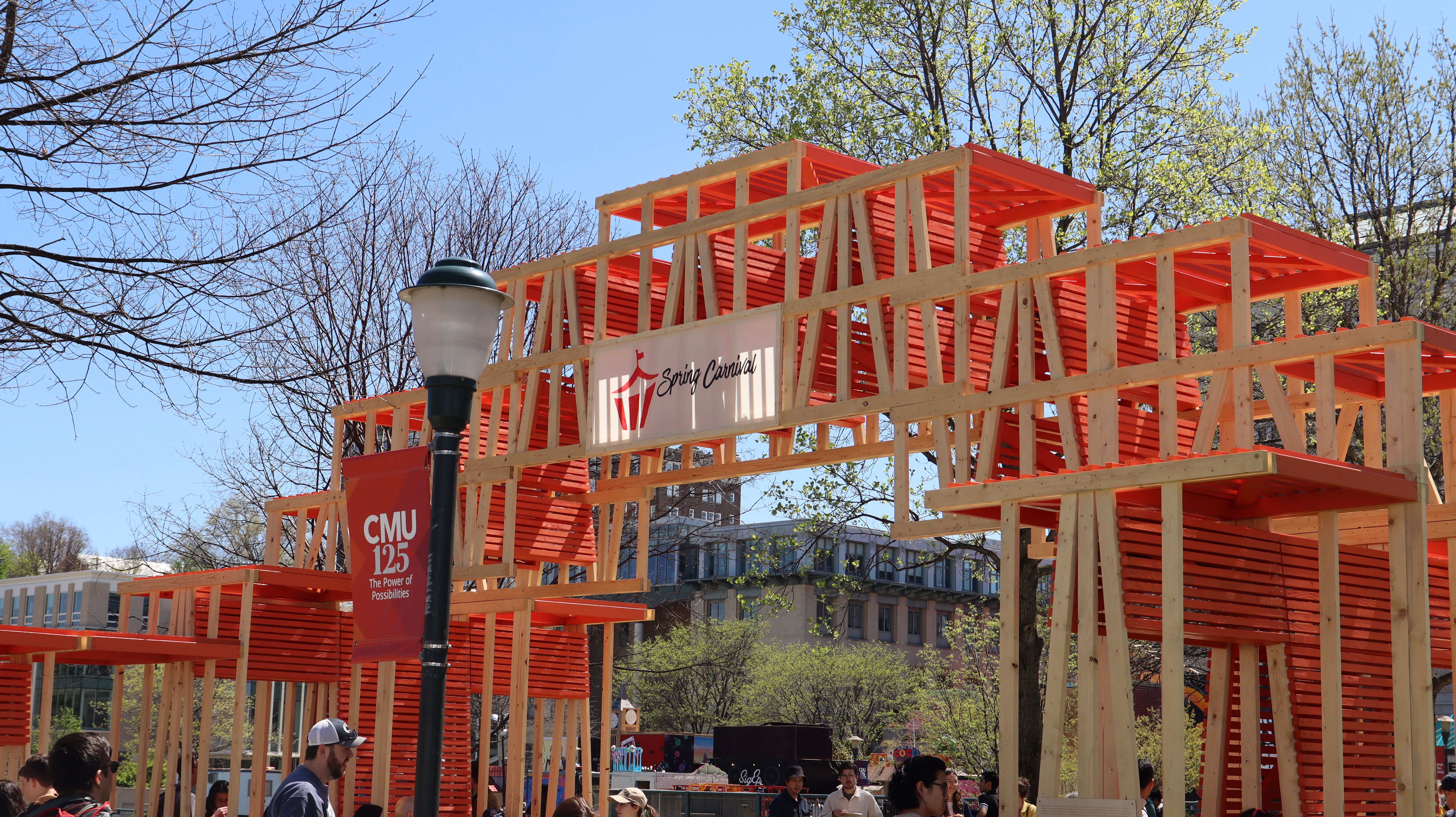
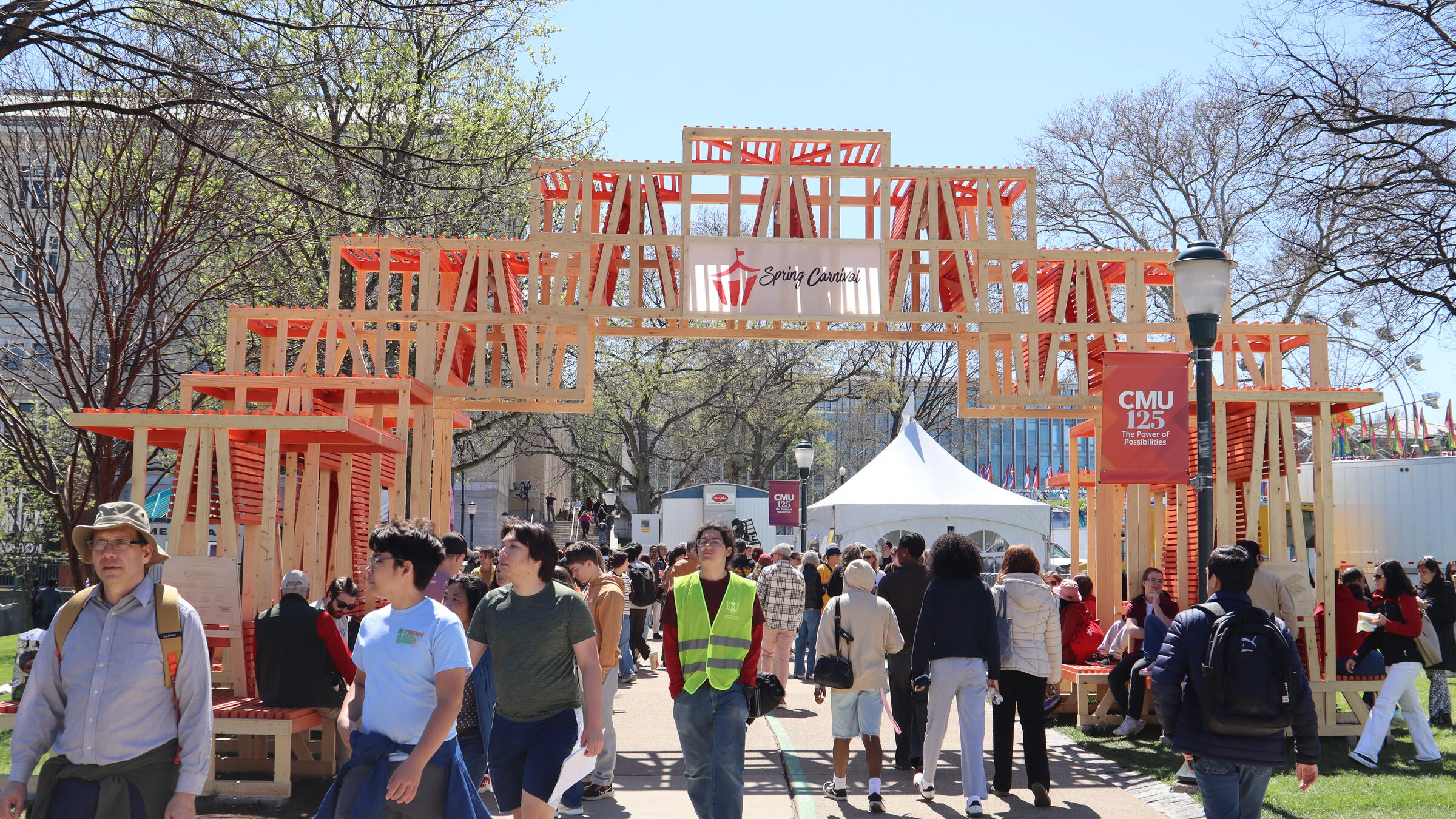
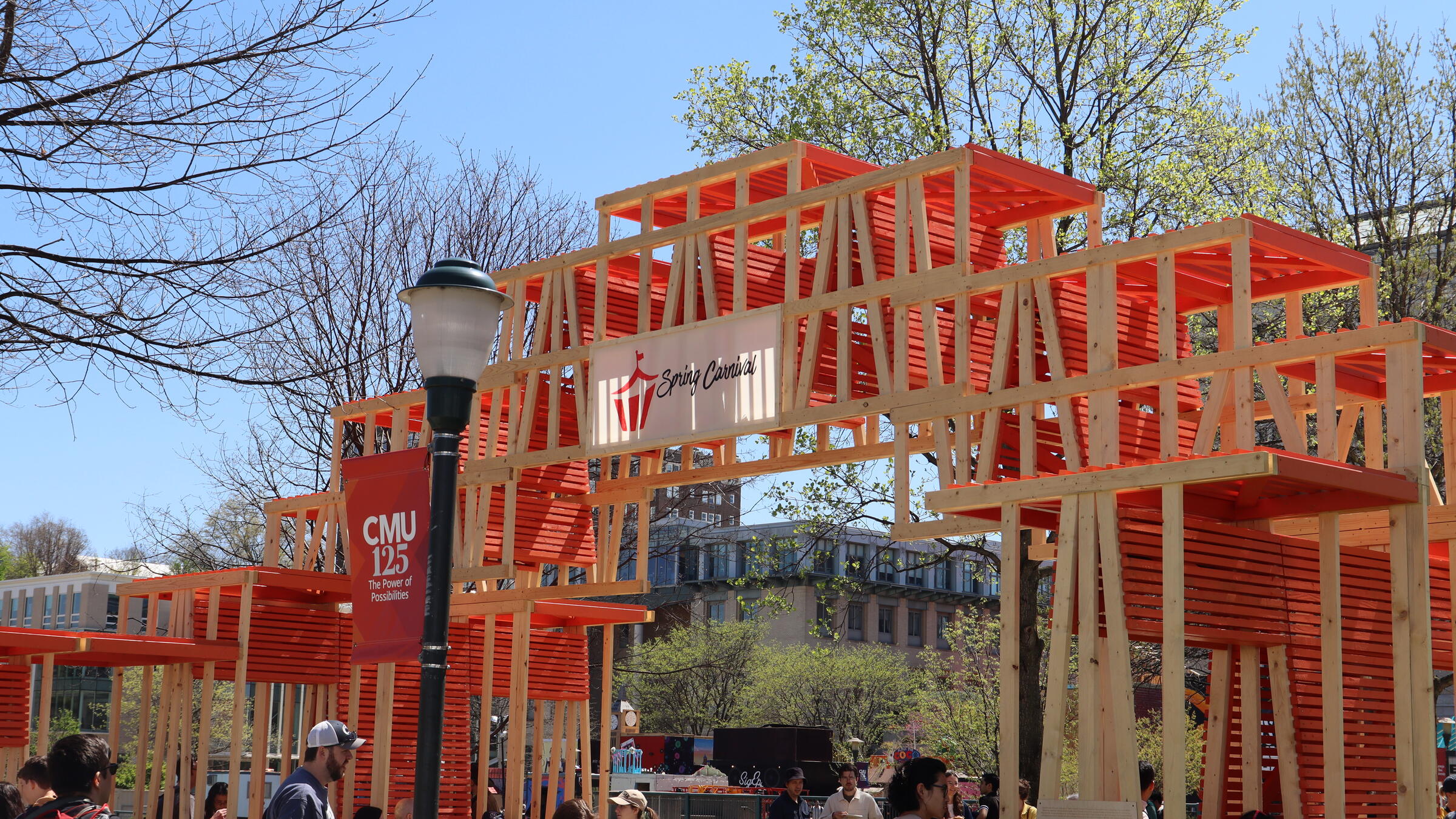
It's hard to believe that the semester is almost over. At the beginning of the month, we welcomed springtime weather during Spring Carnival. CM–A students designed and constructed a welcoming entryway pavilion that served as the gateway to Carnival. The pavilion was the epitome of “engaging”; over the three days of Carnival, people of all ages could be seen lounging on, lingering around, and passing through the pavilion.
As we come to the end of the semester, I want to congratulate all the soon-to-be graduates. Carnegie Mellon Architecture students are among the hardest working, creative, and innovative people in the world. The graduating classes of December 2025 and May 2026 will come together on May 8 to share their accomplishments with their families, friends and faculty. This year’s graduating class will be among one of our largest, with more than 150 graduates from the B.A., B.Arch, M.A., M.Arch, M.S. and Ph.D. programs.
This edition of the newsletter highlights the Remaking Cities Institute, which has undertaken a participatory process to reimagine its research foci. We also reflect on last week’s announcement of the student recipients of our Spring 2026 Architecture Awards, which provided $30,000 to recognize undergraduate, master's and Ph.D. students for professional promise, public interest design and sustainable design.
This spring, CM–A students continued to demonstrate their role as global leaders. Our students have been featured in prestigious conferences and publications worldwide, such as Dr. Suzy Li (PhD-BPD ’26), who led research on smart surfaces and climate-resilient policymaking and guidelines for human comfort design. Her findings, which reveal that Pittsburgh’s underserved neighborhoods suffer higher temperatures due to increased asphalt and sparse canopy cover, exemplify the dedication of our students. By tackling these systemic global challenges with data-driven research, our students are not just identifying today's problems but are actively engineering the sustainable solutions of tomorrow. Their work is reimagining our world and paving a clear path toward a more resilient future.
Congratulations to the graduating classes of 2025 and 2026! And congratulations to all our continuing students for successfully completing another rigorous semester and rounding out a remarkable academic year. My deepest gratitude goes to our faculty, staff and alumni, whose unwavering support brings these students’ achievements and dreams to fruition. Thank you for your profound devotion to scholastic excellence and for your commitment to improving the world through your creativity, innovation and diligence.
Dr. Erica Cochran Hameen
Associate Professor; Co-Director, Center for Building Performance & Diagnostics (CBPD); Track Chair, Doctor of Design (DDes) & Director for Student Relations
Associate Professor, CBPD Co-Director, DDes Track Chair & Director for Student Relations

The Remaking Cities Institute
a research platform for urbanism, participatory action, and community design
This year, the CM–A newsletter has asked: what is academic research for?
Leaders of venerable CM–A research centers and labs have elaborated on the challenges they face and the place of scholarly research in meaningfully addressing those challenges.
Meanwhile, one of CM–A’s most storied research platforms, the Remaking Cities Institute (RCI), has been thoughtfully and steadily doing what its name suggests: redesigning its very approach to research for an era when its work is sorely needed.
Established in 2006 with funding from the Heinz Endowments, RCI initially sought to honor the legacy of participatory urban design pioneer David Lewis by combining research and teaching with real-world engagement in cities and communities.
Nearly 20 years after RCI’s founding, Associate Professor and center director Stefan Gruber recognized the need to reimagine and refocus the institute’s work. He and his RCI colleagues approached this opportunity as they do all of their endeavors: with a nuanced participatory process.
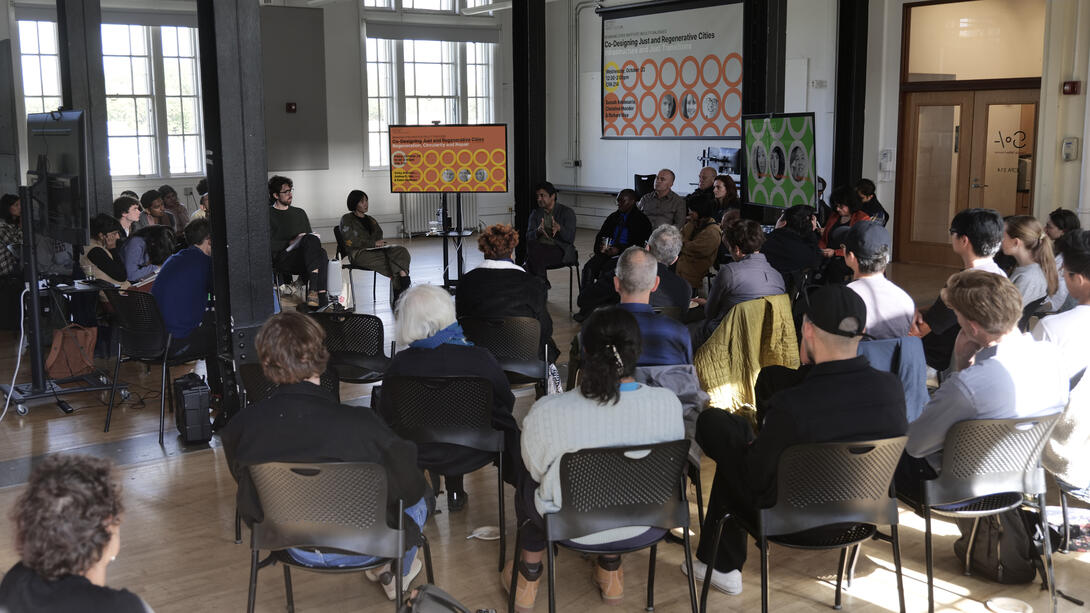
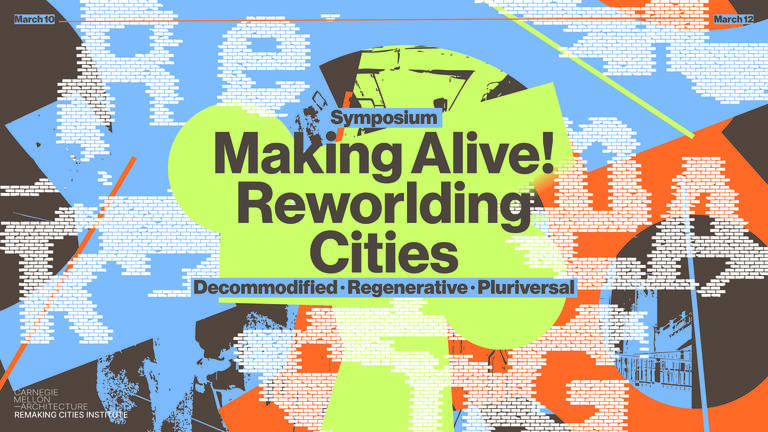
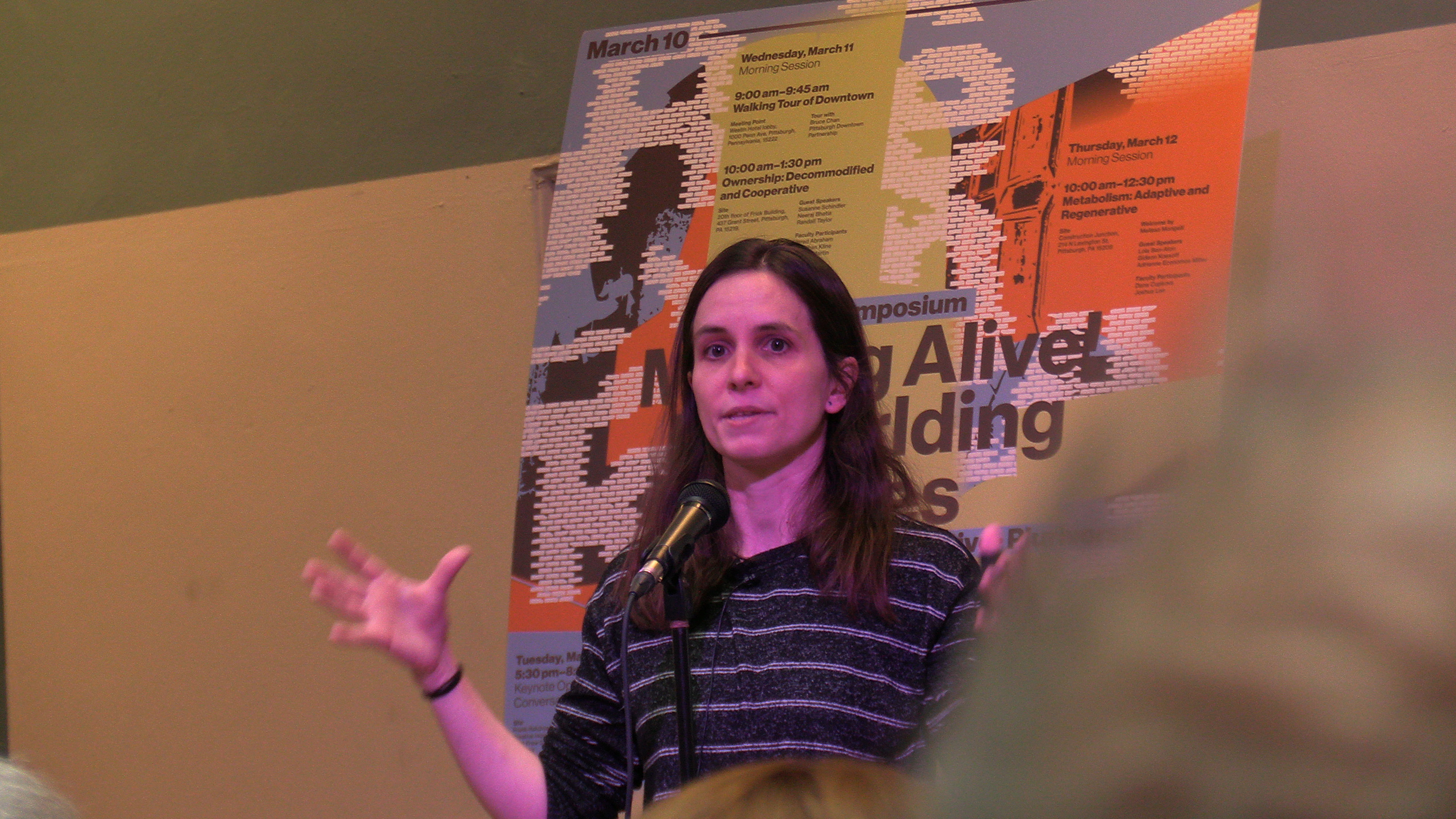
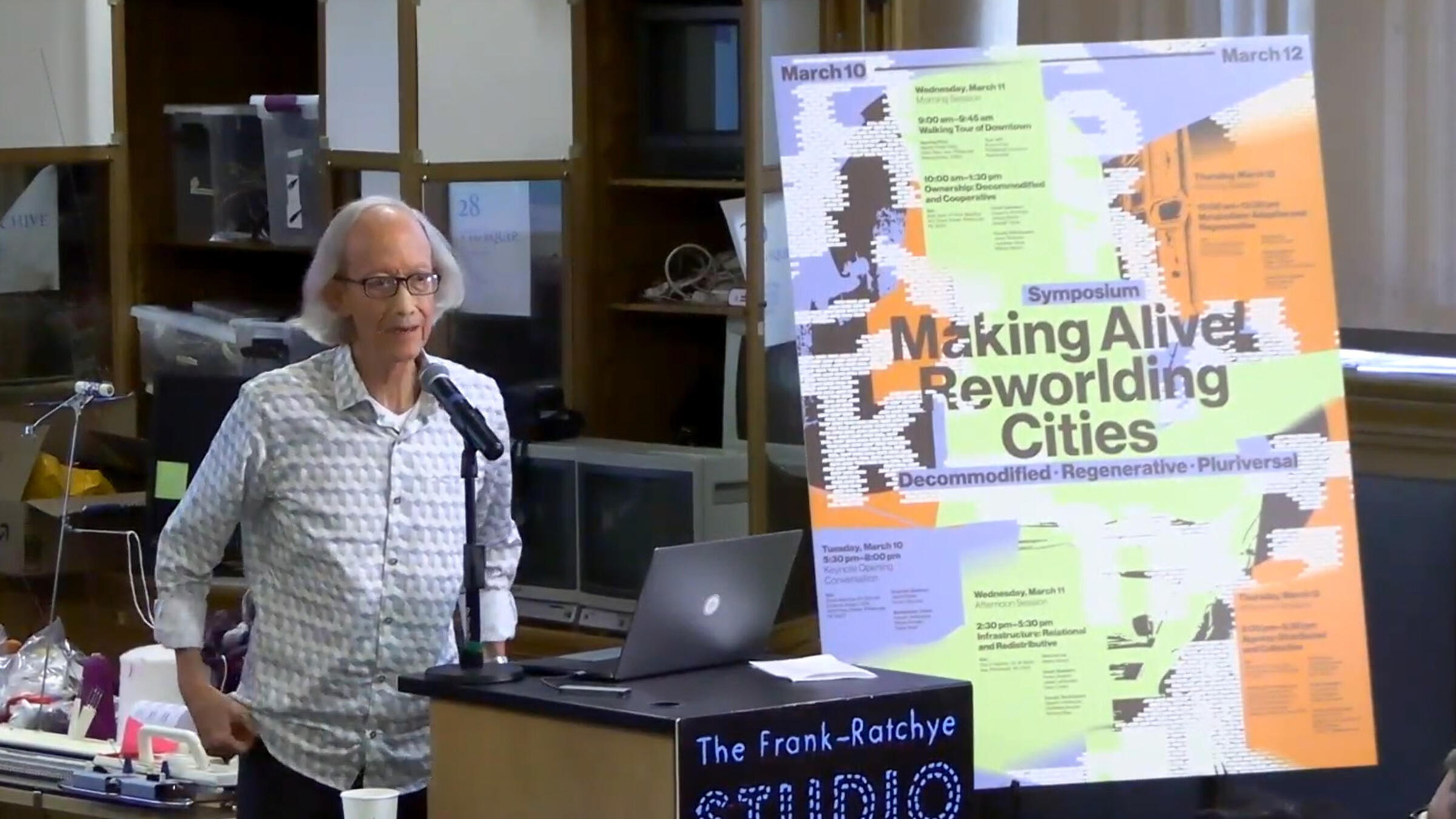
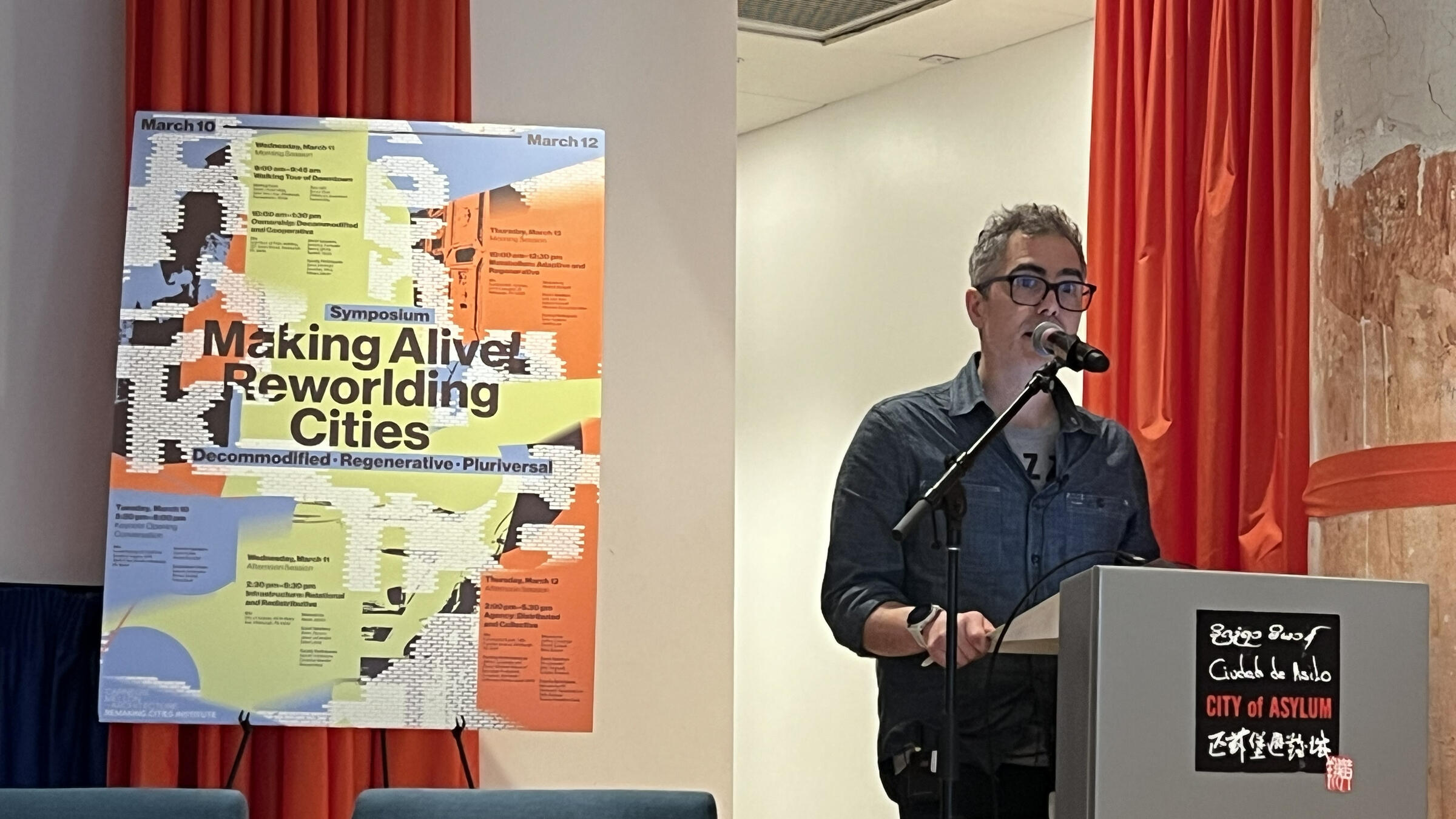
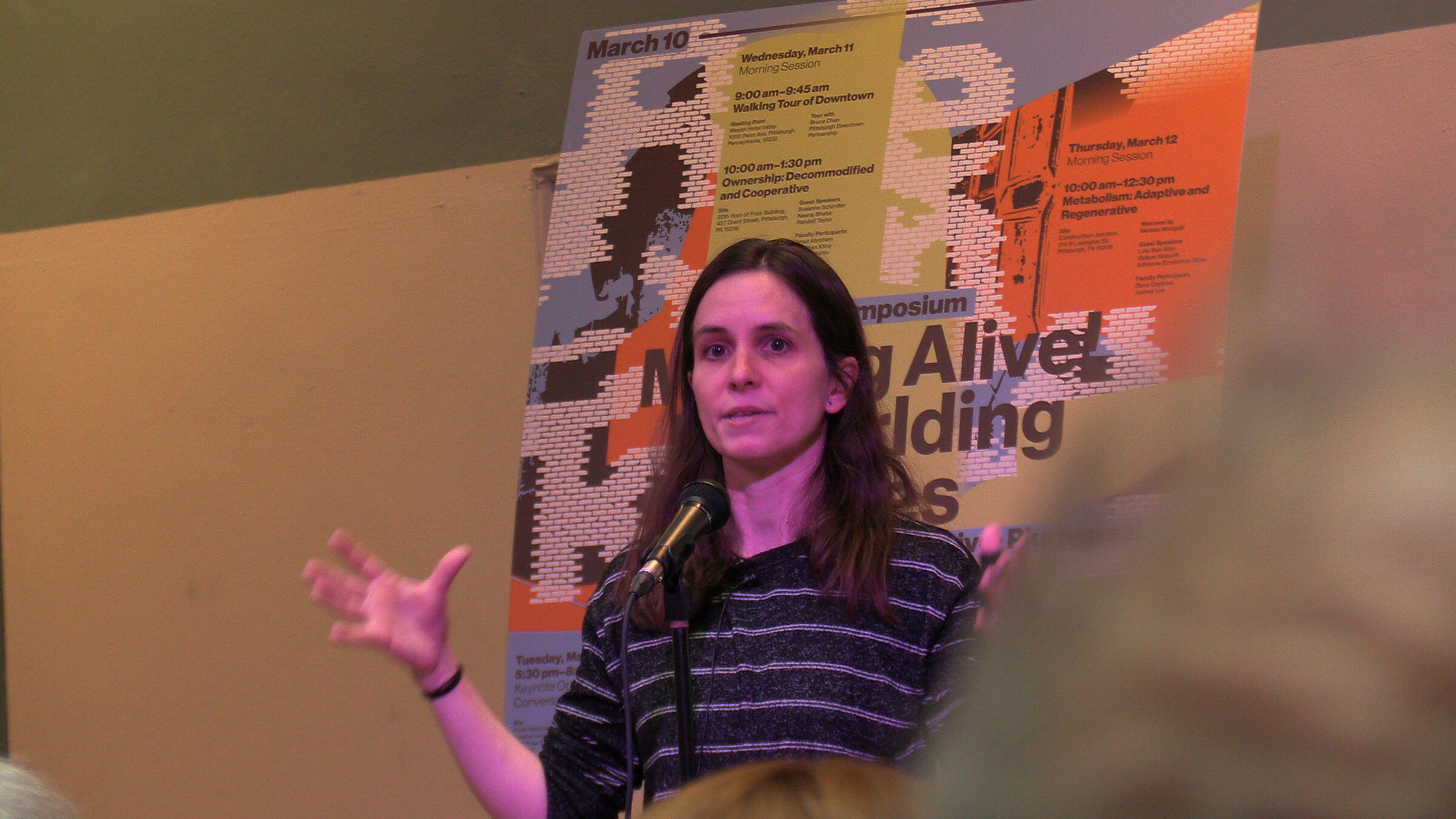
Throughout the academic year, RCI hosted a series of faculty dialogues and presentations and a spring symposium, “Making Alive! Reworlding Cities.” Over the course of those events, which drew hundreds of students, faculty, visitors and community members, RCI collaboratively remade its own approach to research.
According to Gruber, the process “created space to step back from immediate pressures and interrogate the underlying conditions that shape urban transformation: What forms of knowledge determine how cities are made? Which values are embedded in our institutions and design practices? How might alternative epistemologies and ontologies open up different urban futures?”
What is research?
At its base, says Gruber, architecture and urban design research is “about seeking to understand how the built environment shapes our well-being, our social relationships, and our planetary health — but also trying to understand the reciprocal nature of those relationships.”
Among academic disciplines, architecture boasts what Gruber calls a “unique interdependency of research and design,” a clear opportunity to move beyond the scholarly world of conferences and papers, to translate ideas and apply them — in partnership with communities — to real-world challenges.
And in 2026, real-world challenges are myriad.
As anthropologist and political ecologist Arturo Escobar put it in his keynote address at the symposium, “most modern ‘solutions’ have become part of our unprecedented planetary crisis…as architects, designers, artists and humans we are summoned to remake our (habitual ways of) making.” Design, says Escobar, is a matter of “mobilizing for relational conditions for being human and dwelling on the planet in an Earth-wise manner.”
What does that mean for the future of RCI?
Imagining and testing new urbanisms
The institute, says Gruber, is “the place where new forms of urbanism are both imagined and tested.”
It prioritizes bringing a sense of shared purpose to work that’s often fragmented — both across the school (studios, research agendas, and public programs) and across spheres of design (the institution, the city, the discipline).
Just as importantly, it puts that work into practice for the benefit of communities that have too often been excluded from shaping the neighborhoods they call home. In Wilkinsburg, RCI is supporting Community Forge to transform a vacant elementary school into a vibrant community hub. In Manchester Chateau, CM–A faculty have worked with graduate students to envision the removal of a divisive highway and the reconnection of two Northside neighborhoods.
RCI has always partnered with communities, municipalities, and grassroots organizations to support community-led transformation, and these partnerships are only becoming more crucial. At a moment when some of the most innovative social, spatial, and policy change is emerging at the scale of cities, the institute’s collaborations with Pittsburgh-based organizations can inform broader systemic shifts, nationally and globally.
Gruber envisions Pittsburgh as a “testing ground for new models of ownership, infrastructure, and urban metabolism — whether through adaptive reuse, cooperative development, or circular material practices.”
While many of these initiatives and community-university partnerships are driven by individual faculty and student groups, RCI aims to connect them, ensuring that they are not isolated projects but part of a larger effort to rethink how cities are organized and governed.
“In this way,” says Gruber, “RCI can operate as both partner and catalyst: supporting ongoing work in neighborhoods across the city while using these engagements to inform wider debates on the future of urbanism. It links practice to structural change, positioning Pittsburgh not only as a site of intervention, but as a place from which new models of urban transformation are developed, tested, and shared.”
Learn more about RCI, its year of reimagination, and its plans for the future(s). You can also sign up for the RCI Newsletter.
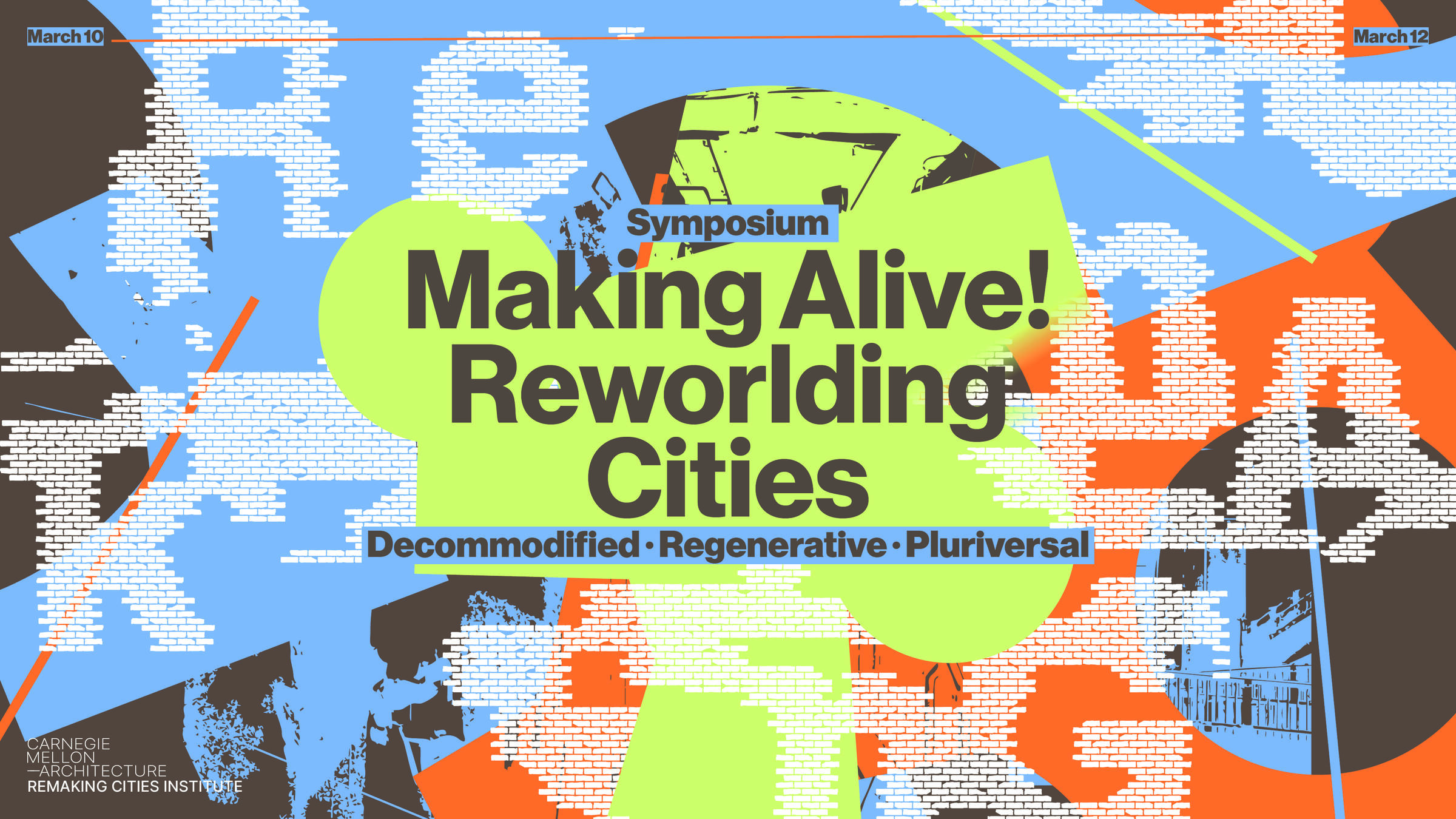
Making Alive! Reworlding Cities: Decommodified · Regenerative · Pluriversal
In March 2026, RCI convened the three-day symposium across sites in Pittsburgh, bringing together scholars, designers, activists, and community partners to rethink how cities can move from extraction toward stewardship, regeneration, and collective care. Structured through four lenses — ownership, infrastructure, metabolism and agency — the program tested these ideas against concrete urban conditions.
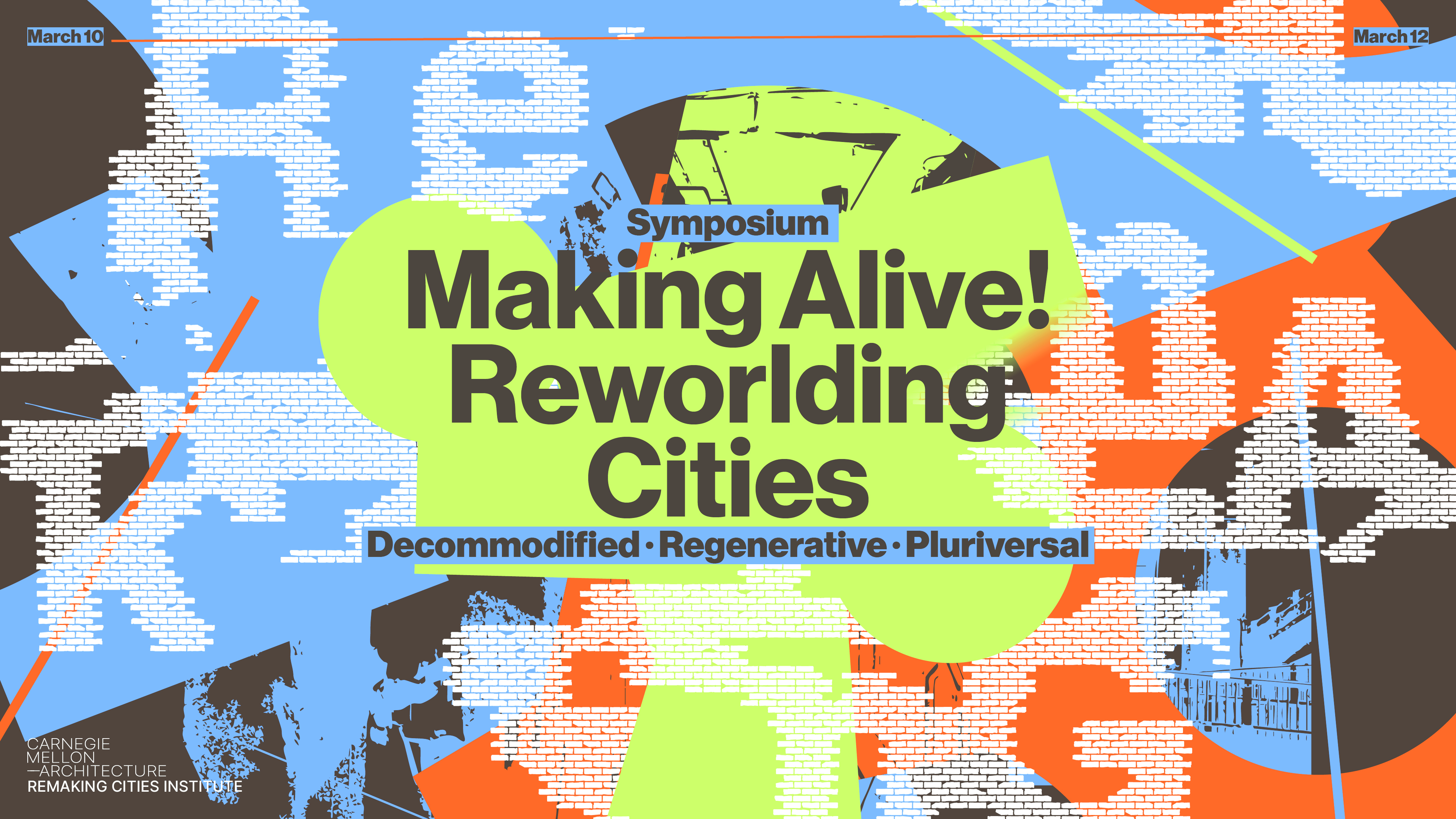
In March 2026, RCI convened the three-day symposium across sites in Pittsburgh, bringing together scholars, designers, activists, and community partners to rethink how cities can move from extraction toward stewardship, regeneration, and collective care. Structured through four lenses — ownership, infrastructure, metabolism and agency — the program tested these ideas against concrete urban conditions.
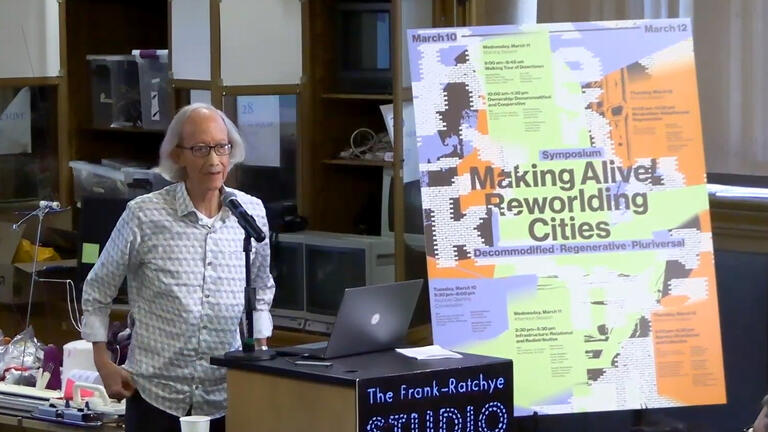
Keynote Lecture by Arturo Escobar
Arturo Escobar, CM–A’s 2025-26 Watson Chair, opened the symposium by reflecting on how modern urbanism has often been shaped by separation, extraction and accumulation. In contrast, he invited participants to understand cities as living constellations of relationships continually sustained through cooperation, stewardship and governance.
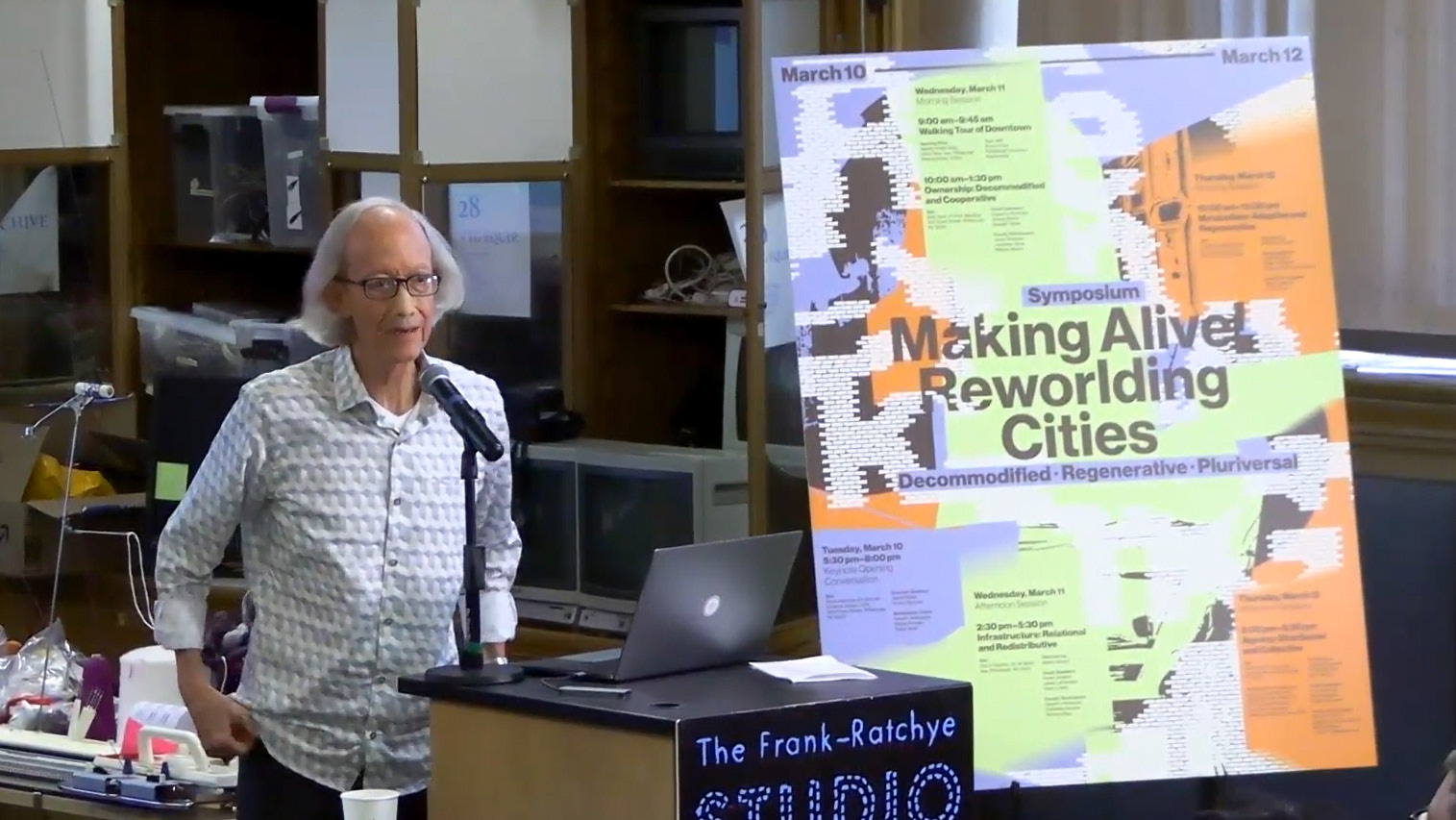
Arturo Escobar, CM–A’s 2025-26 Watson Chair, opened the symposium by reflecting on how modern urbanism has often been shaped by separation, extraction and accumulation. In contrast, he invited participants to understand cities as living constellations of relationships continually sustained through cooperation, stewardship and governance.
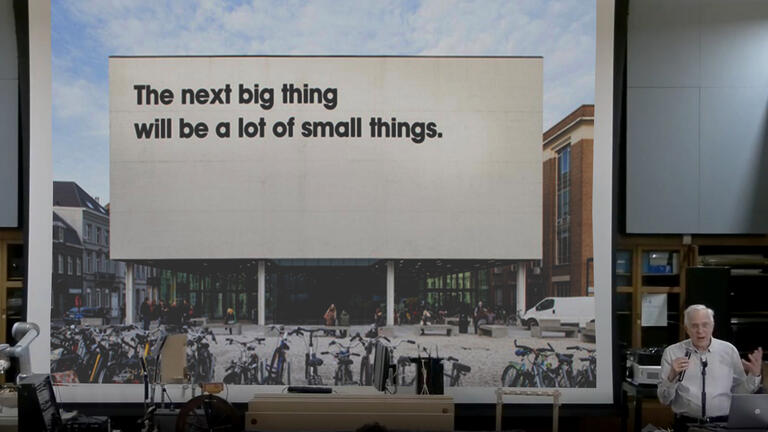
Keynote Lecture by David Bollier
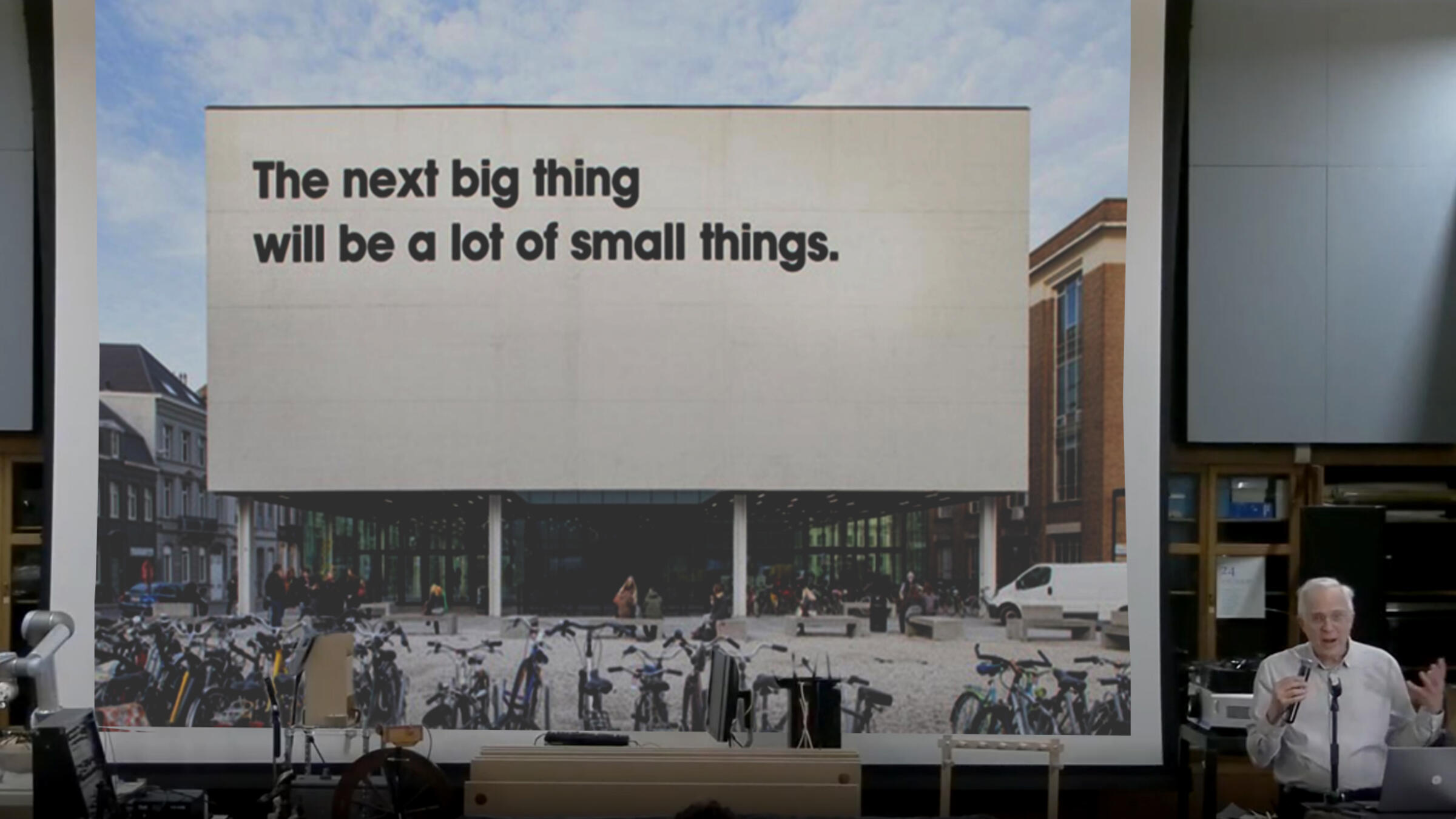
David Bollier reflected on the idea of the “alive,” developed with Silke Helfrich in “Free, Fair, and Alive: The Insurgent Power of the Commons.“ Here, “alive” signals a deeper shift in how we understand the world we inhabit — and how we might imagine other urban futures.
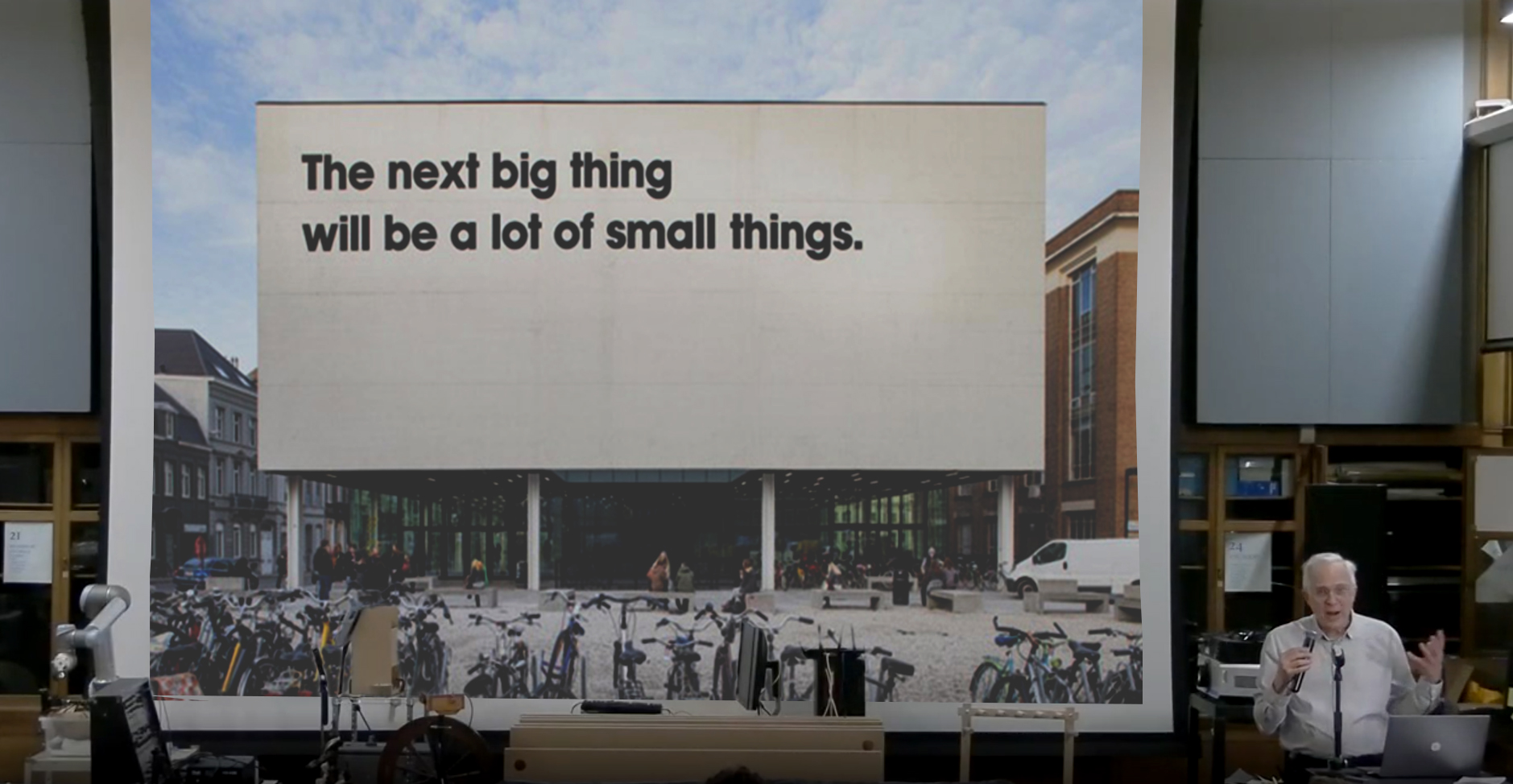
David Bollier reflected on the idea of the “alive,” developed with Silke Helfrich in “Free, Fair, and Alive: The Insurgent Power of the Commons.“ Here, “alive” signals a deeper shift in how we understand the world we inhabit — and how we might imagine other urban futures.
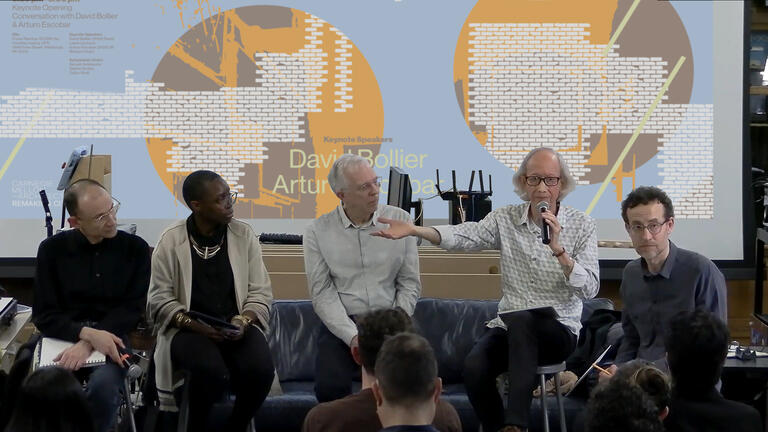
Conversation: David Bollier and Arturo Escobar
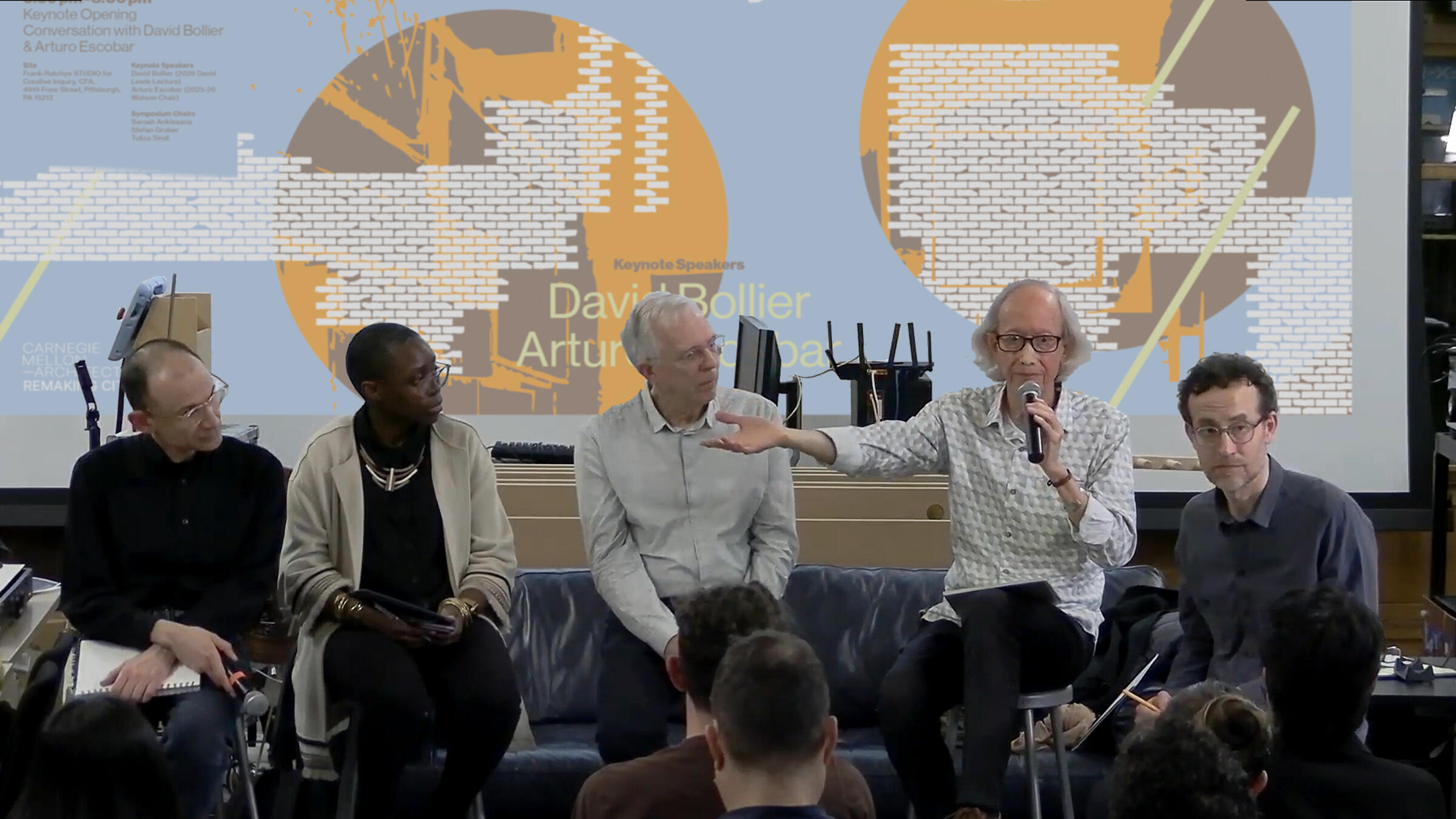
In conversation with Sarosh Anklesaria, Stefan Gruber and Tuliza Sindi, David Bollier and Arturo Escobar explored how relationality, commoning, and just transitions might reorient design toward more equitable and regenerative futures. Their dialogue also helped chart an agenda for RCI in the years ahead.
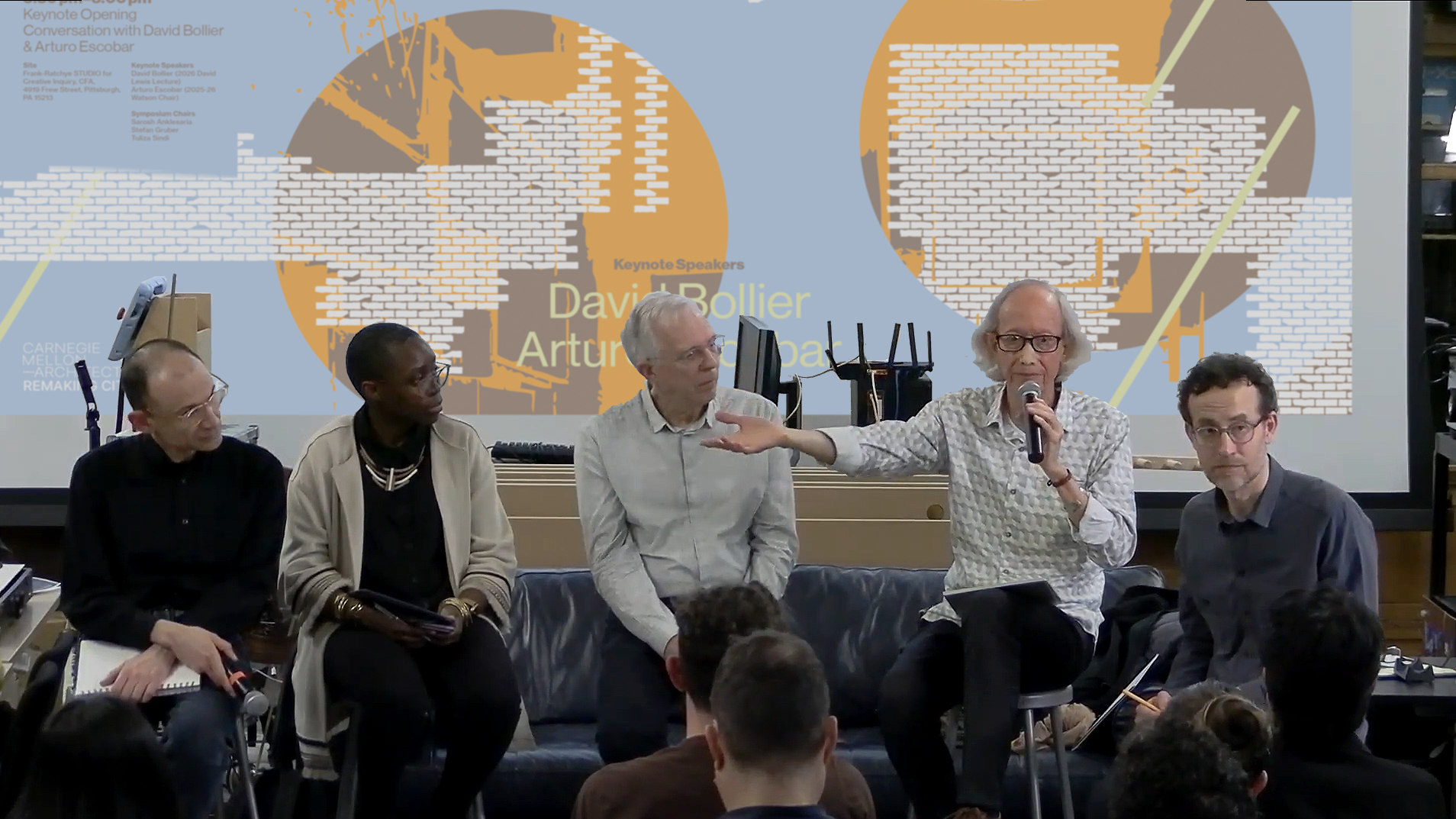
In conversation with Sarosh Anklesaria, Stefan Gruber and Tuliza Sindi, David Bollier and Arturo Escobar explored how relationality, commoning, and just transitions might reorient design toward more equitable and regenerative futures. Their dialogue also helped chart an agenda for RCI in the years ahead.
Ownership: Decommodified and Shared
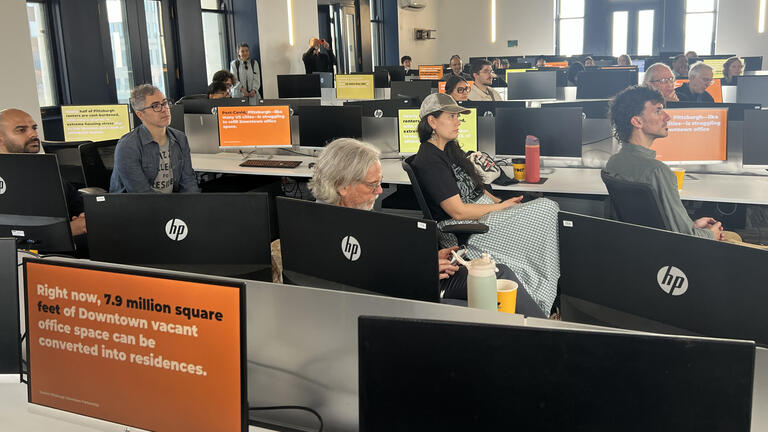
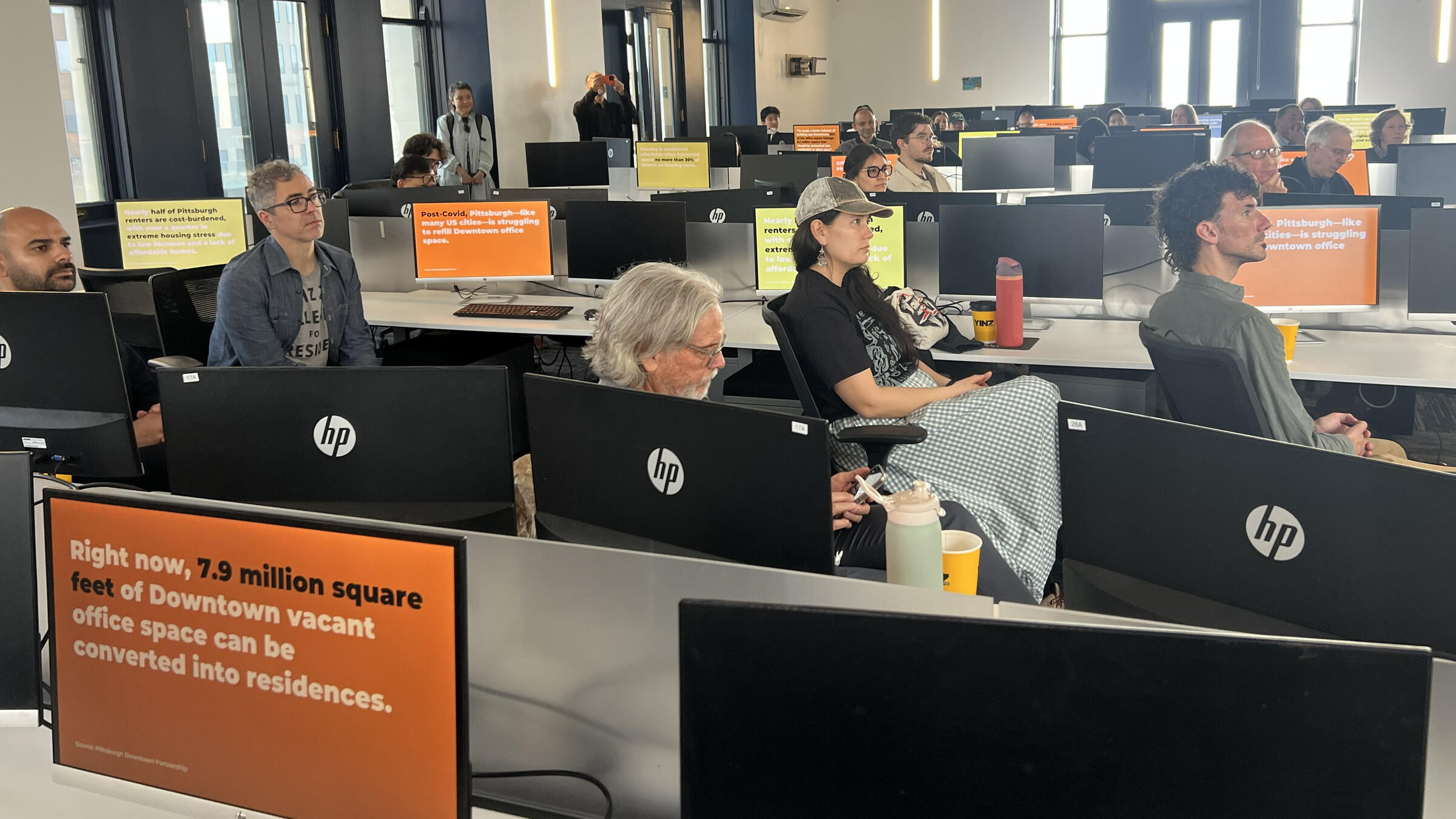
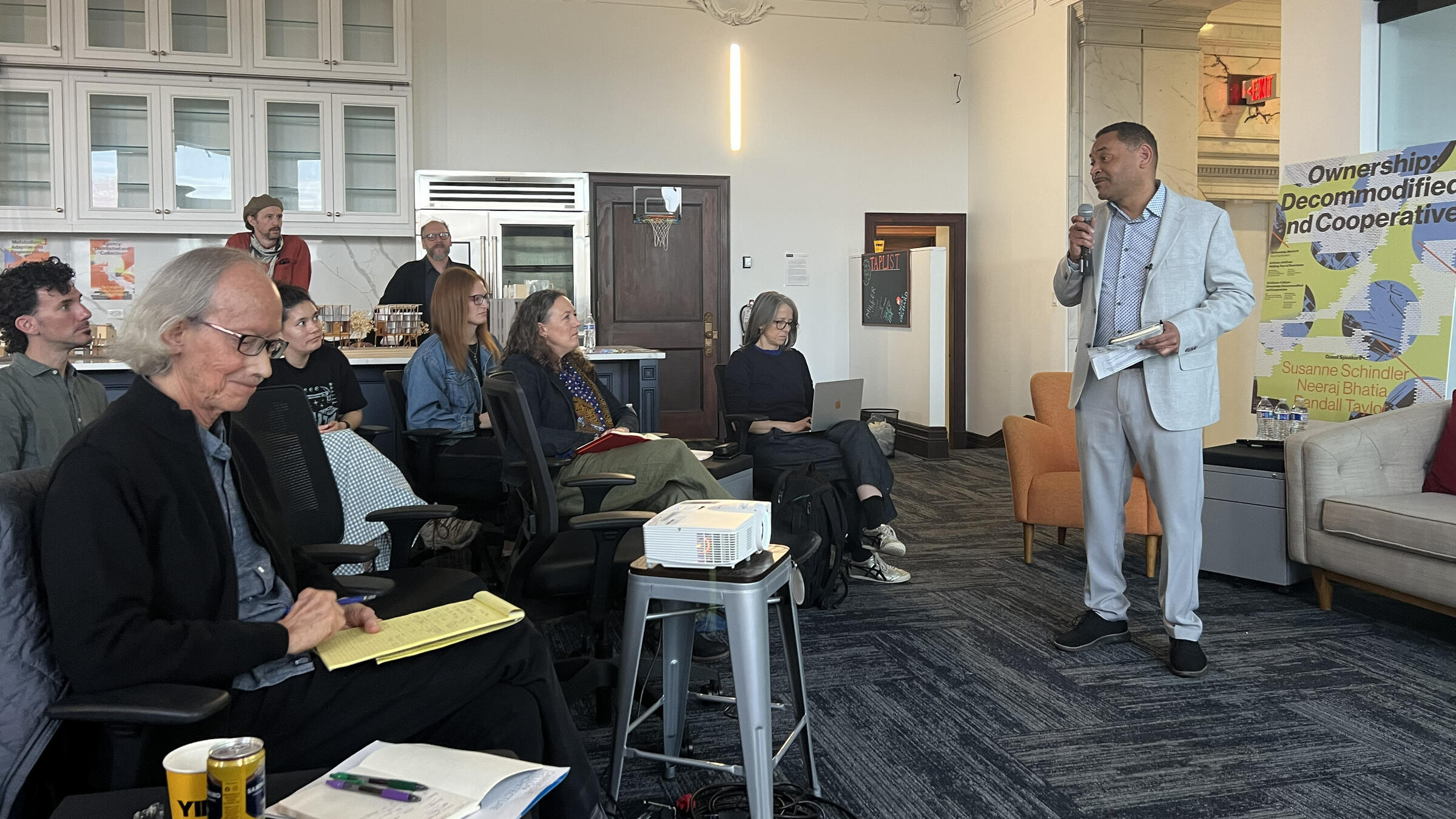
Set in a vacant office on the 20th floor of the Frick Building downtown, the first session examined housing affordability and alternative forms of ownership. Against vacancy and speculation, speakers asked what legal, financial, and spatial frameworks could transform underused buildings into shared urban assets.
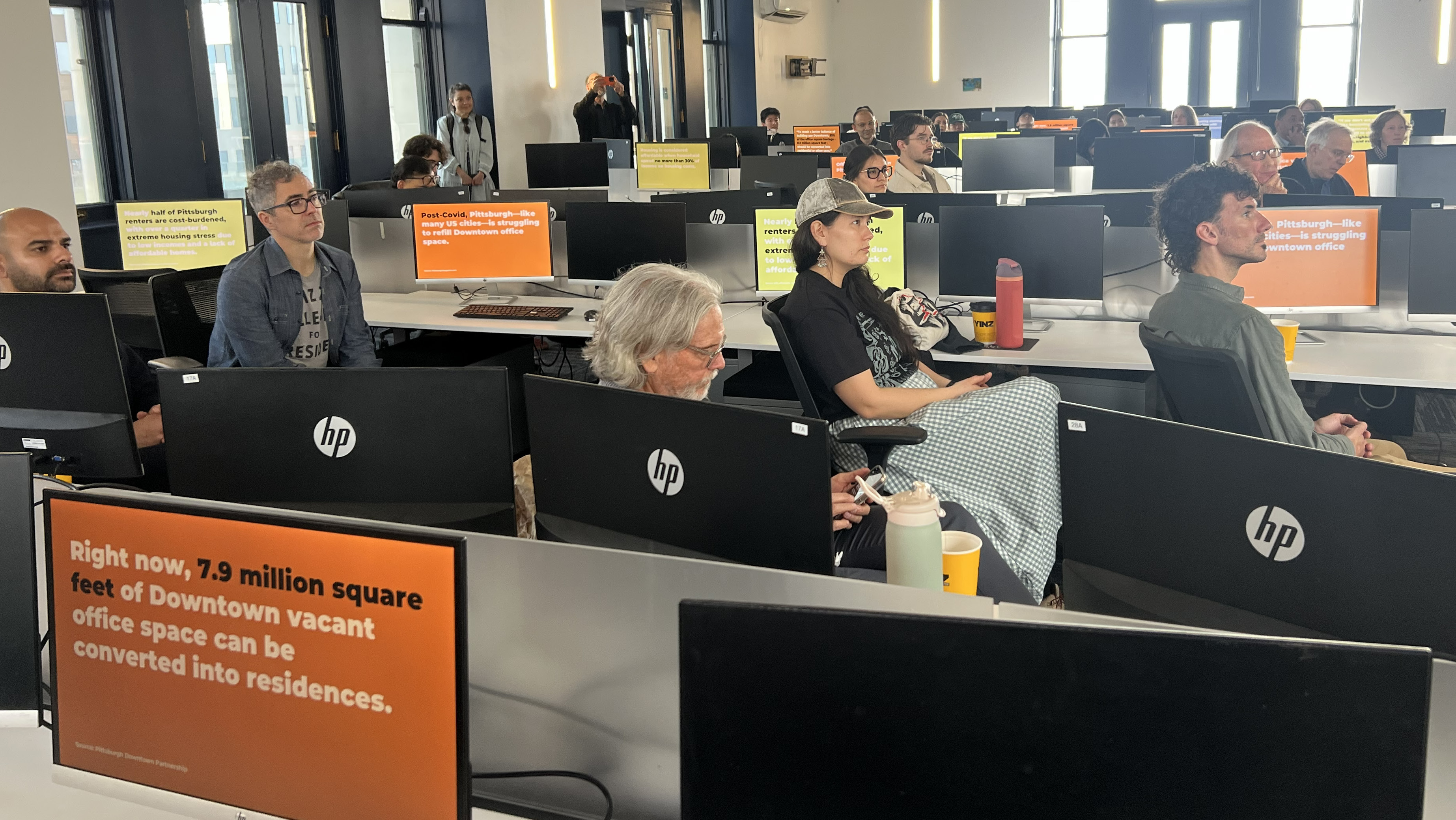
Set in a vacant office on the 20th floor of the Frick Building downtown, the first session examined housing affordability and alternative forms of ownership. Against vacancy and speculation, speakers asked what legal, financial, and spatial frameworks could transform underused buildings into shared urban assets.
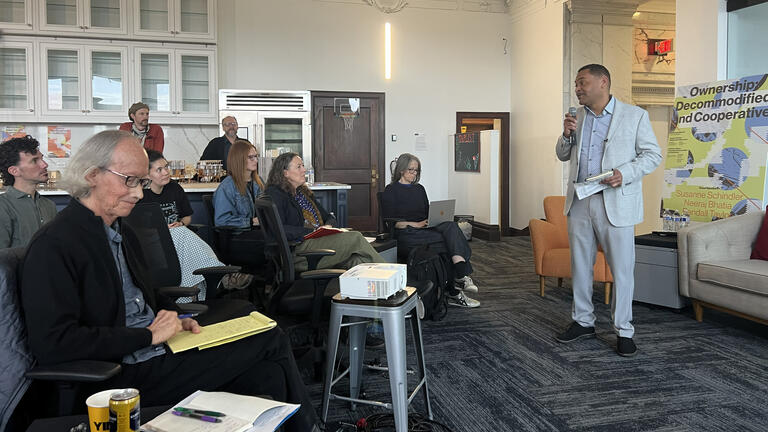
Randall Taylor on the Steel City Cooperative Housing Initiative
With presentations by Susanne Schindler, Neeraj Bhatia and Randall Taylor, the session moved from histories of displacement and struggle to cooperative housing systems and the architectural forms that support collective life. Speakers explored how cooperatives, community land trusts, adaptive reuse, and nonprofit ownership can sustain affordability.
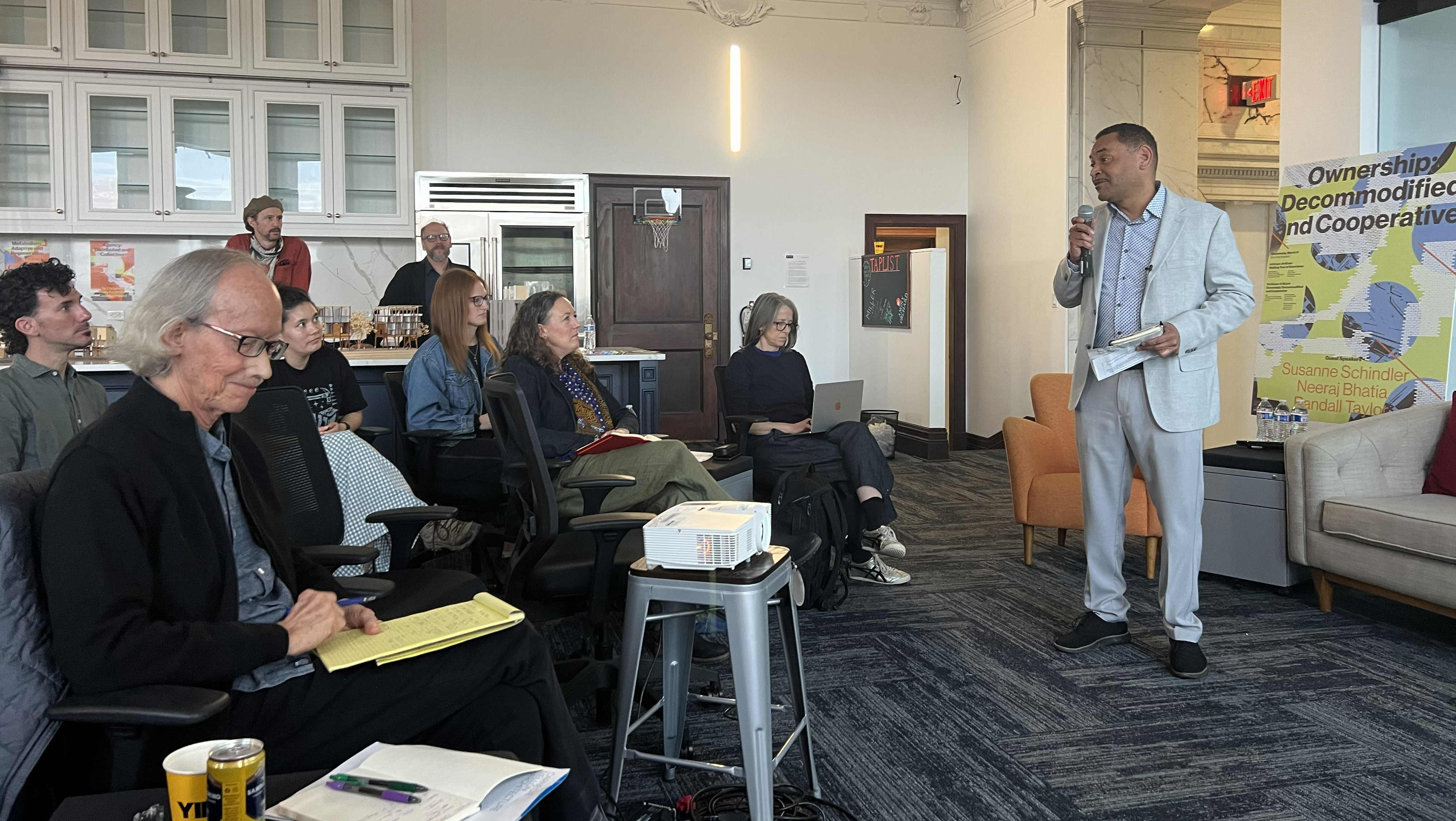
With presentations by Susanne Schindler, Neeraj Bhatia and Randall Taylor, the session moved from histories of displacement and struggle to cooperative housing systems and the architectural forms that support collective life. Speakers explored how cooperatives, community land trusts, adaptive reuse, and nonprofit ownership can sustain affordability.
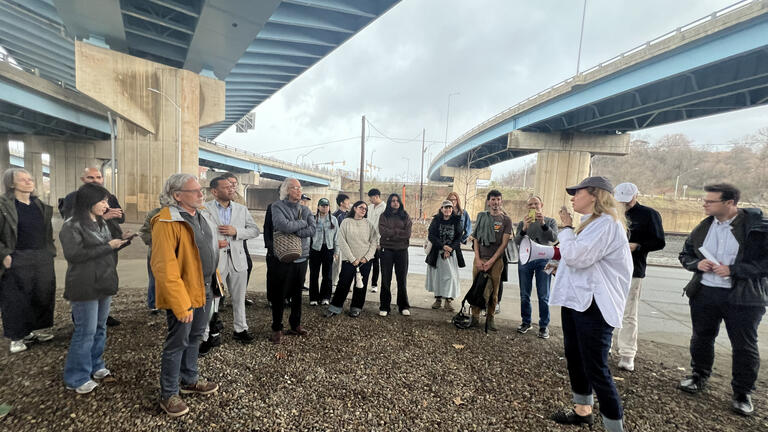
Site Visit to Route 65 on Pittsburgh’s North Side
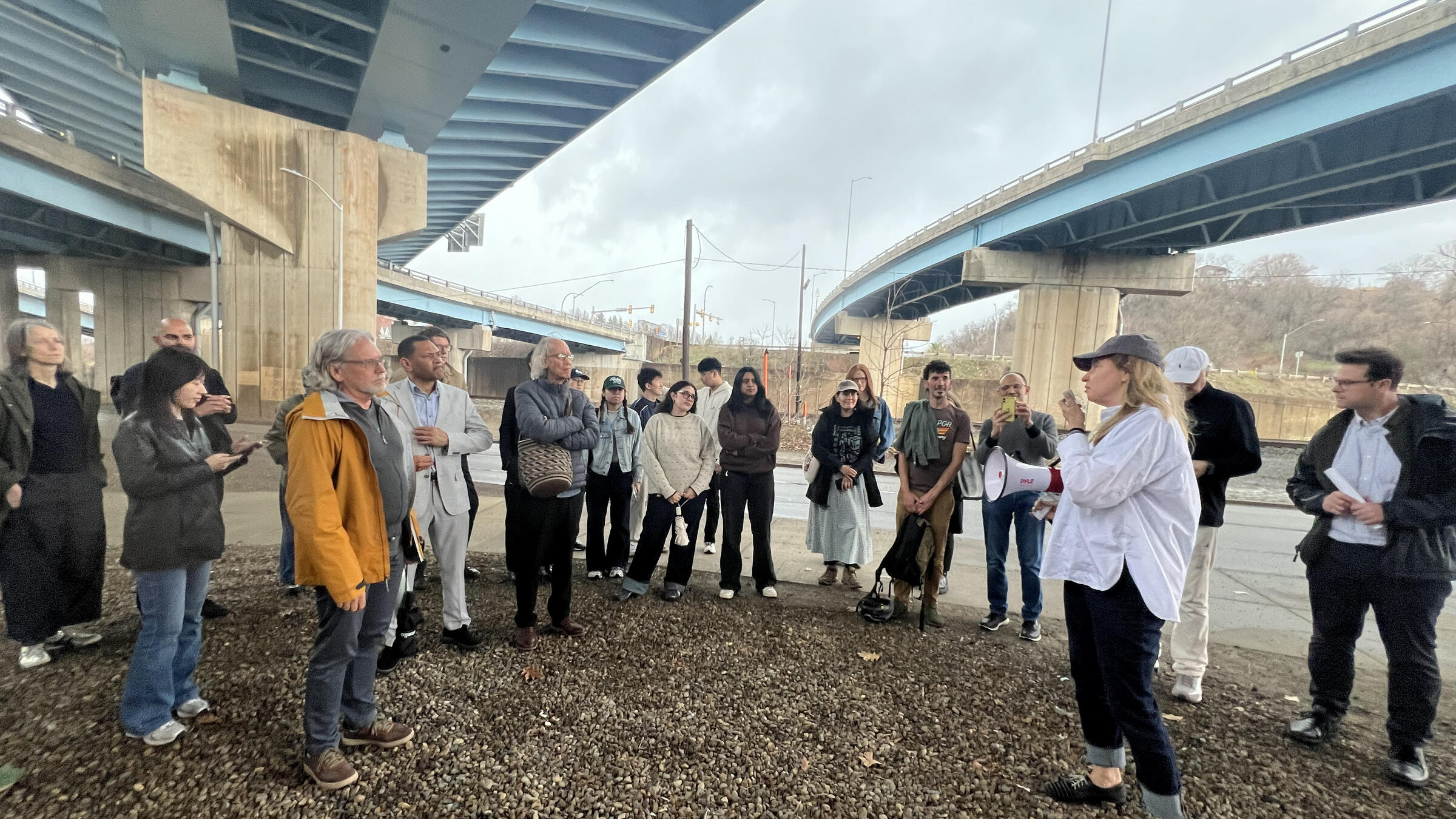
Christine Mondor introduced participants to the neighborhoods of Manchester and Chateau, divided by Route 65 through urban renewal. Design studios led by Chrisitne Mondor, SaroshAnklesaria, and Jonathan Kline have imagined the highway’s removal as an act of repair and reconnection — an idea now being actively considered by the City of Pittsburgh.
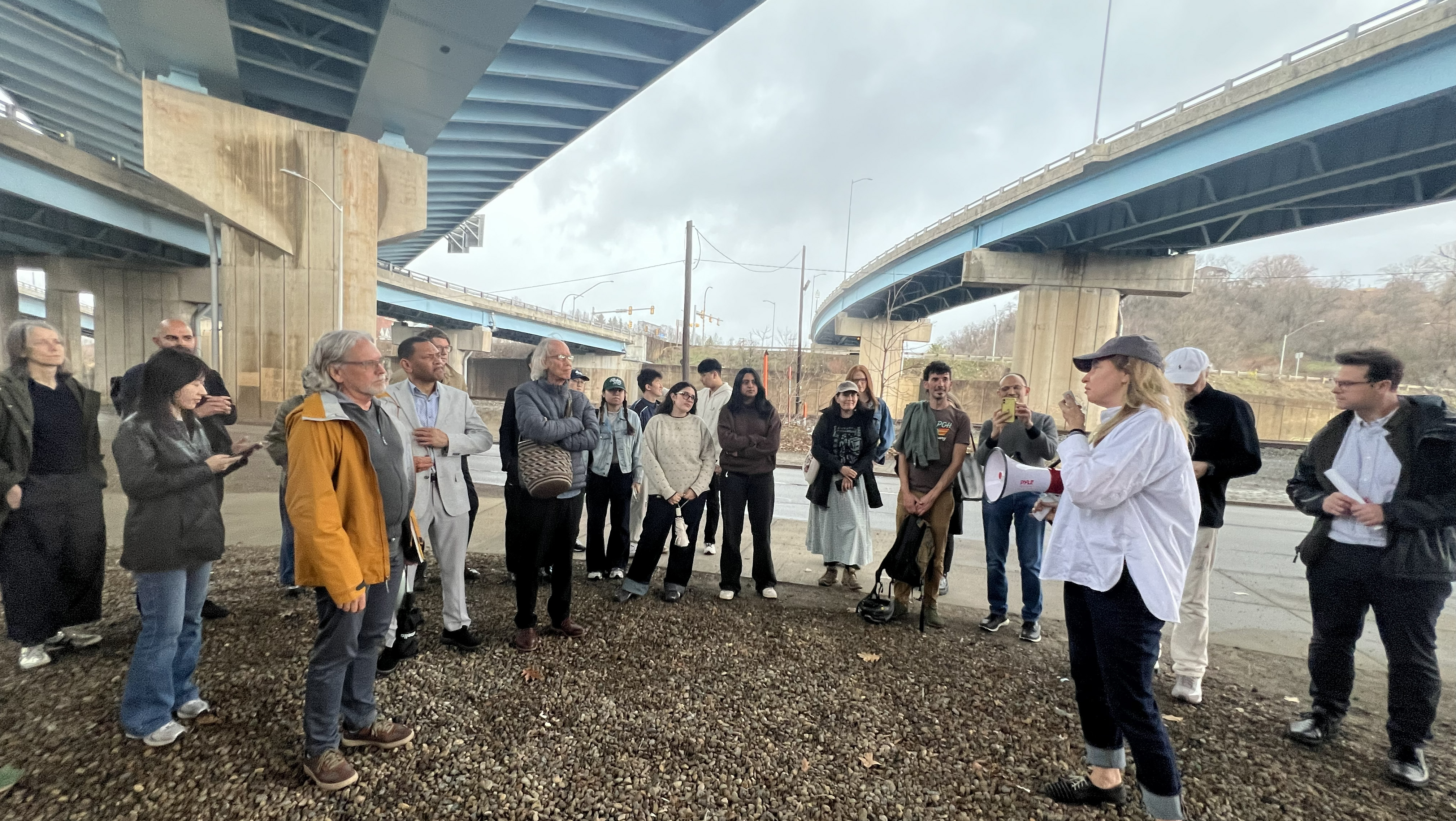
Christine Mondor introduced participants to the neighborhoods of Manchester and Chateau, divided by Route 65 through urban renewal. Design studios led by Chrisitne Mondor, SaroshAnklesaria, and Jonathan Kline have imagined the highway’s removal as an act of repair and reconnection — an idea now being actively considered by the City of Pittsburgh.
Infrastructures of Separation
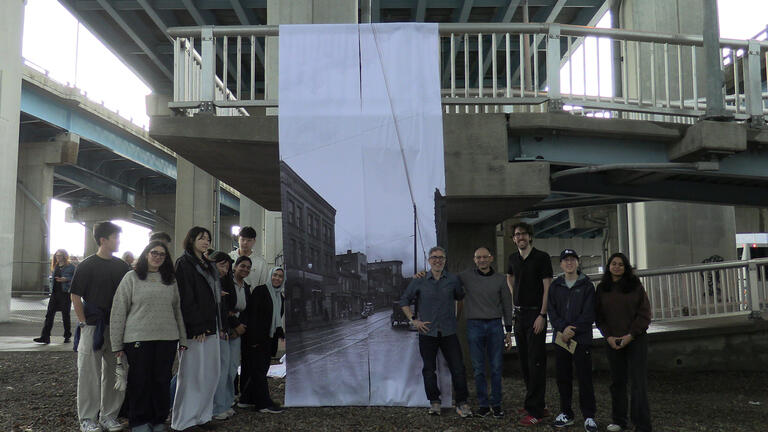
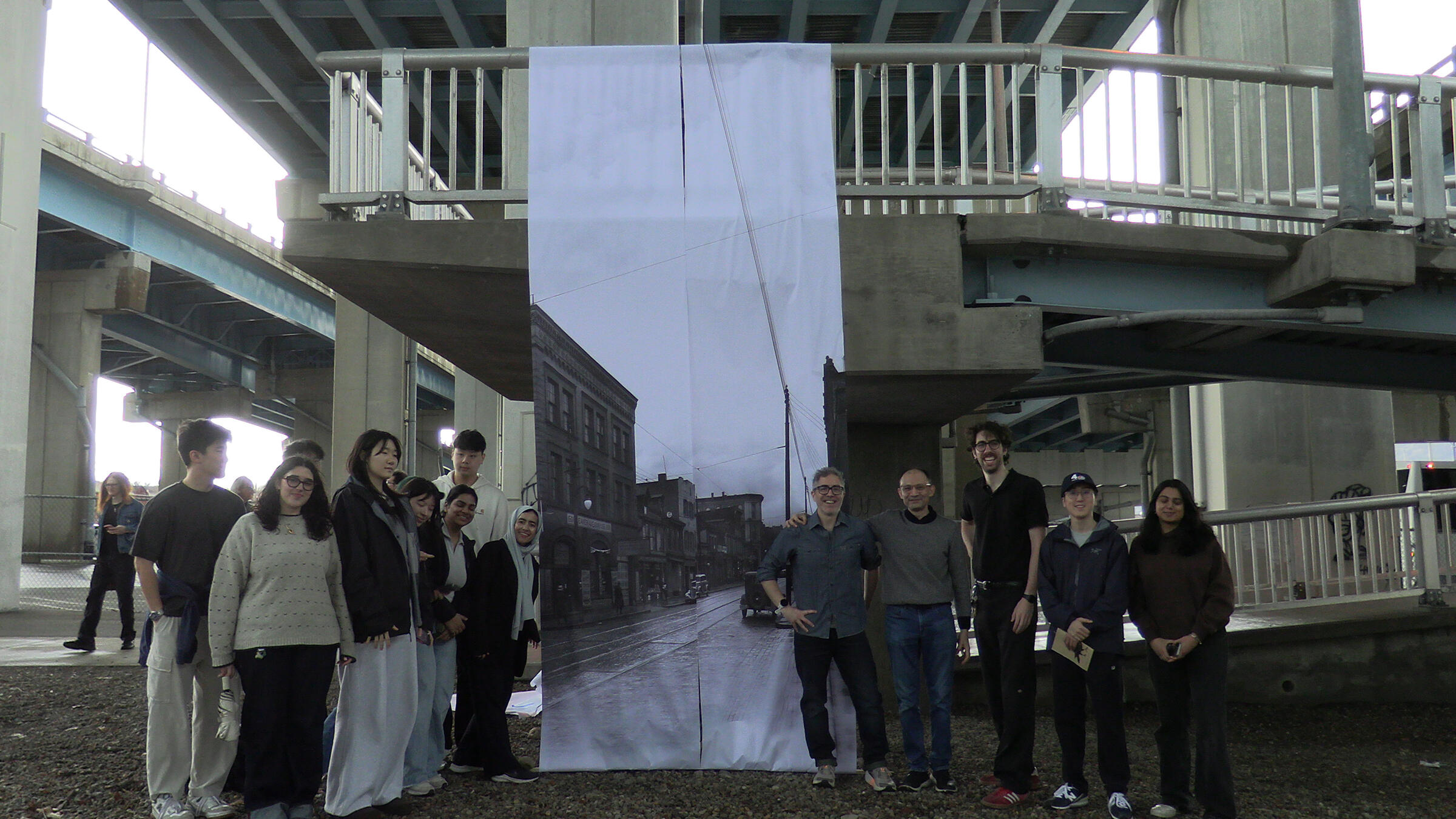
While infrastructure often remains invisible, its violence can be impossible to ignore. During the site visit, participants raised a banner depicting the thriving neighborhood erased to make way for the current highway infrastructure.
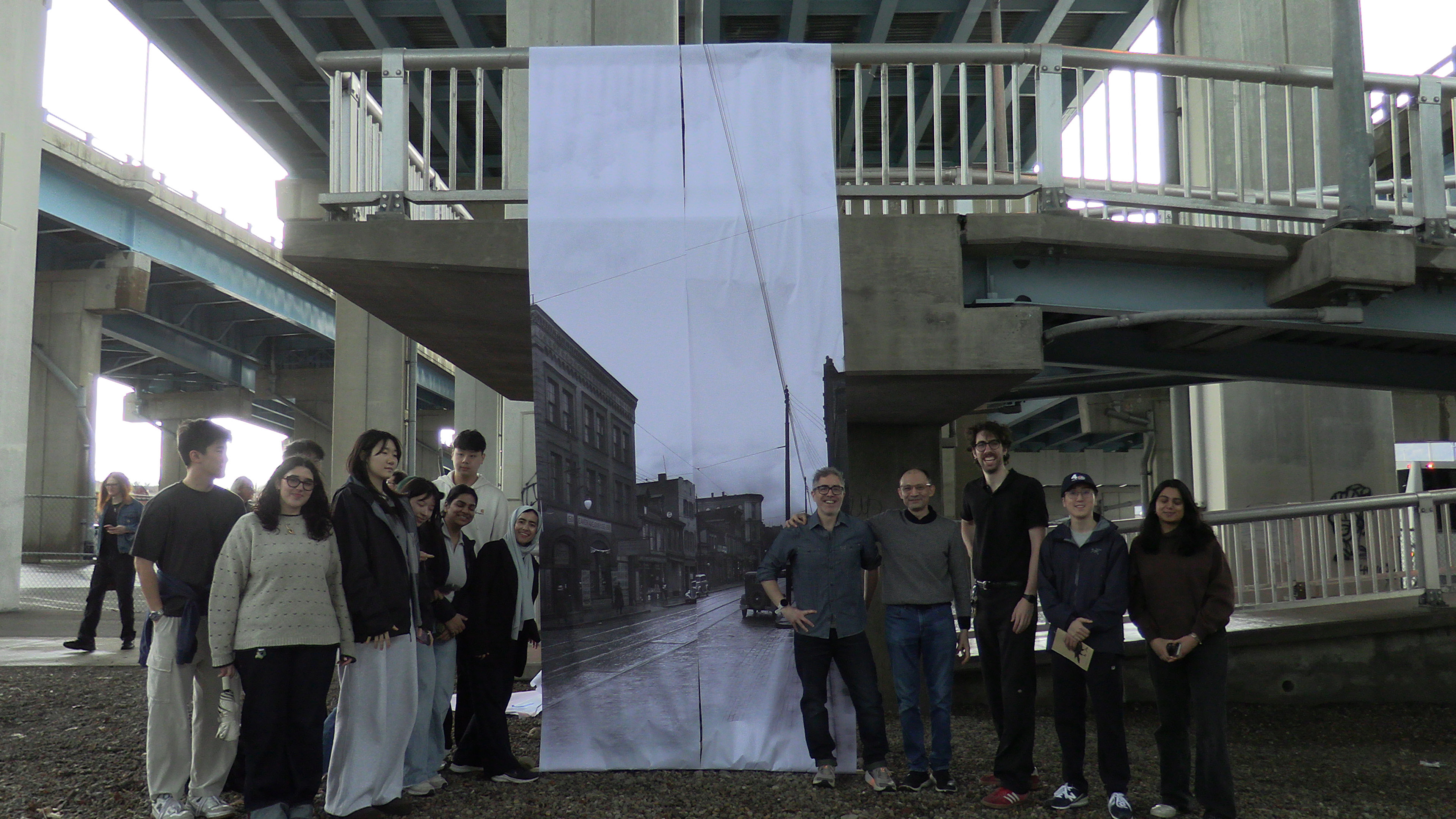
While infrastructure often remains invisible, its violence can be impossible to ignore. During the site visit, participants raised a banner depicting the thriving neighborhood erased to make way for the current highway infrastructure.
The Clamour of a Falling Leaf
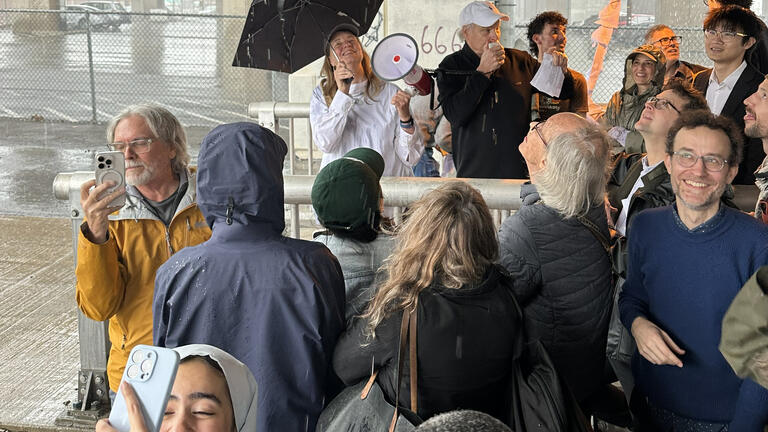
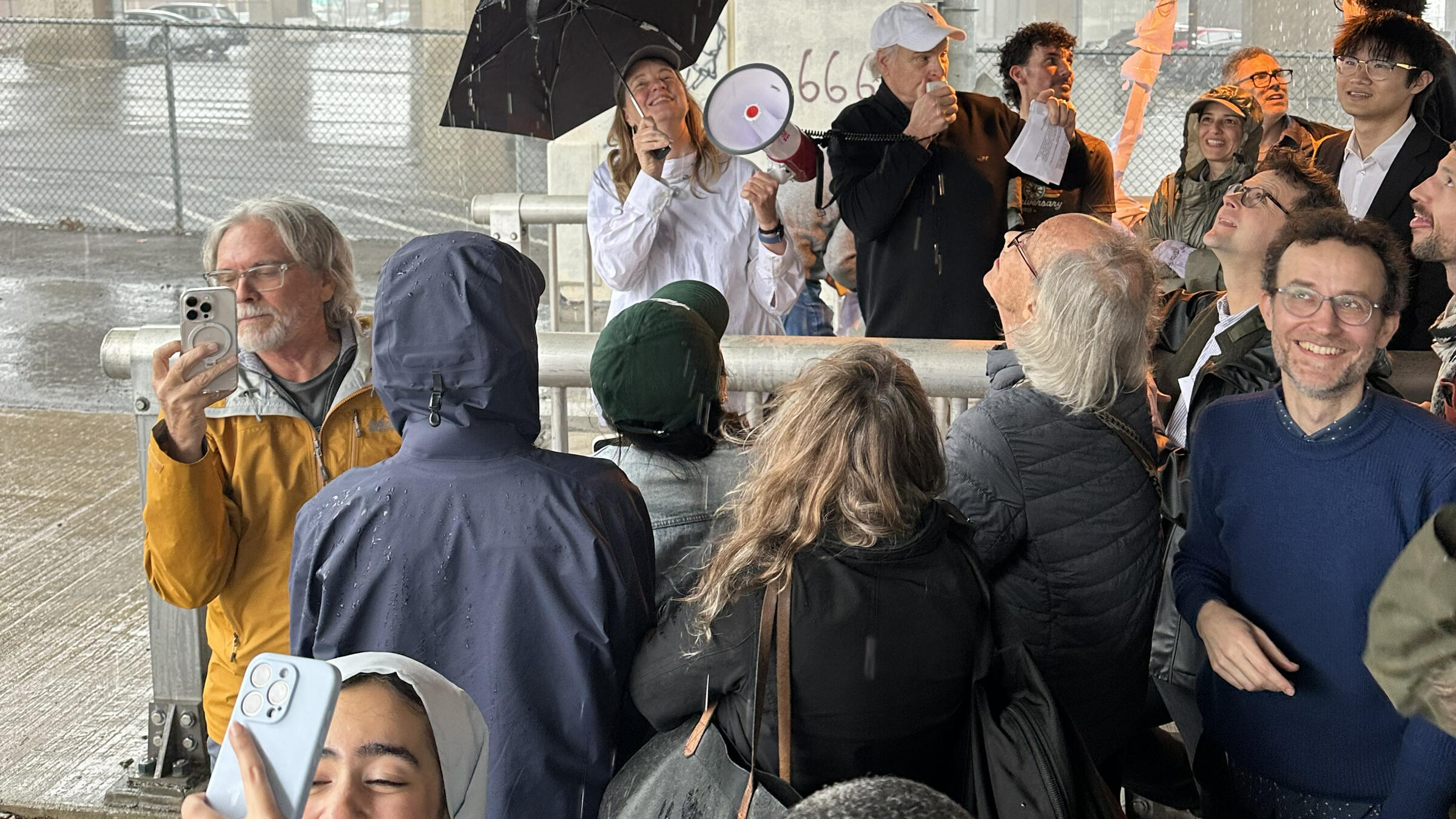
Each symposium session opened with a poetry reading that offered an affective entry point to the issues at stake. Curated by Will Martin, the series included Sten Carlson, Andrea Cha, Charles Legere, Emily Carlson and Robin Clarke. As participants gathered to hear Legere read poems on Pittsburgh’s public steps, a sudden downpour sent the group sheltering beneath the highway.
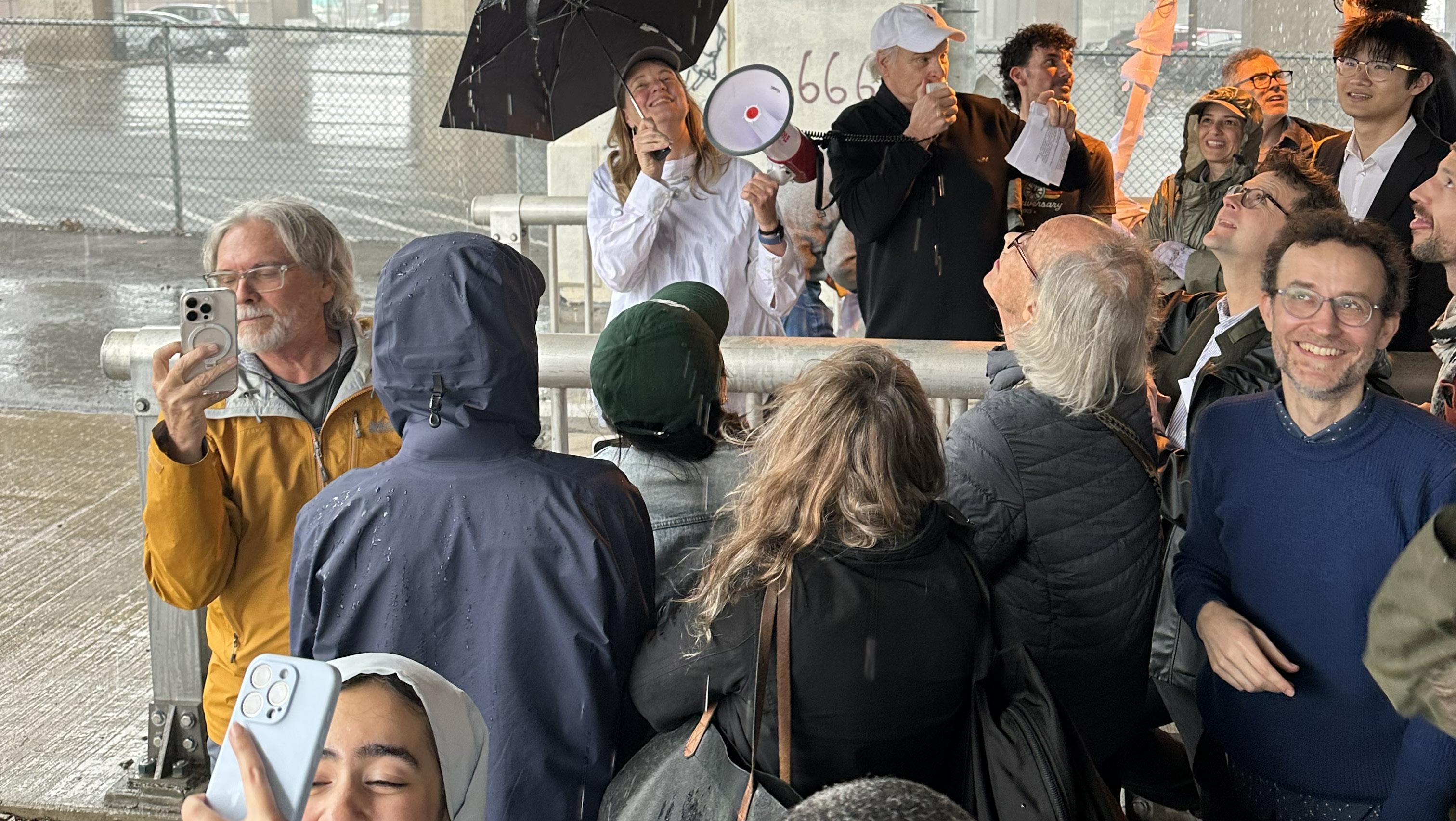
Each symposium session opened with a poetry reading that offered an affective entry point to the issues at stake. Curated by Will Martin, the series included Sten Carlson, Andrea Cha, Charles Legere, Emily Carlson and Robin Clarke. As participants gathered to hear Legere read poems on Pittsburgh’s public steps, a sudden downpour sent the group sheltering beneath the highway.
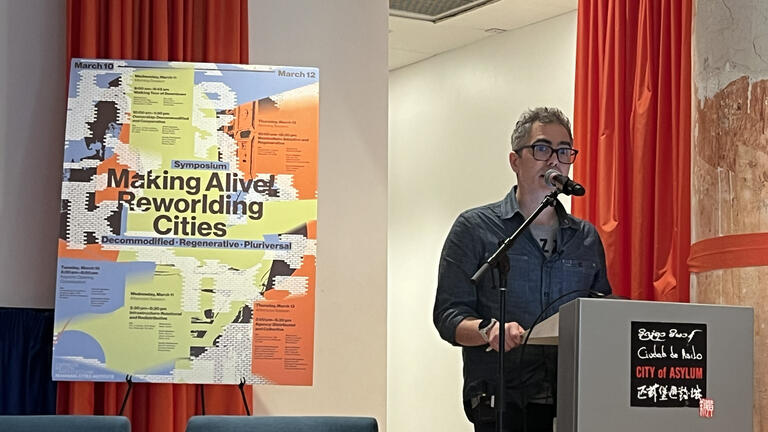
Infrastructure: Relational and Redistributive
Rich Nisa introduced the infrastructure session in neighborhood anchor City of Asylum, a bookstore and performance venue that serves as a sanctuary for exiled writers. Presentations by Karen Abrams, Jesse LeCavalier, and Clare Lyster explored how physical, social, and digital infrastructures shape relations between communities, ecologies, and institutions.
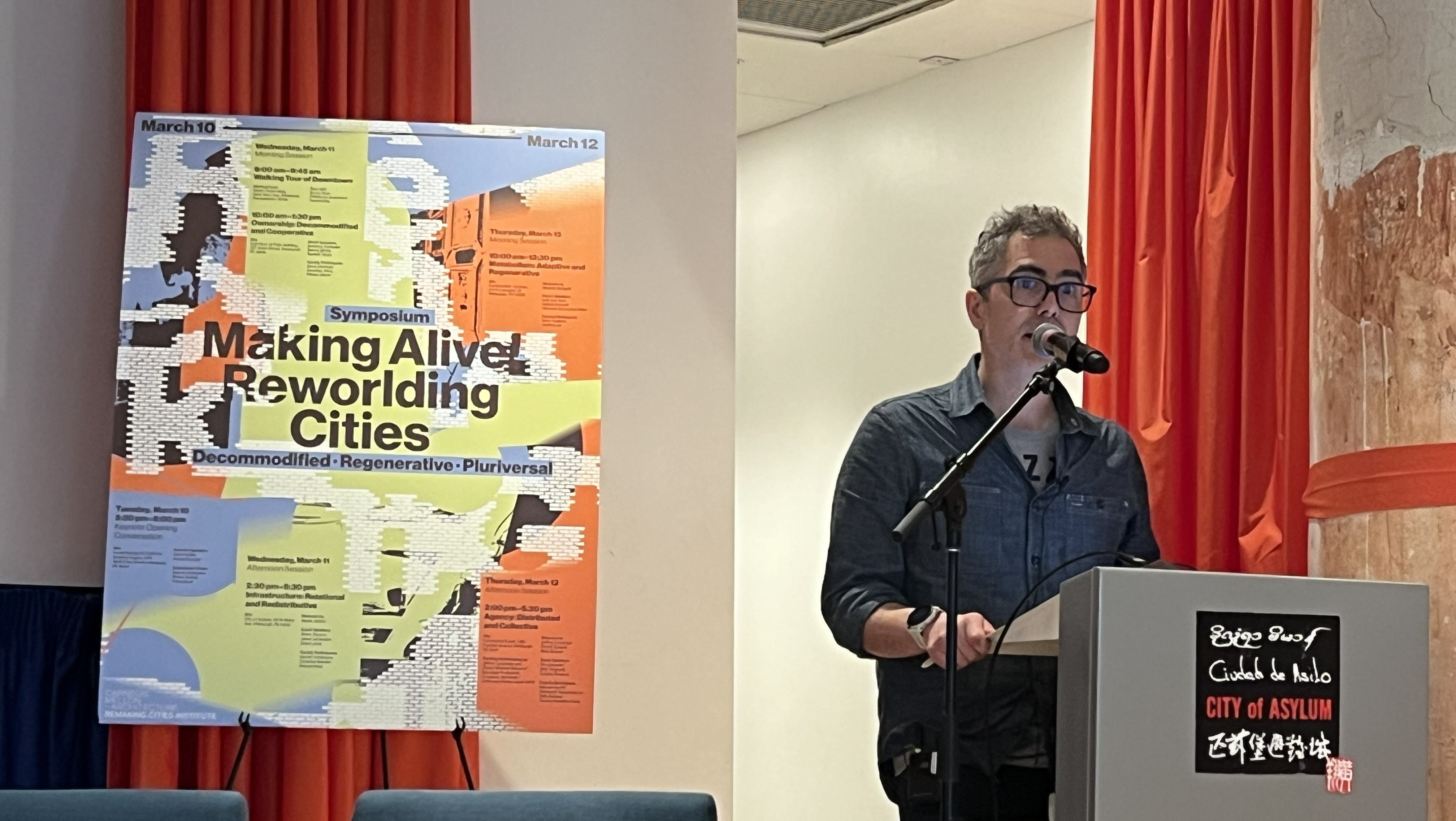
Rich Nisa introduced the infrastructure session in neighborhood anchor City of Asylum, a bookstore and performance venue that serves as a sanctuary for exiled writers. Presentations by Karen Abrams, Jesse LeCavalier, and Clare Lyster explored how physical, social, and digital infrastructures shape relations between communities, ecologies, and institutions.
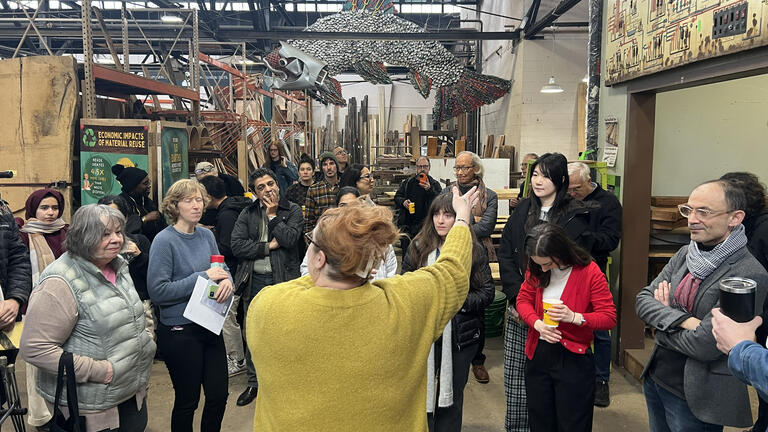
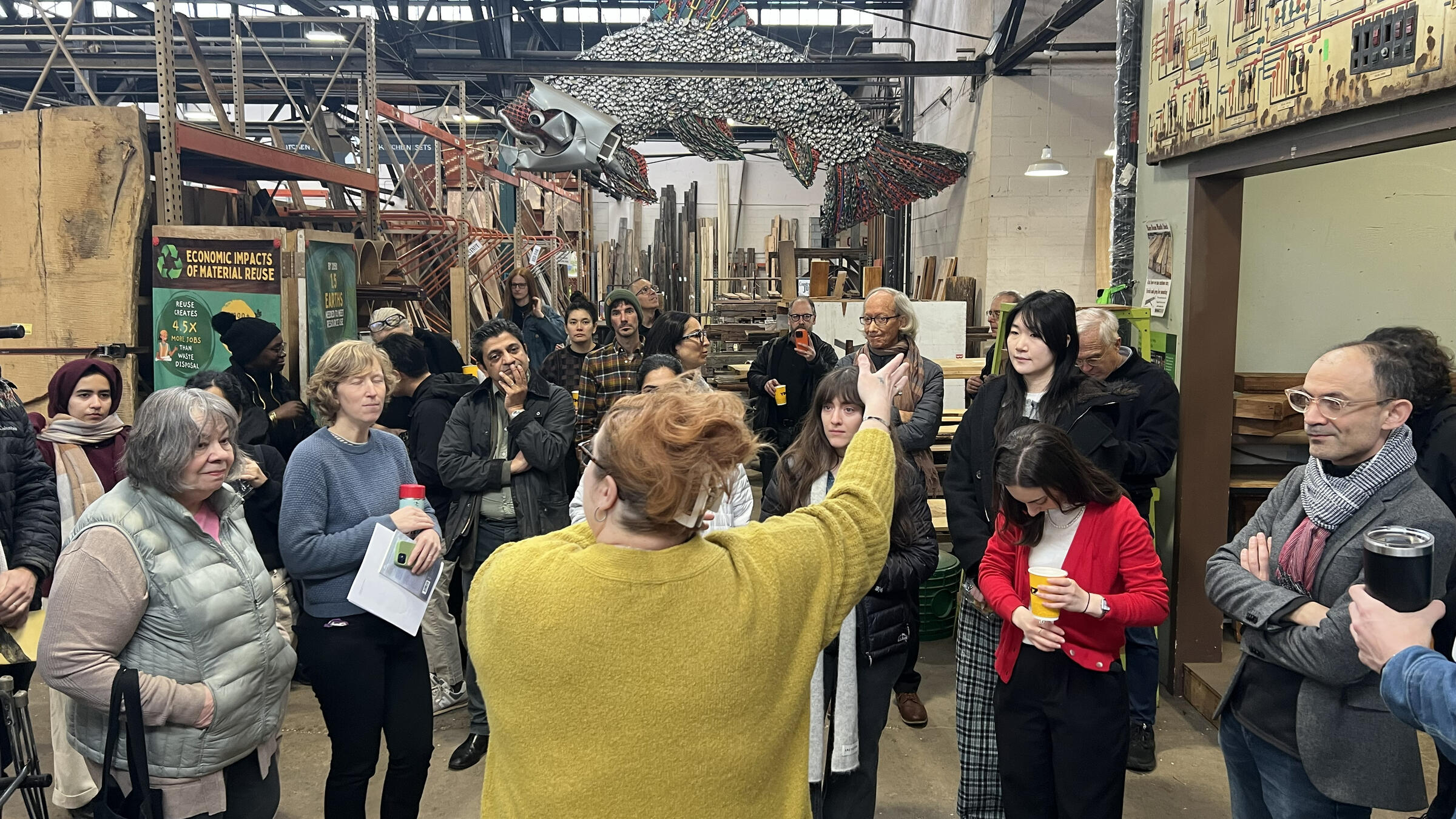
Tour of Construction Junction
Melissa Mongelli led a tour of Construction Junction and reflected on the challenges and opportunities of building a circular economy.
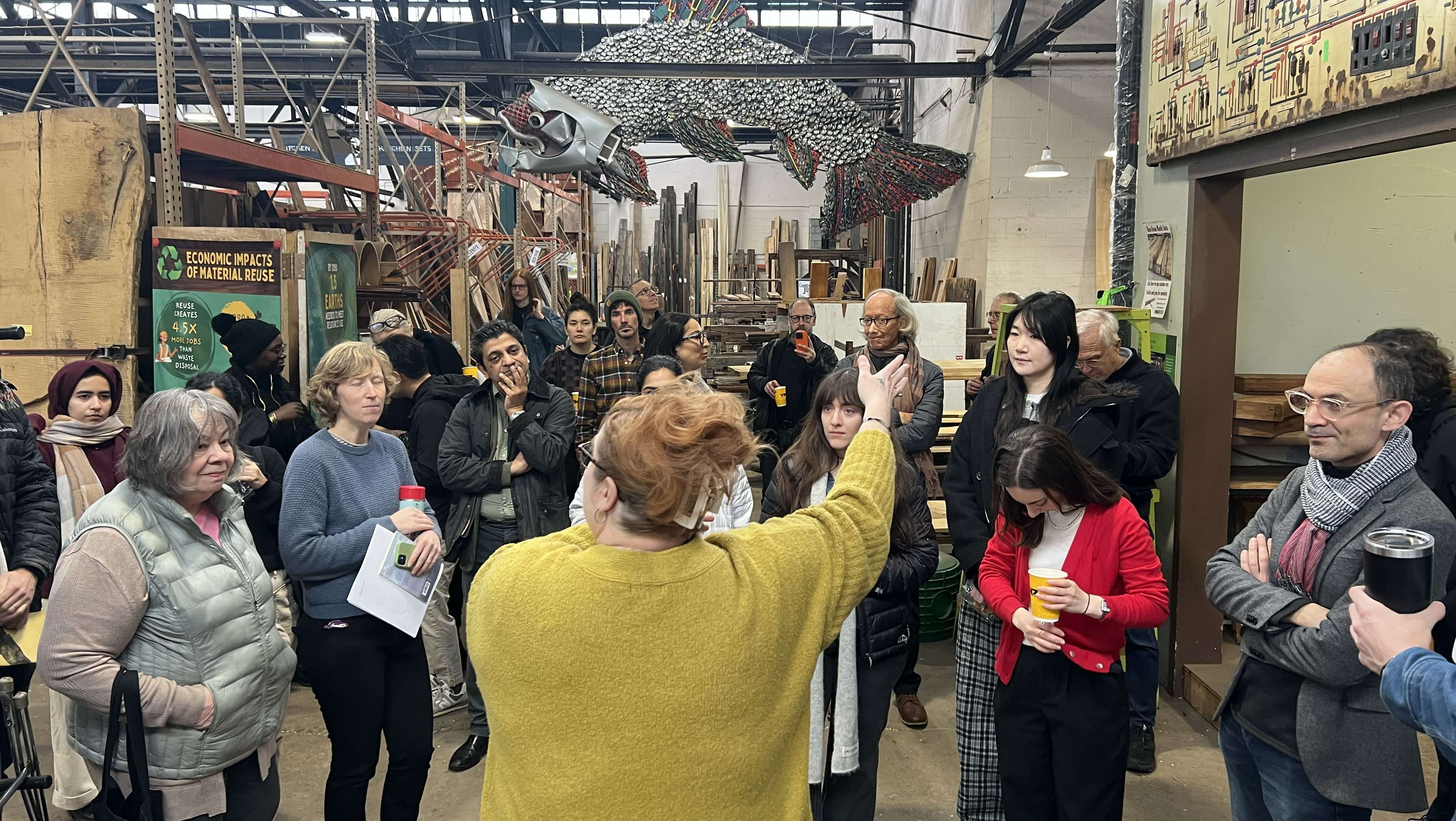
Melissa Mongelli led a tour of Construction Junction and reflected on the challenges and opportunities of building a circular economy.
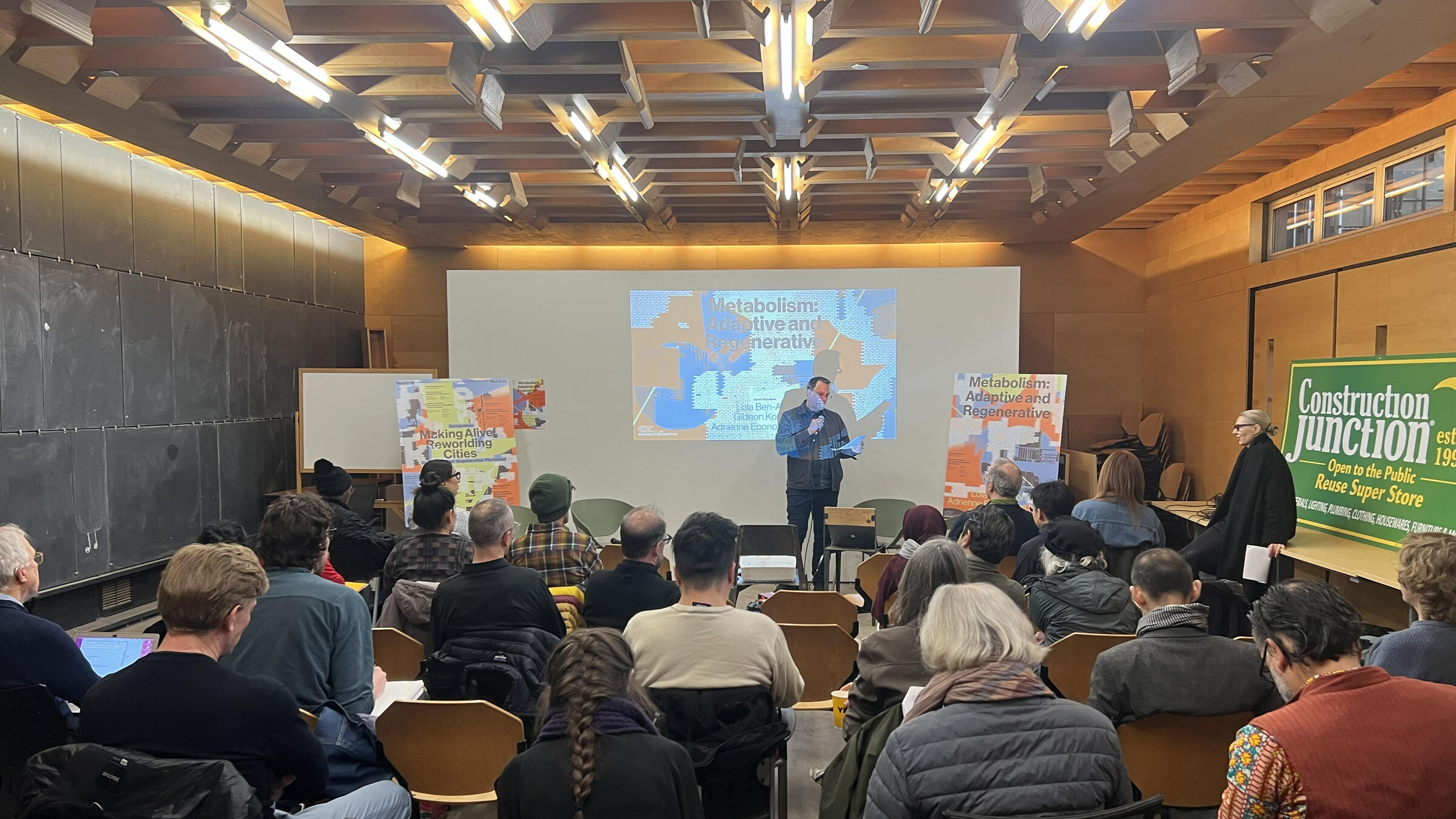
Metabolism: Adaptive and Regenerative
Joshua Lee and Dana Cupkova introduced the session on urban metabolisms with guest speakers Lola Ben-Alon, Adrienne Economos Miller and Gideon Kossoff. Together, they explored how waste streams and regenerative materials can repair ecologies, close loops, and foster more reciprocal relations with land, water, and non-human life.
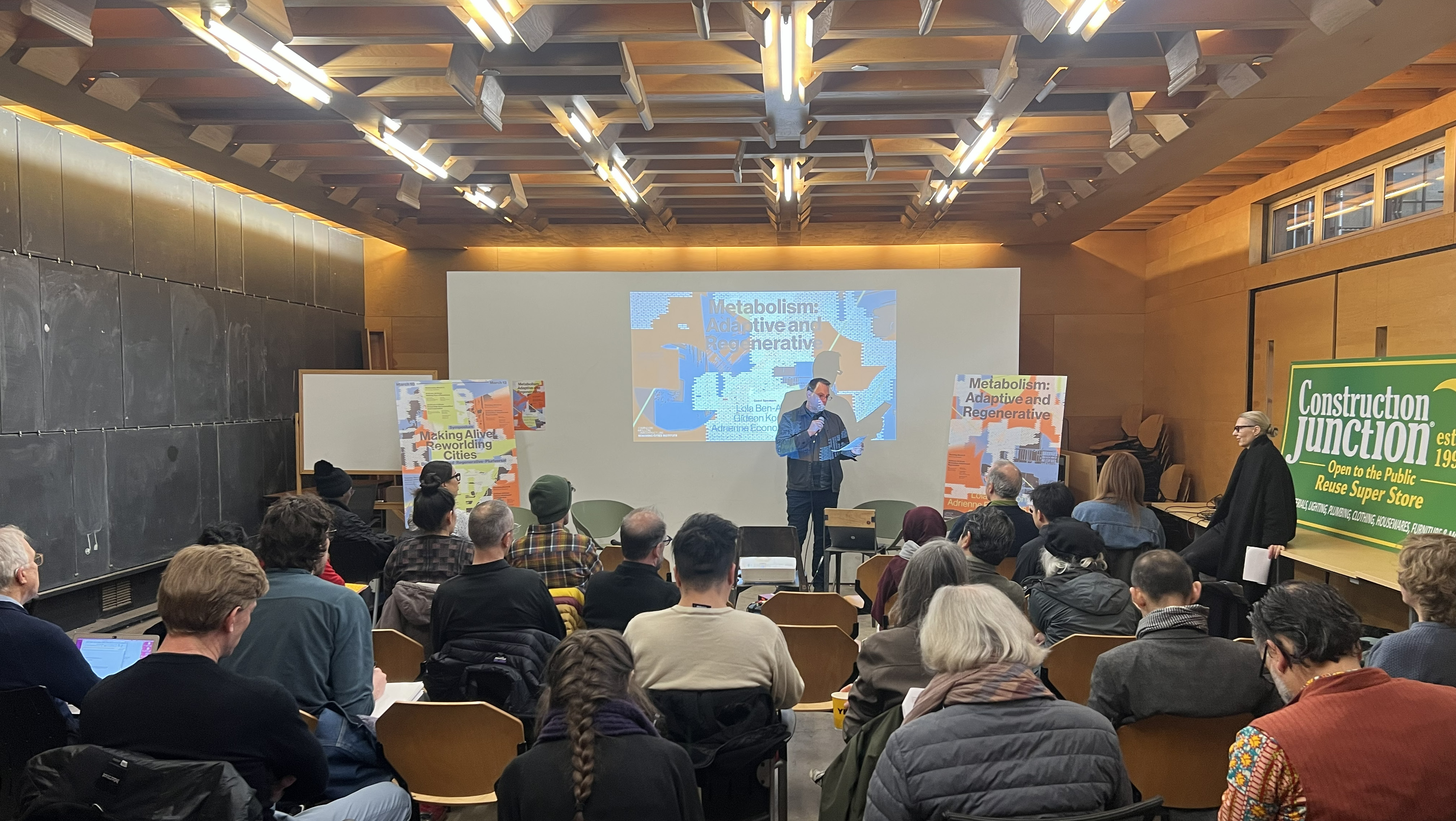
Joshua Lee and Dana Cupkova introduced the session on urban metabolisms with guest speakers Lola Ben-Alon, Adrienne Economos Miller and Gideon Kossoff. Together, they explored how waste streams and regenerative materials can repair ecologies, close loops, and foster more reciprocal relations with land, water, and non-human life.
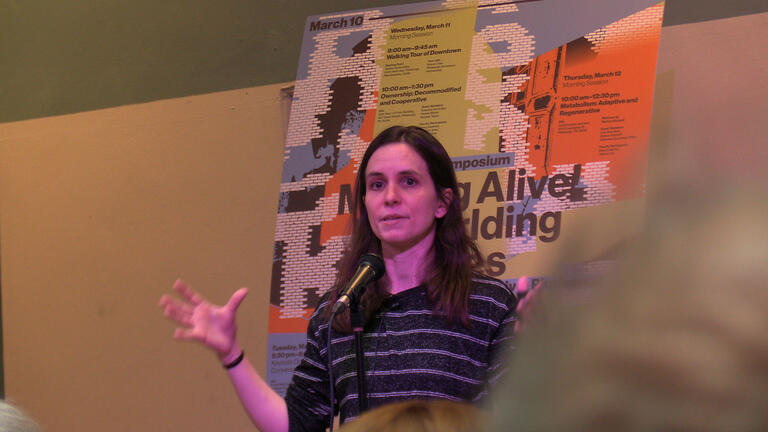
Community Forge
Jackie Cameron shared the story of transforming a vacant elementary school into a hub for entrepreneurship, after-school programs, crime prevention, and arts and culture. Since 2018, Community Forge has partnered with RCI’s Stefan Gruber to reimagine the building and its surroundings as vibrant civic space.
Jackie Cameron shared the story of transforming a vacant elementary school into a hub for entrepreneurship, after-school programs, crime prevention, and arts and culture. Since 2018, Community Forge has partnered with RCI’s Stefan Gruber to reimagine the building and its surroundings as vibrant civic space.
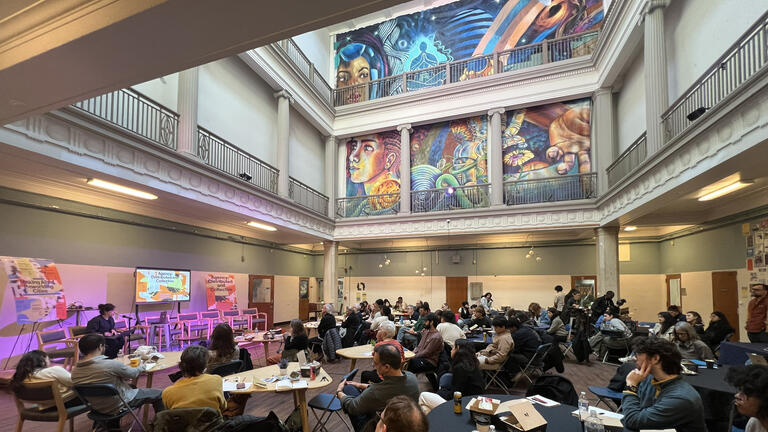
Agency: Distributed and Collective
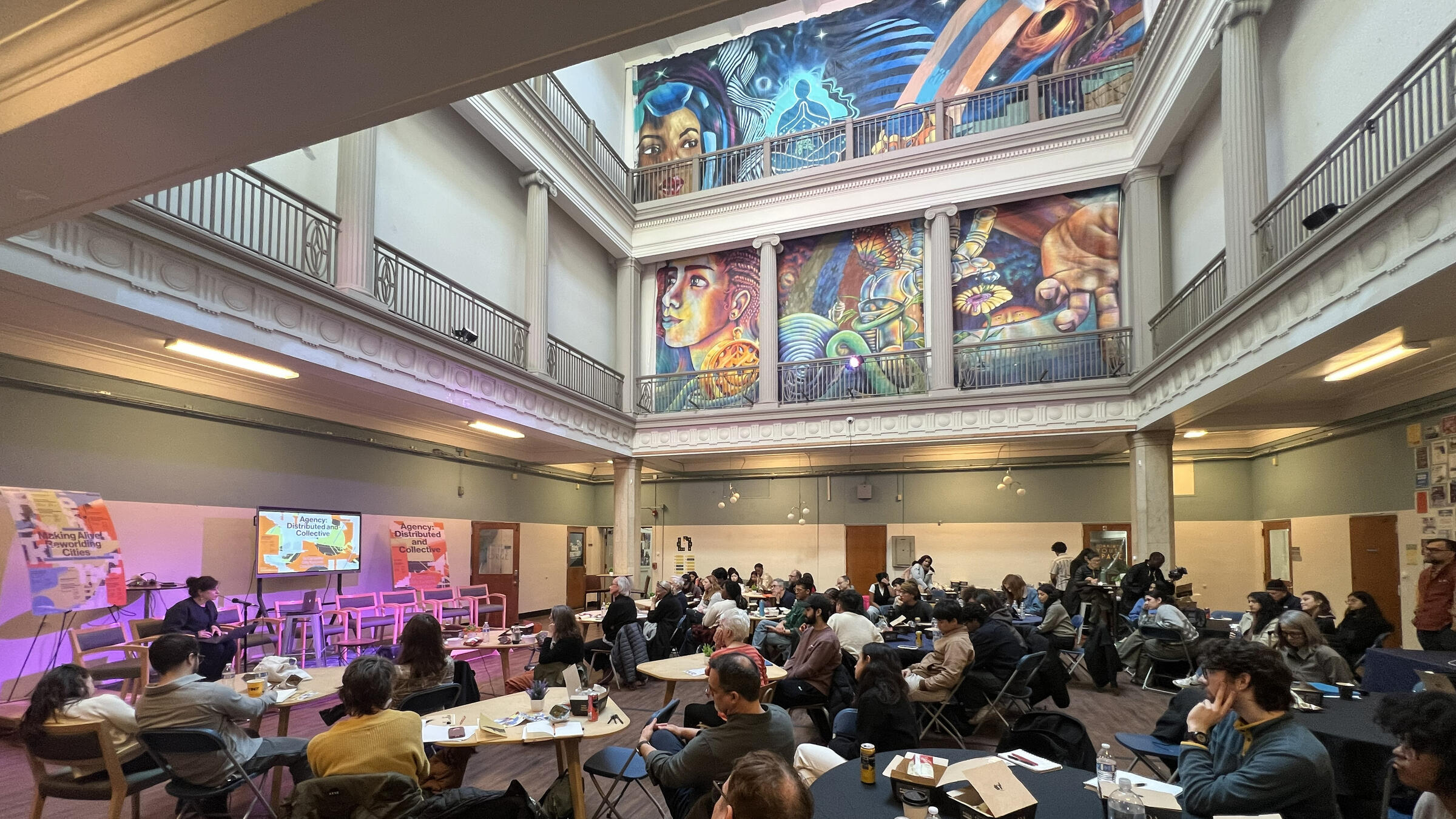
Maryam Karimi introduced the session on agency with guest speakers Tei Carpenter, Gilly Karjevsky and Cassim Shepard, joined in discussion by Stephanie Kyuyoung Lee, Tommy CheeMou Yang and Nida Rehman. Together, they explored agency as a collective practice emerging through situated knowledge, ecological care, self-help housing, and shared forms of authorship beyond experts or markets.
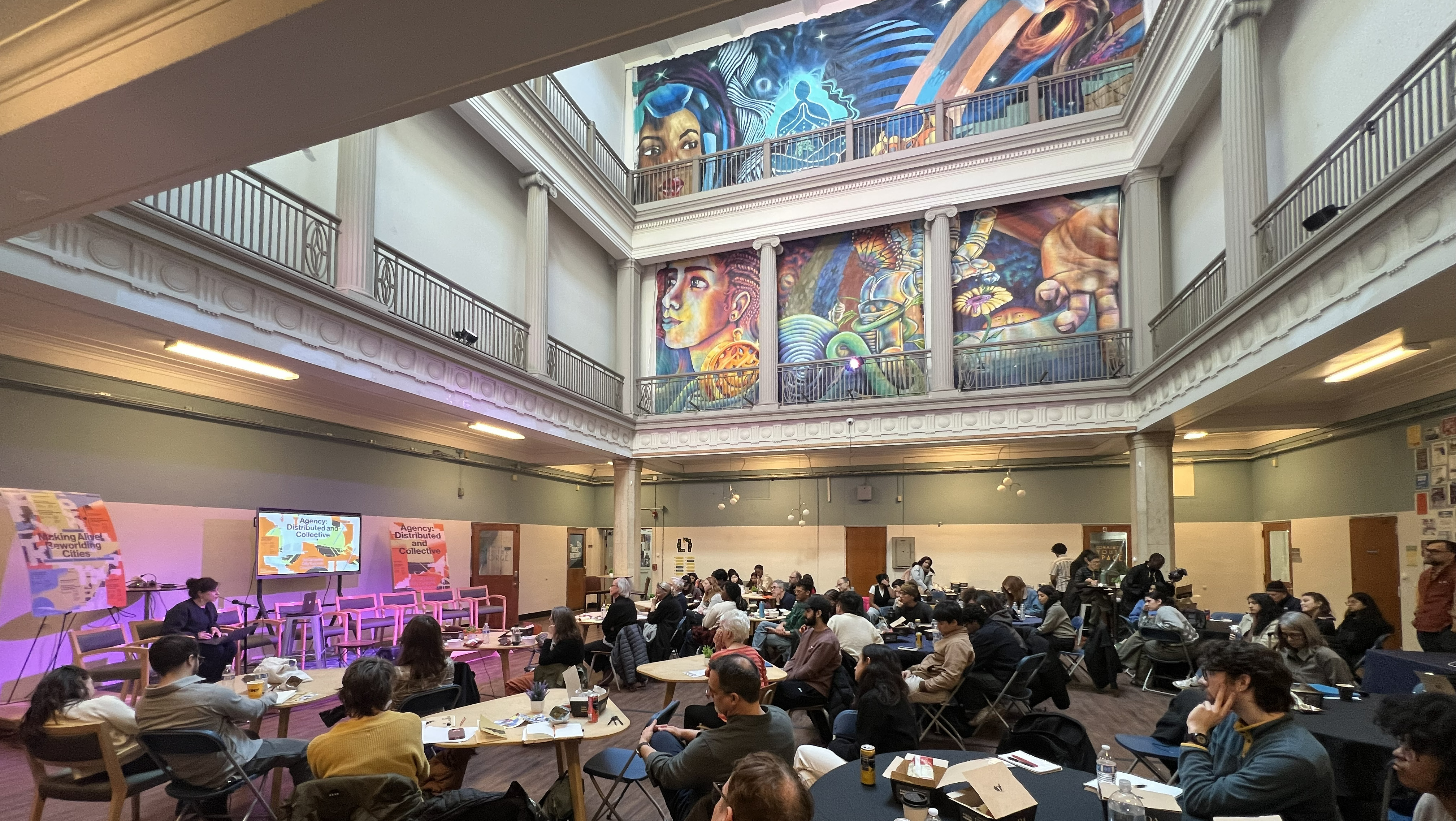
Maryam Karimi introduced the session on agency with guest speakers Tei Carpenter, Gilly Karjevsky and Cassim Shepard, joined in discussion by Stephanie Kyuyoung Lee, Tommy CheeMou Yang and Nida Rehman. Together, they explored agency as a collective practice emerging through situated knowledge, ecological care, self-help housing, and shared forms of authorship beyond experts or markets.
In Photos: 2026 Spring Carnival
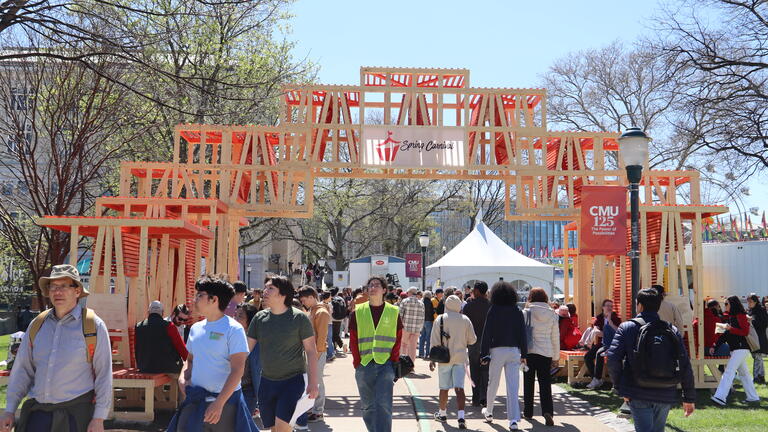
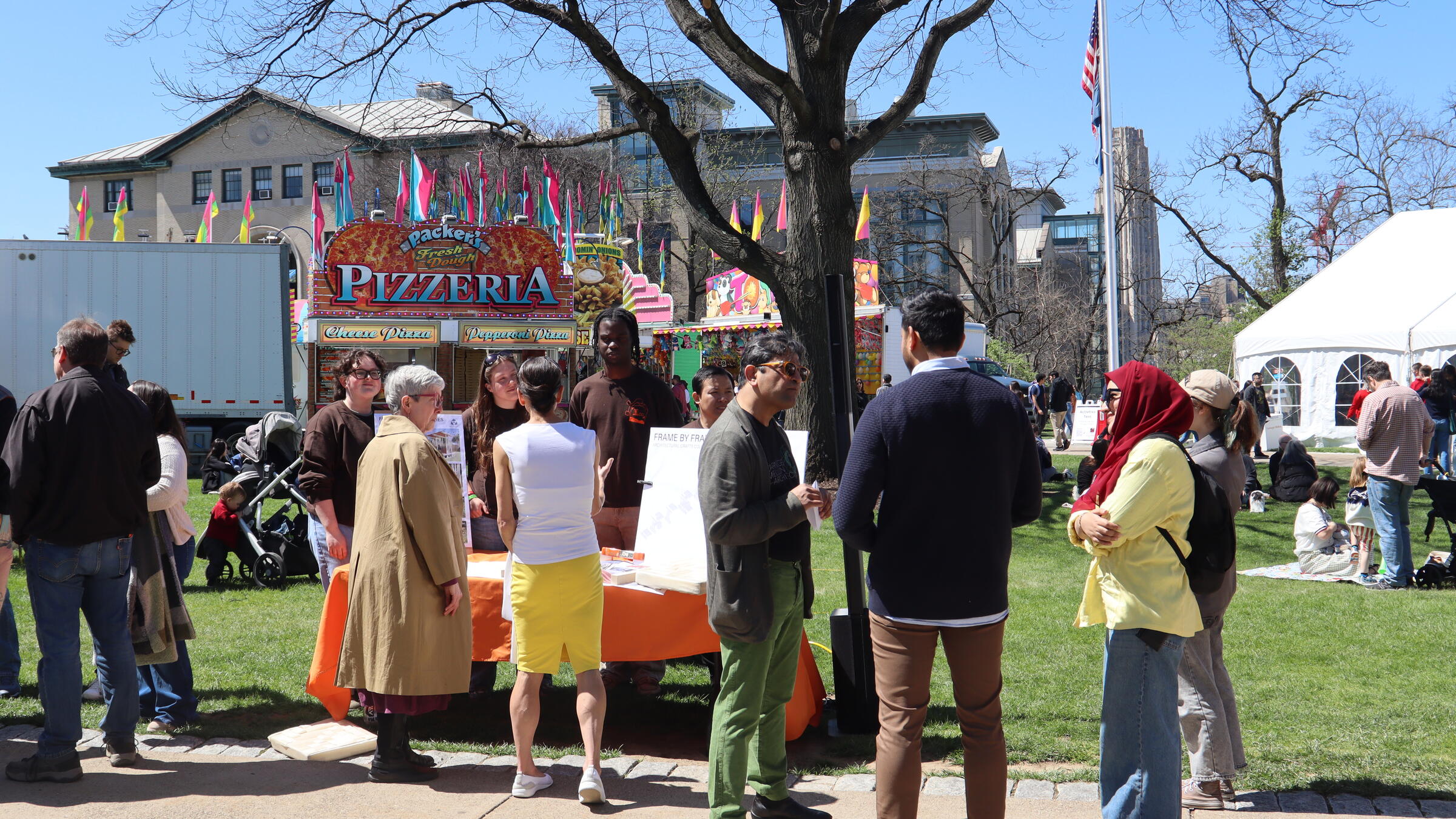
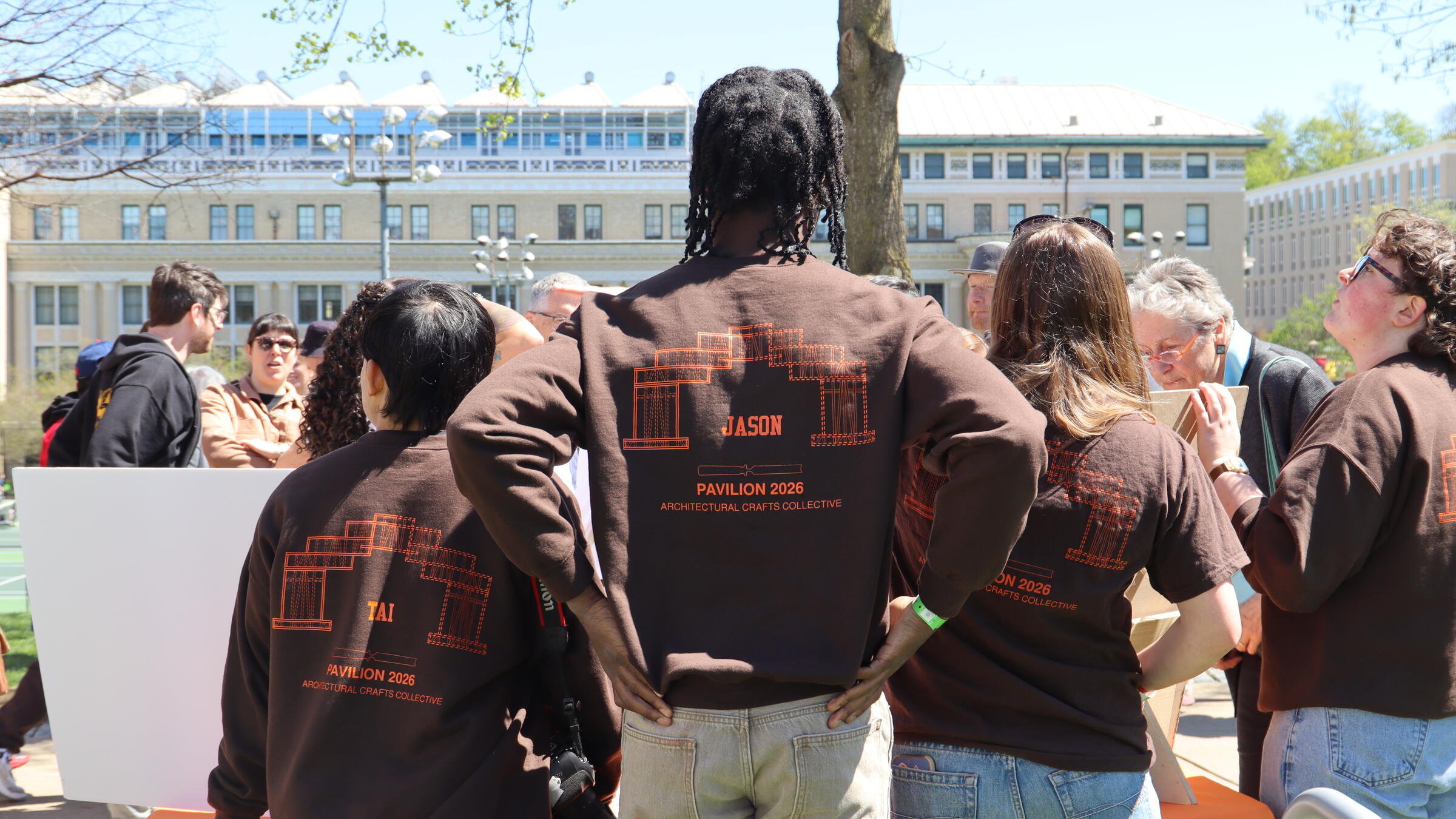
CMU's Spring Carnival took place this year from April 9-11. The School of Architecture celebrated the Pavilion Dedication and Alumni Open House on Saturday, April 11.
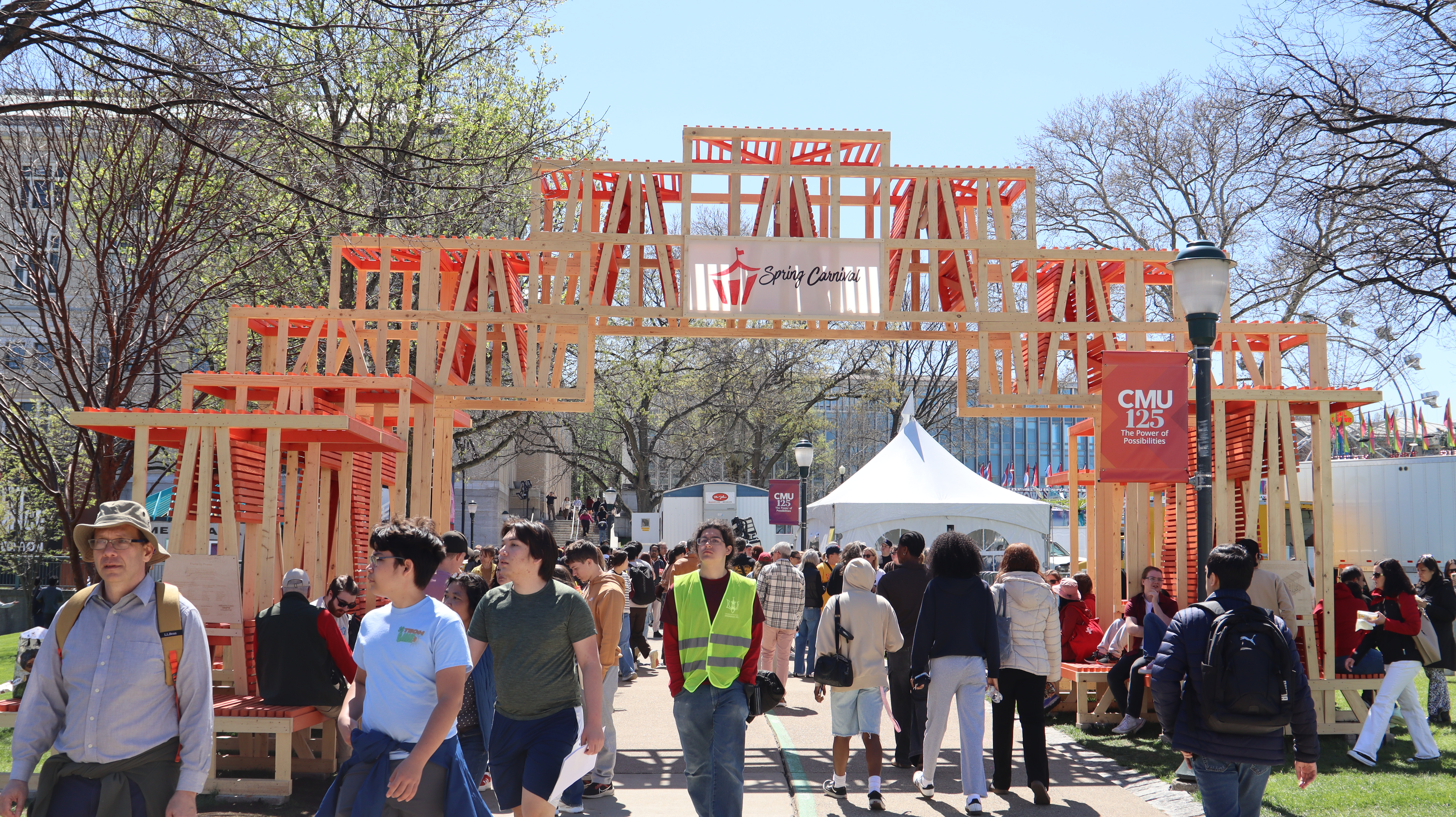
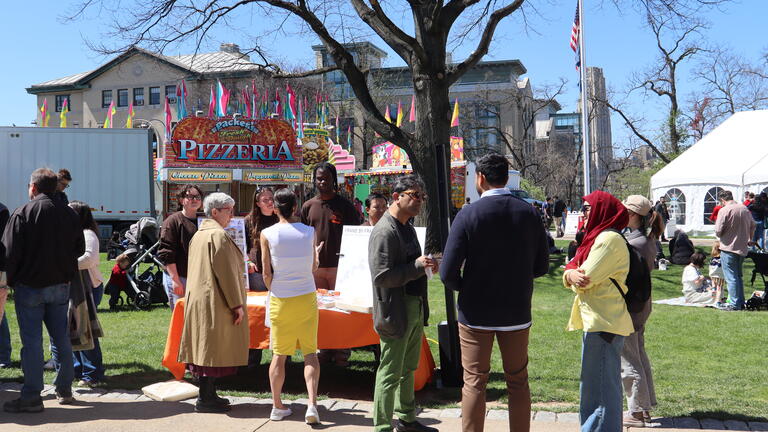
Head of School Omar Khan and members from CM–A's student groups were at the open house to greet alumni and guests. Student work was also on display.
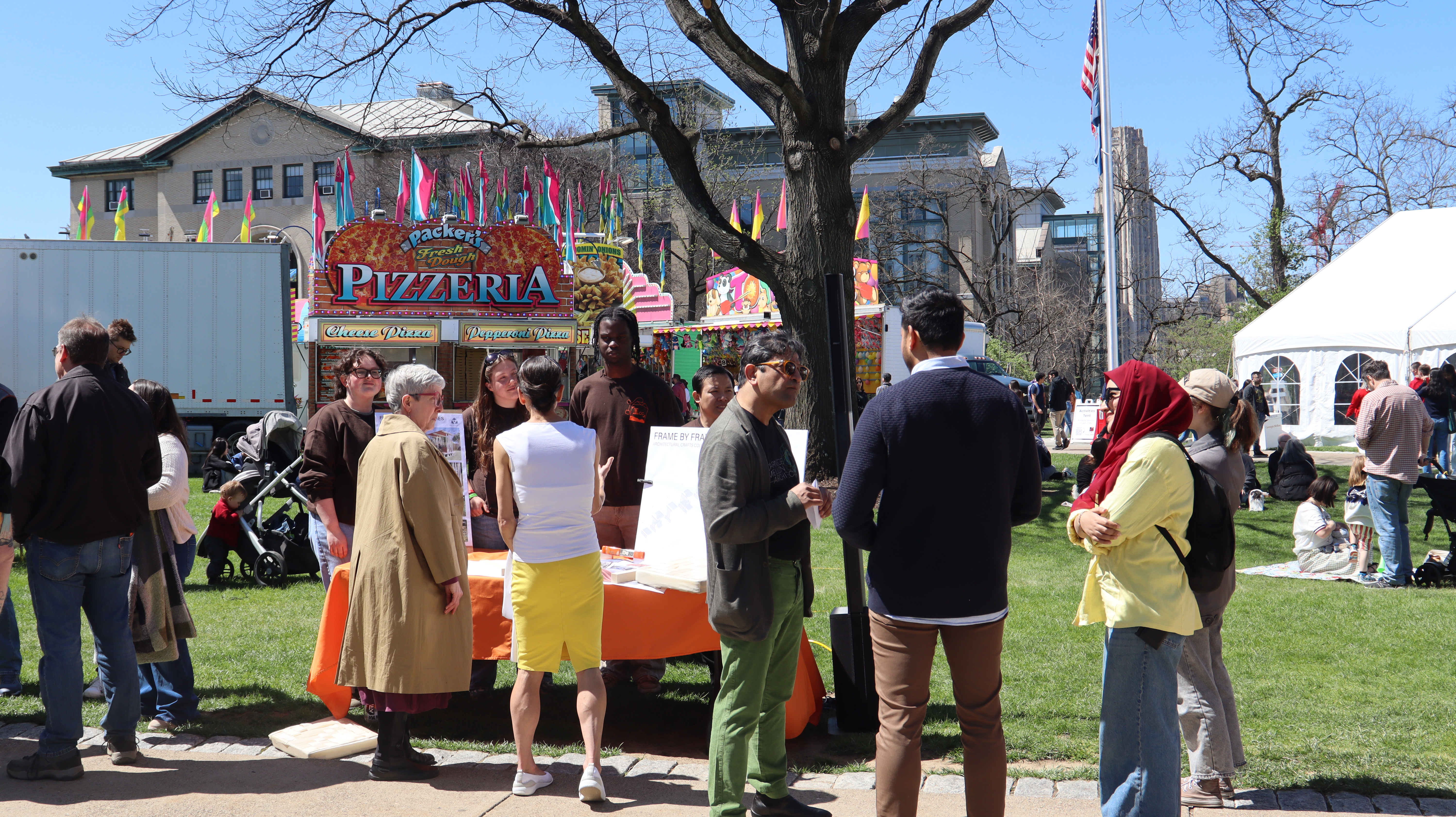
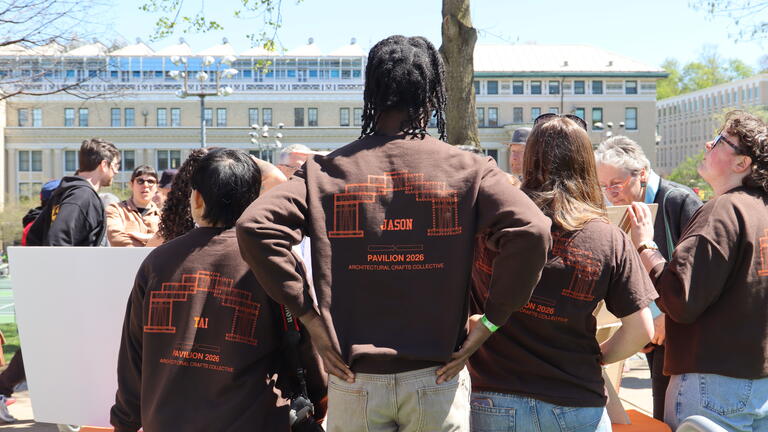
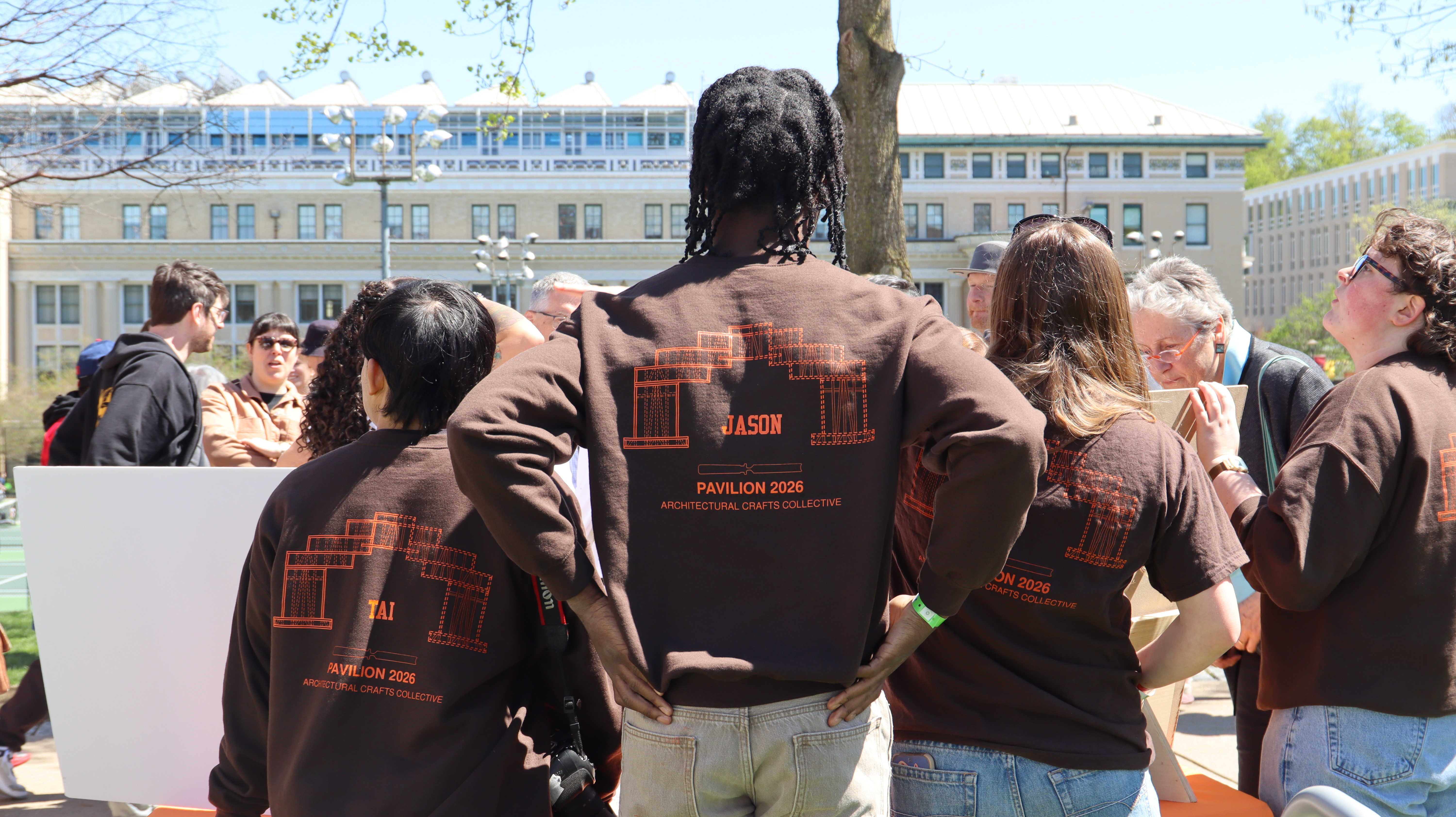
This year's pavilion was designed and built by the Architectural Crafts Collective (ACC), one of the student groups at CM–A.
Four classes of alumni celebrated reunions this year, including the classes of 1991, 2001, 2011 and 2016. Many alumni from these classes and others traveled to CMU's campus from near and far to partake in the weekend's festivities.
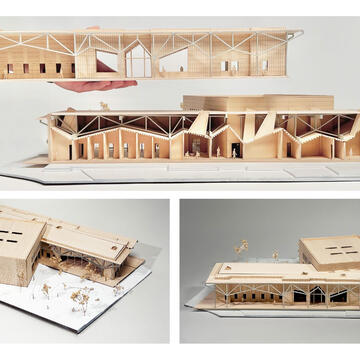
Models of "Oakland Firehouse 14," Sydney Mansavage and collaborator, Fall 2025.
Spring 2026 Architecture Awards
Carnegie Mellon Architecture is proud to announce the student recipients of our Spring 2026 Architecture Awards.
This spring's awards provide $30,000 to support our undergraduate, master's and Ph.D. students. Awards recognize professional promise, public interest design and sustainable design. We extend our thanks to the juries and staff for supporting the awards program.
Please join us in congratulating the recipients on their tremendous accomplishments, and thanks to all of those who applied. We appreciate the generous support of our donors for making these awards available to our students.
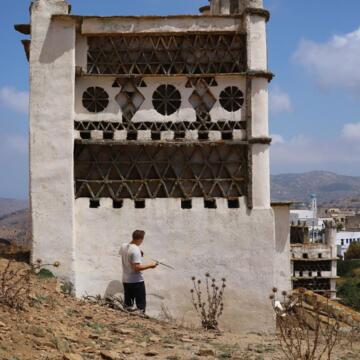
Carter Nelson (B.Arch '17), recipient of the 2022 Delbert Highlands Travel Fellowship, documents a dovecote on the Greek island of Tinos.
Call for Applications for the 2027 Delbert Highlands Travel Fellowship for Alumni: Now Offered Annually
We're pleased to announce that applications are now open for the 2027 Delbert Highlands Travel Fellowship. Formerly offered on a biennial basis, the fellowship is now offered every year. We are excited to bring the fellowship into an annual offering along with our other awards and the opportunity this will offer to support more alumni research in the coming years. Applications are due Friday, October 30, 2026, at 11:59pm ET.
Faculty & Staff News
- Associate Professor Daniel Cardoso Llach joined the board of the CAAD Futures Foundation as a Vice Chair.
- Associate Professor Joshua D. Bard and Special Faculty Jimmy Wei-Chun Cheng were among 17 CFA faculty and staff recipients of the second round of the CFA AI Up-skilling Fund.
- CMU's 2026 Celebration of Education Awards honored Heather Workinger Midgley, Senior Academic Advisor for Undergraduate Studies, with the Award for Outstanding Contributions to Academic Advising and Mentoring, and Vivian Loftness, University Professor and Paul Mellon Chair, received the Lazarus Award for Student and Faculty Mentoring.
- Assistant Professor Azadeh Sawyer and adjunct faculty Fred Betz received a seed grant from the Scott Institute to reinstate the rooftop weather station on the IW to provide data for urban microclimate analysis and building performance analysis modeling.
- On May 14, the Green Building Alliance (GBA) will honor adjunct Bill Bates with the Legacy Award and NOMA Pittsburgh’s Project Pipeline with the Pathfinder Award during the 2026 Emerald Evening.
- Associate Professor Daniel Cardoso Llach is part of a team supported by the Social Sciences and Humanities Research Council of Canada to organize a research symposium at the Canadian Centre for Architecture (CCA) in Montréal with the notion of "Biographies of the Digital" as a provocation.
- Associate Teaching Professor Joshua D. Lee and PhD-AECM candidate Joseph Murray published a guest edited special issue of "Open House International," a Q1 research journal published by Emerald Publishing, entitled "Beyond Single Use: Looking Back and Looking Forward at the Open Building Movement."
- Tuliza Sindi, Curator for Public Programs and Director of Publications, served as an external advisor to assess shortlisted applications for the fifth cohort of the Prince Claus Fund Building Beyond Fellowship program in the Netherlands.
- Tuliza Sindi was selected to present at "The Materialities of the Ephemeral City" conference this June at the Institut d'Études Avancées in Paris, presenting the paper "Black Futuring in the Public Interior."
- Tuliza Sindi contributed a commissioned article for the publication "NE51/ This House is Not 4 Sale" accompanying South African artist Hoek Swaratlhe's body of work on the history, architecture, and the lived realities of people within the NE51/9, the four-room Apartheid township house designated for Black South Africans.
- Associate Professor Nida Rehman delivered a public lecture, "A Garden City in a Forest: Viewing Improvement from Unruly Ground," at the Rochester Institute of Technology's "Urban Natures" lecture series organized by the Central New York Humanities Corridor and RIT Department of Sociology and Anthropology.
- Nida Rehman co-organized with Aparna Parikh (Penn State) a panel session entitled "Between World Ending and World Making: Politics of Climate and Urbanism in South Asia" at the American Association of Geographers Annual Meeting, and presented papers "Critical Geographies of Design and Repair" co-authored with professor Richard Nisa and "Imagining Collective Futures in the Mon Valley" co-authored with PhD-Arch student Morgan Newman.
Alumni News & Updates
We invite all Carnegie Mellon Architecture alumni to keep us up to date on their awards, professional milestones and more. Send us your updates with a brief description and link to more information.
- Priyanka Thakur (M.Arch '24) was awarded the 2026 Delbert Highlands Travel Fellowship for her proposal "Learning from the River: Building a New Vernacular with the Communities of Majuli, Assam, India." Thakur's project is a continuation and evolution of her 2024 Master of Architecture thesis and a decade-long engagement with Majuli, Assam, one of the world's largest inhabited river islands and ecologically precarious landscapes.
- James B. Harrison III (M.S. Arch '93) is featured in the spring 2026 edition of the College of Fine Arts Magazine. A principal at his own firm, Harrison Kornberg Architects in Houston, James reflects on his passion for building, for life, and paying it forward.
Carnegie Mellon Architecture Newsletter
The Carnegie Mellon Architecture Newsletter comes out three times per semester. It includes interviews with CM–A alumni and faculty and deep dives into research, events, projects and work happening at the school. Started in 2010 as a print publication known as "Span," it moved online under the name "e-SPAN" before coming to be known as the CM–A Newsletter. Have an update you'd like to share? Contact us.