This seminar examines the entwined relationship between nature and culture, challenging the false dichotomy that separates them. By tracing how concepts of nature, landscape, and ecology are culturally constructed and aesthetically represented, the course reveals how human imagination has shaped — and been shaped by — the natural world.
Spring 2026
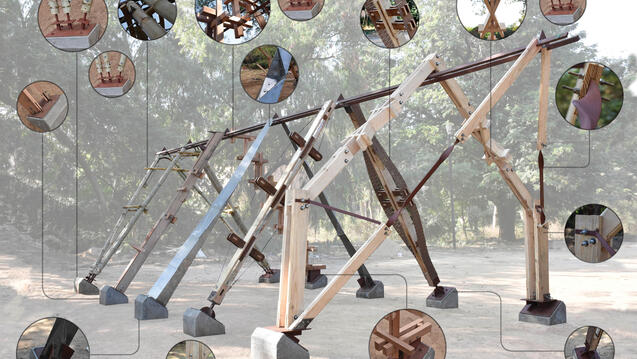
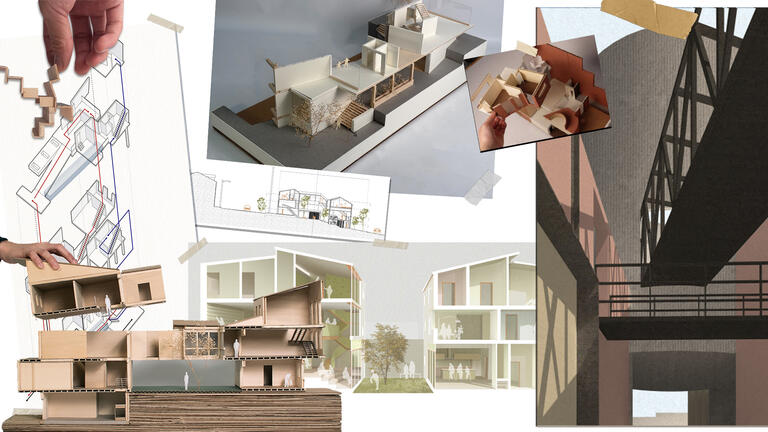
Poiesis II experiments by Allen Chen, Alobi Huang, Will Ivansco, Jioh Kim, Adeline Kwan, Estee Teo, Max Whalley and Lukas Yao.
This course asks: In what ways do the sociopolitical, ecological, and/or economic histories of a particular place continue to manifest through the built environment and how might this inform your architectural practice?
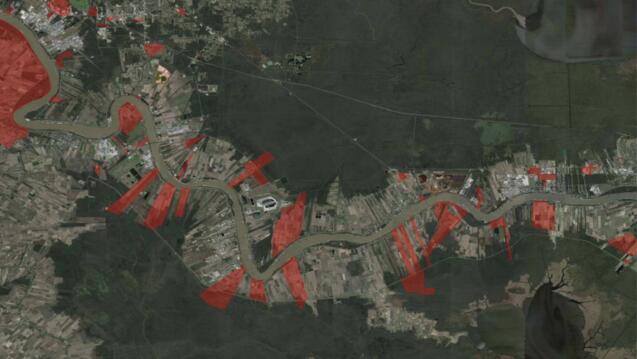
As a critical nexus of the global climate crisis, South Asia provides urgent and exemplary case studies to examine the ecological, spatial, and material dimensions of contemporary cities.
This course explores conceptual, technical, and practical questions of heritage and technology through theory, concepts, and critical making.
This research-based seminar explores the entangled histories of architecture and agriculture, focusing on land, labor and collective resistance.
To scrutinize enduring material culture and practices, this course investigates seminal architectural projects, analyzing their controversy through ethical and ecological perspectives.
In this course, students work alongside the "x-change" and in otherwards Imprint director Tuliza Sindi, and the 2026 publication and exhibition graphic designers and copy editor, to gain direct experience with editorial and curatorial practices.
This course is an on-ramp to the Laboratory for Cybernetics (Lab4C), supporting students engaging with wicked challenges based on personal interests and/or current projects for their coursework or thesis.
This seminar focuses on the formless as an operation relative to social constructs, parametrics and aesthetics.
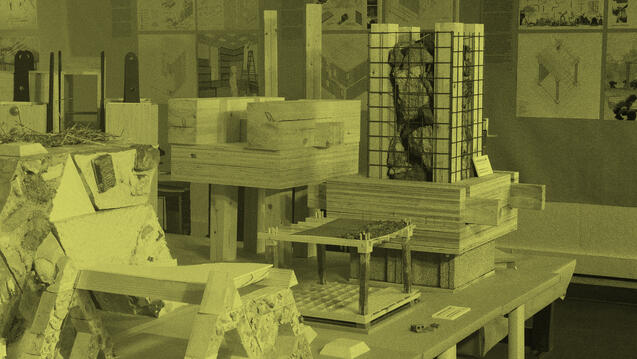
This course takes reuse as our point of design and construction inspiration. Students select salvaged materials and experiment with material reconfigurations informed by a wide range of reuse practices, organizations and precedents.
This course focuses on the search engine and the discussion of digital representations in the context of search engines and generative AI, investigating how to unfold the hidden correlations between objects through search engines, recommendation systems, and image generators.
This course follows "48-555/48-755: Introduction to Architectural Robotics," teaching students how robots sense, interpret, and act in the built environment to connect design intent to fabrication.